
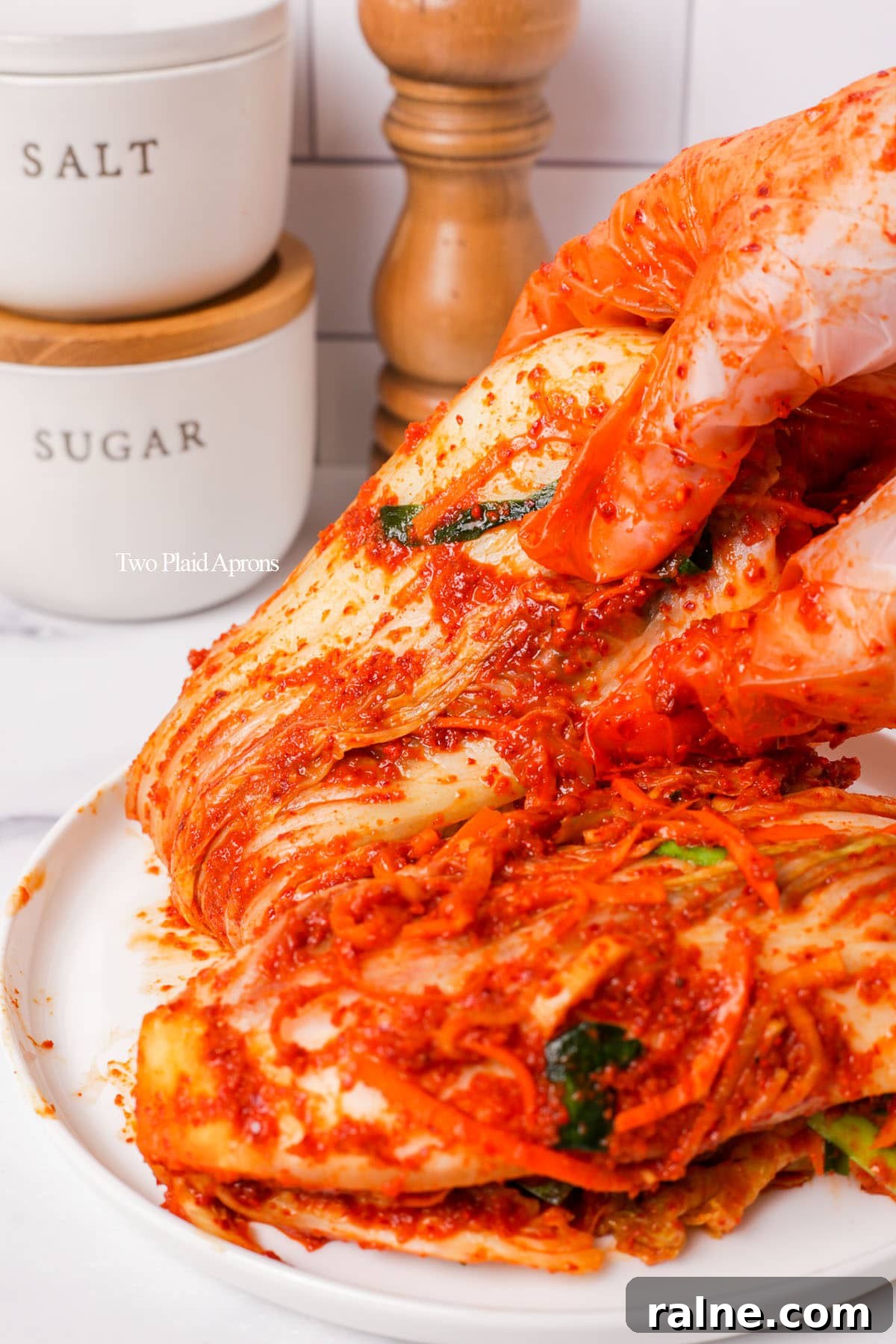
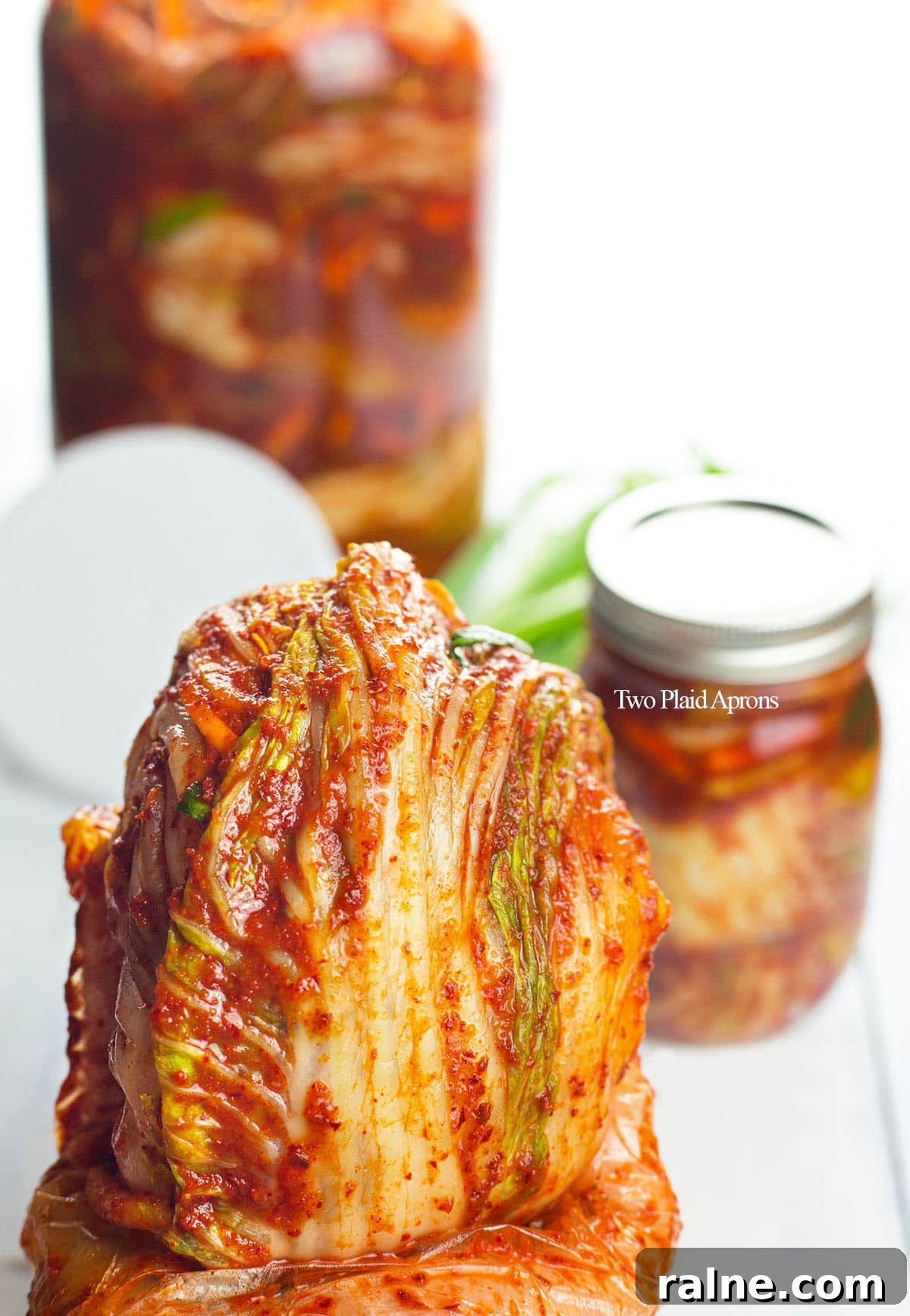
Kimchi — specifically napa cabbage kimchi (baechu kimchi – 배추김치) — is one of the most beloved traditional Korean banchan enjoyed worldwide. This authentic recipe uses quartered napa cabbage, which requires more hands-on work but yields kimchi that stores and ferments longer than quick geotjeori (fresh kimchi). If you want a fast, crunchy alternative, try a quick cucumber kimchi instead.

If you make this recipe, please tag us on Instagram using #twoplaidaprons — or mention @two_plaid_aprons in your stories. We love seeing your kimchi creations! 🥰
What is kimchi?
Most people picture fermented napa cabbage when they hear “kimchi.” That classic kimchi is commonly served as a complementary side dish at Korean restaurants or used in dishes like budae jjigae (Korean army stew). But the word kimchi simply means pickled vegetables, so many vegetables can become kimchi — from cubed radish (kkadugi) to quick cucumber kimchi.
The basic process for any kimchi starts with salting the vegetables to inhibit harmful bacteria and draw out excess water. After salting, the vegetables are rinsed and coated in a seasoned, red chili-based paste. Julienne vegetables such as carrot and Korean radish plus buchu (Asian chives) are often added for texture, sweetness, and depth of flavor.
How to eat kimchi and what to do with it
Kimchi can be eaten immediately after making it or after it has fermented. Fresh kimchi is bright, spicy, and slightly sweet — excellent as a side dish or wrapped with boiled pork in bossam. Fermented kimchi grows tangier, funkier and more sour over time, which is perfect for cooking.
Popular ways to use fermented kimchi include:
- Kimchijeon (savory kimchi pancakes)
- Kimchi mac and cheese
- Kimchi jjigae (kimchi stew)
- Kimchi chili oil ramen
- Kimchi spam fried rice
- Creamy kimchi pasta


Ingredients and substitutions
Scroll to the recipe card below for exact ingredient quantities.
For the bulk of the kimchi:
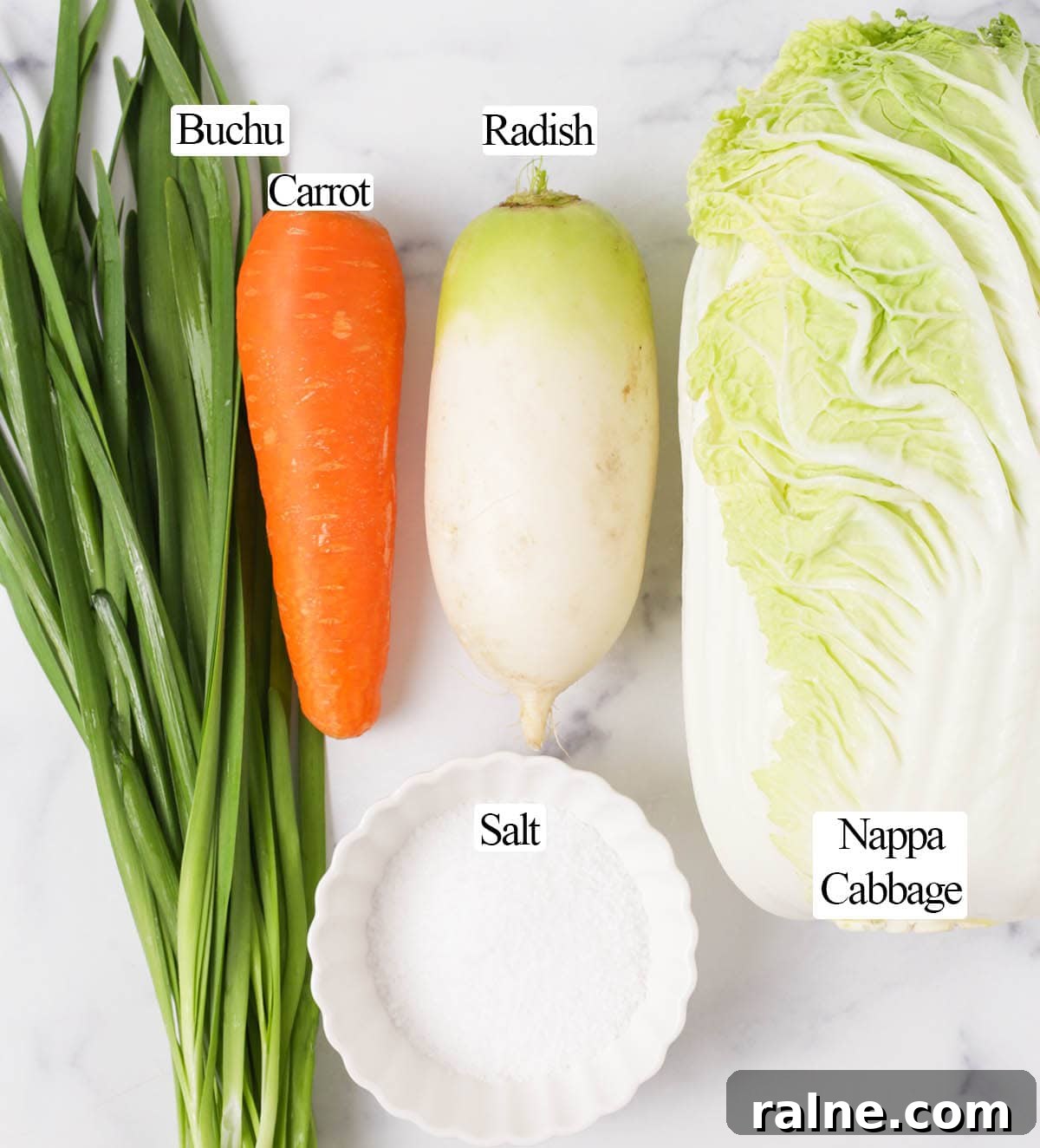
- Napa cabbage — the star ingredient. Available at Asian markets and many grocery stores.
- Salt — use kosher or another coarse salt for easier, more even salting.
- Carrot and Korean radish — add sweetness, crunch, and body. Daikon is a suitable substitute if Korean radish isn’t available.
- Buchu (Asian chives) — contributes a distinctive savory funk. Use green onions if you can’t find buchu.
For the kimchi marinade:
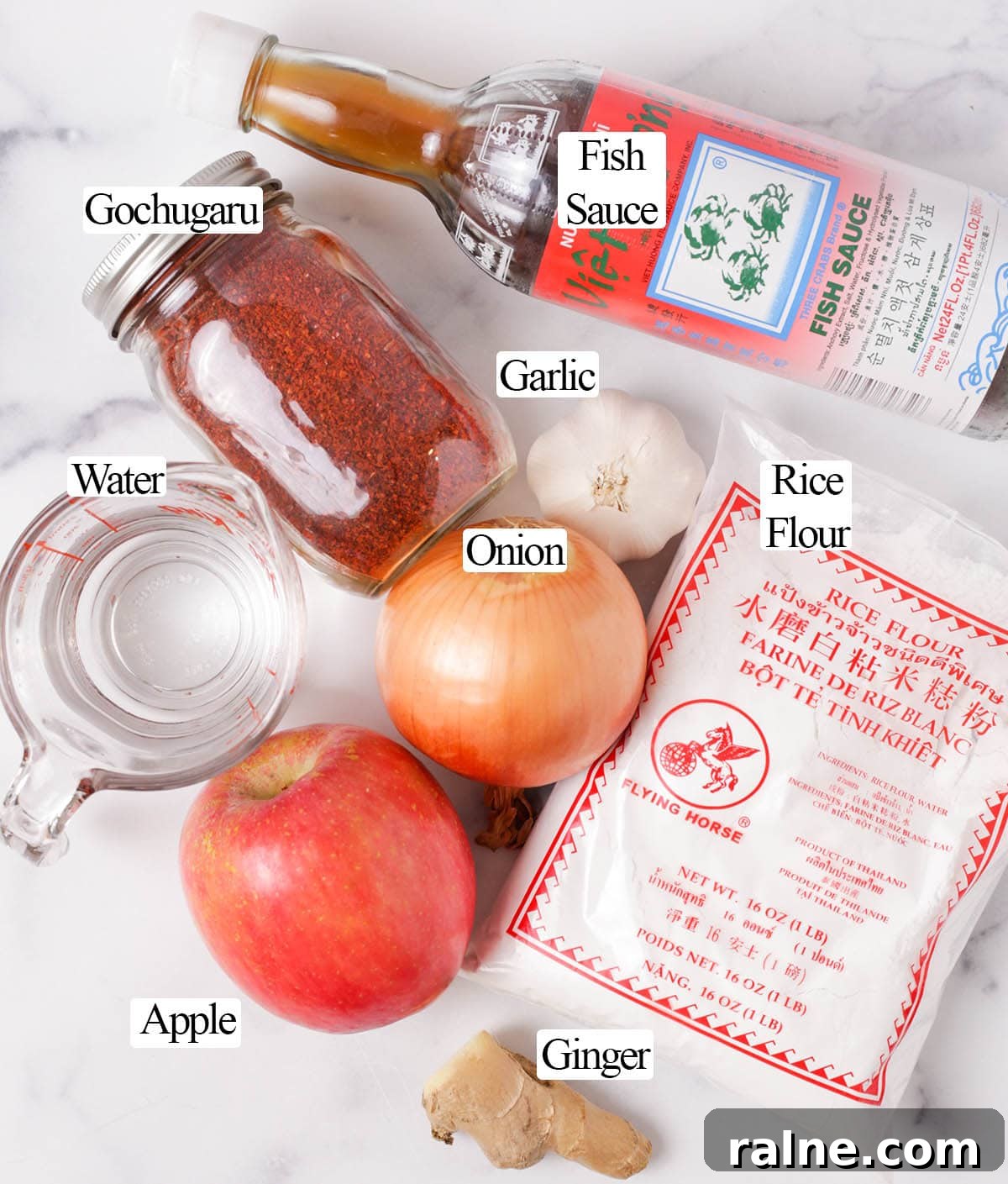
- Rice flour and water — cooked into a sticky paste so the marinade adheres to the cabbage. Use either regular rice flour or glutinous rice flour.
- Gochugaru — Korean red pepper flakes. Use coarse gochugaru for proper texture and flavor intensity.
- Yellow onion, garlic, ginger — the aromatic base of the paste.
- Apple or Korean pear — adds natural sweetness and liquid to the paste. Juicier apples like Fuji work well.
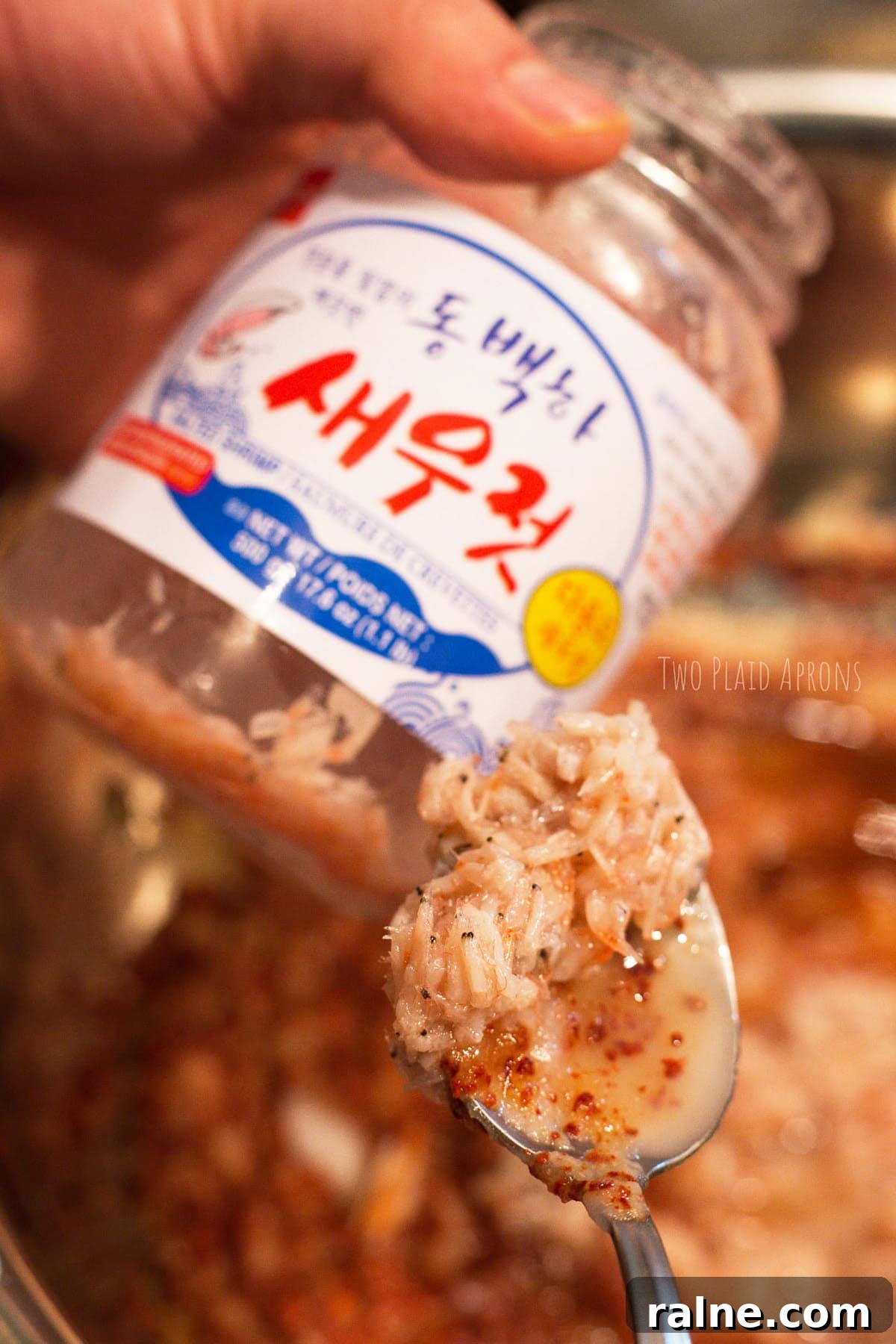
- Fish sauce or saeujeot — provides saltiness and funk. Saeujeot (fermented salted shrimp) is traditional, but fish sauce is a practical substitute.
How to pick the best napa cabbage and Korean radish
Late fall and winter are peak season for napa cabbage and radish. Choose cabbages that feel heavy for their size and have a fresh-looking core; heavier heads usually mean better water content and sweetness. Younger heads with yellow-tinged leaves are more tender, while darker green leaves are heartier but still fine.
For radishes, select heavy, firm roots with some green near the top if possible; these tend to be juicier and sweeter. Avoid light, woody, or dried-out specimens.
How to make authentic kimchi
Clean and cut the napa cabbage:
1. Remove and discard any damaged outer leaves.
2. With the cabbage on its side, quarter it lengthwise. You can also trim the stem and gently pull the leaves apart by hand.
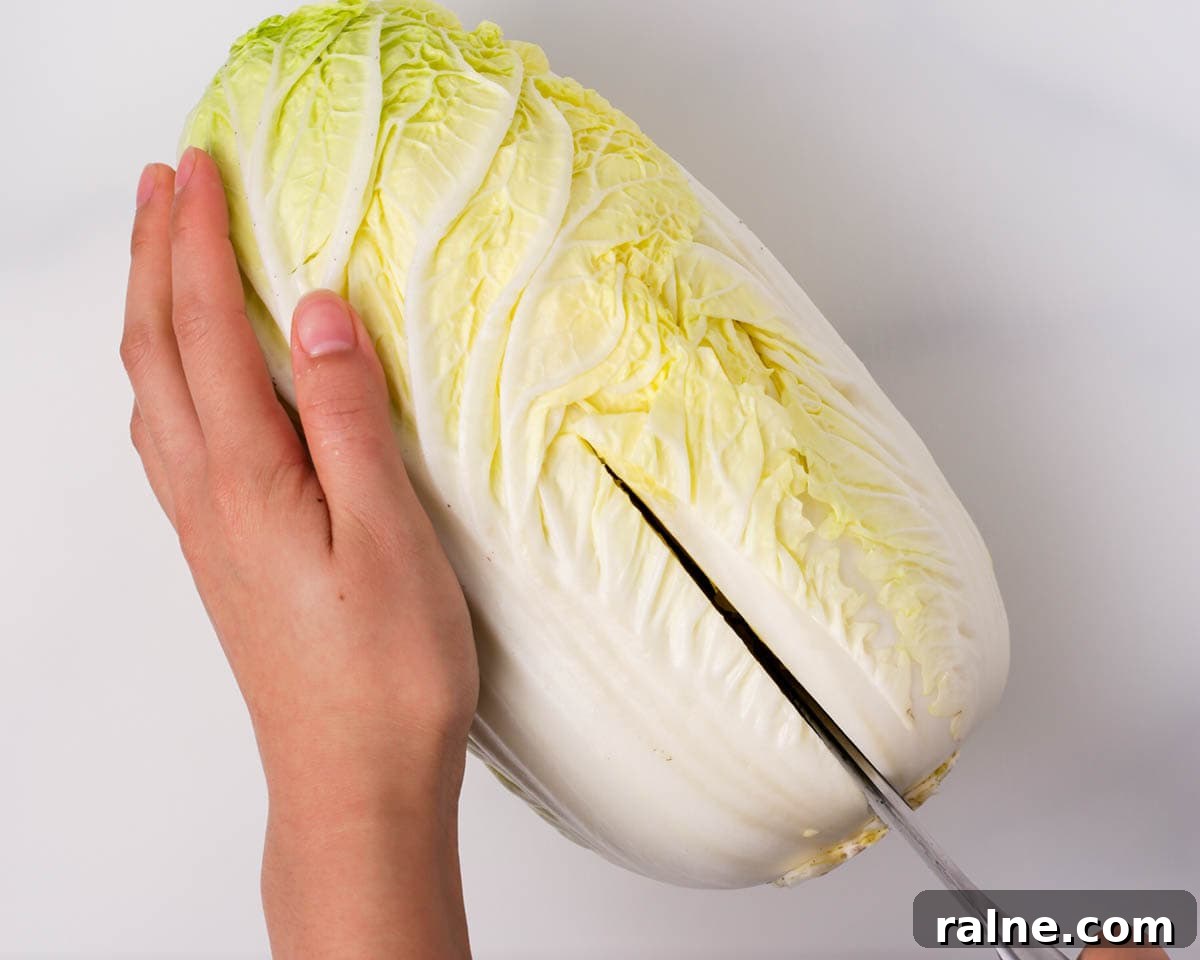
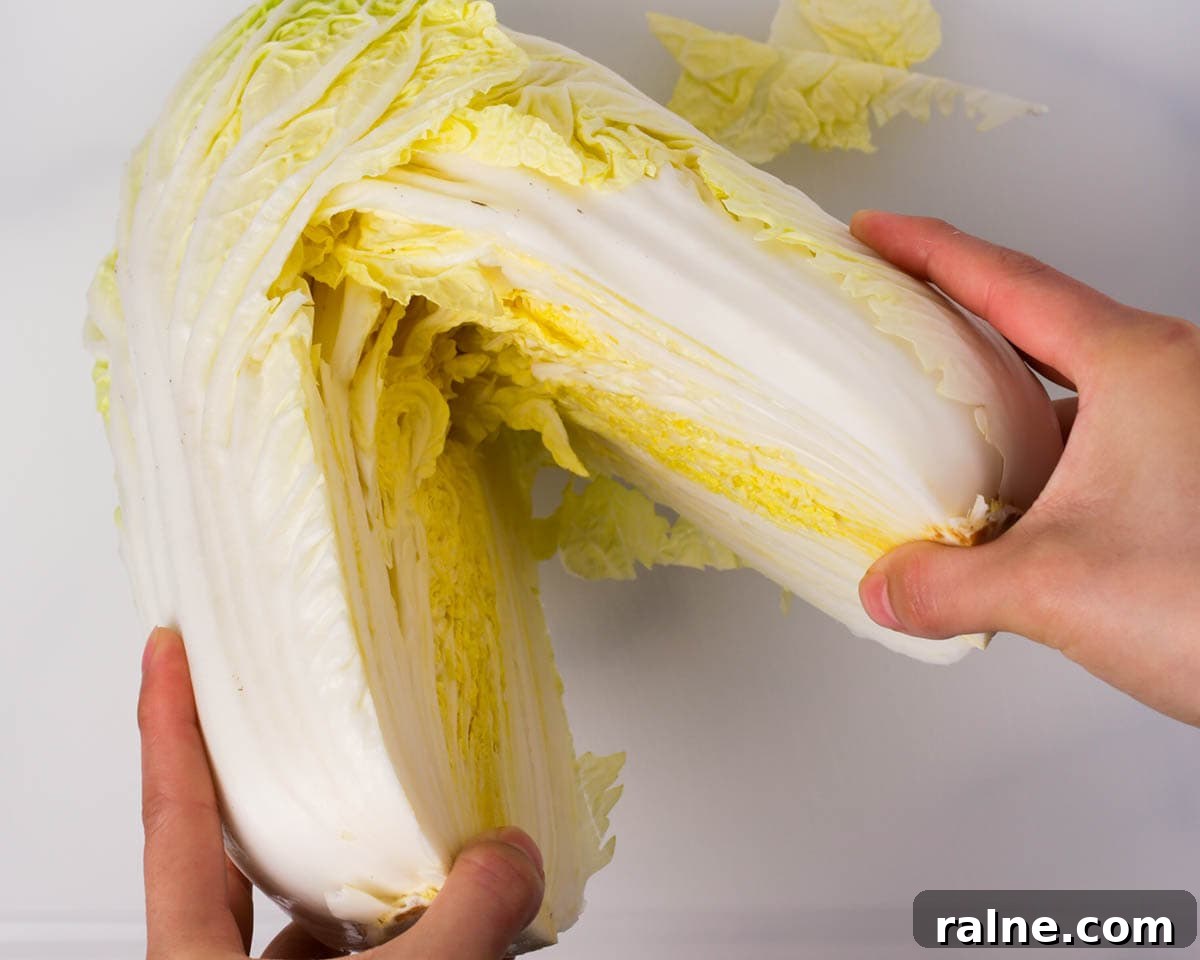
3. Trim excess core (but keep enough to hold the leaves together), rinse between each leaf to remove dirt, and drain well.
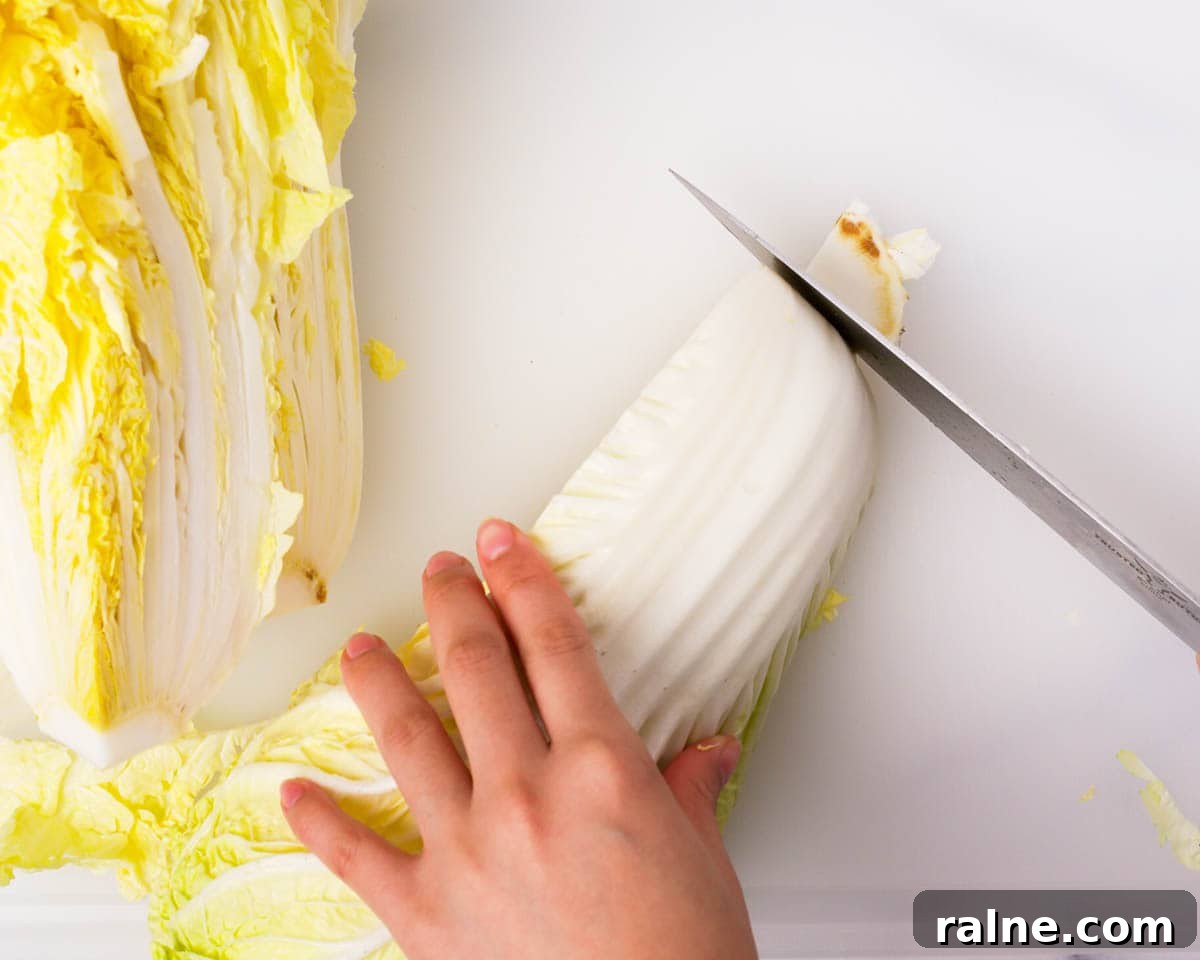
Salt the napa cabbage:
4. In a clean bowl or sink, sprinkle salt between every leaf from stem to tip, salting the stem area more generously. Repeat with all quarters.
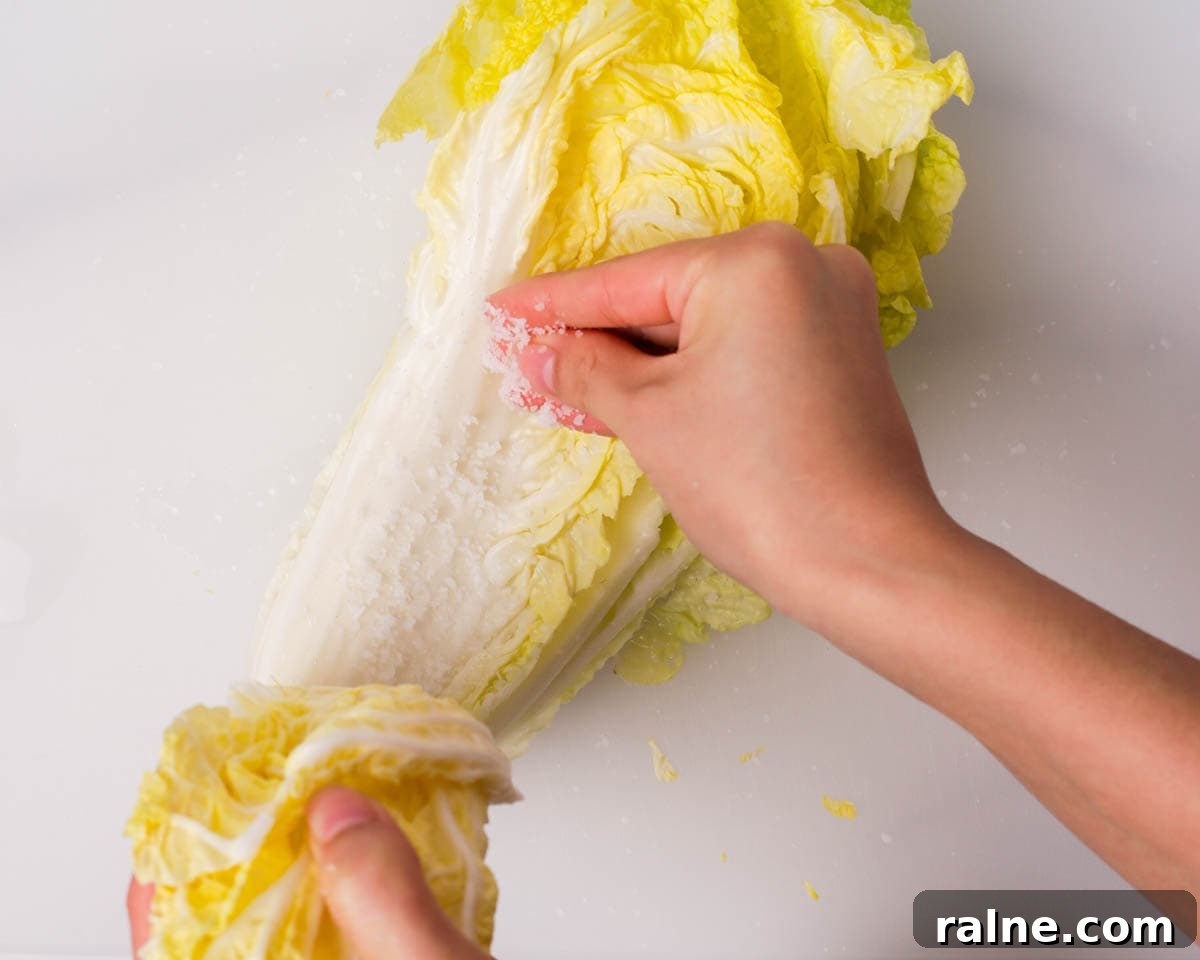
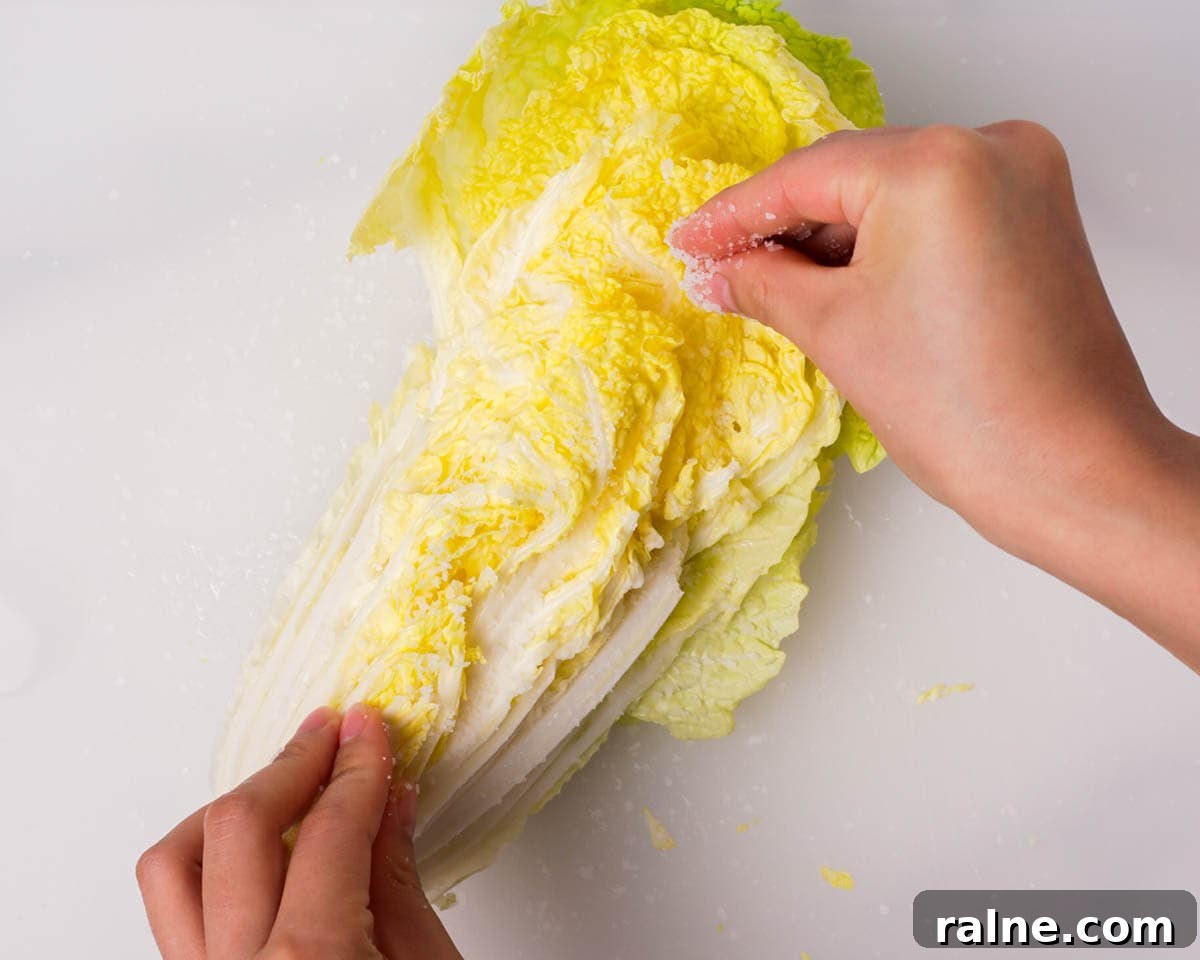
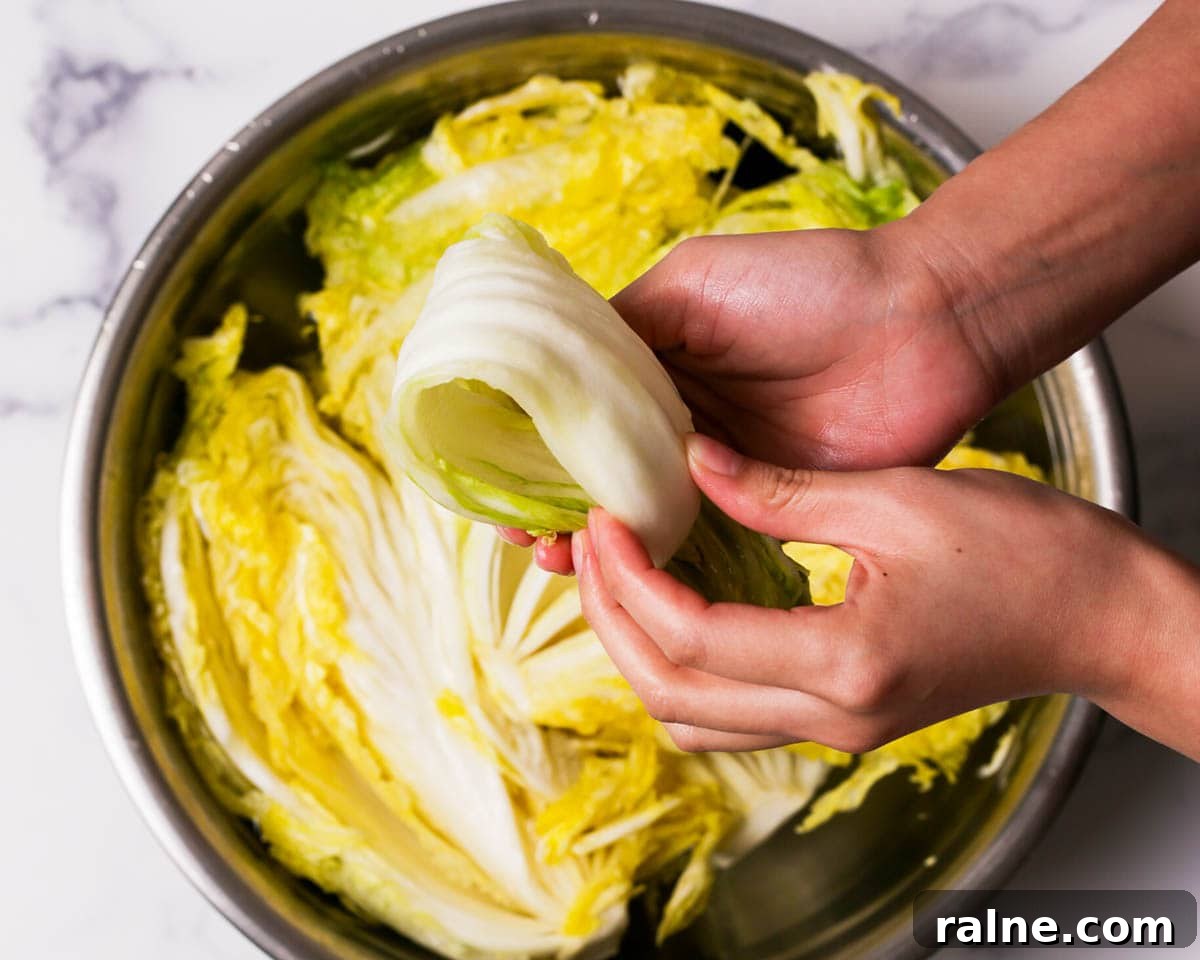
5. Stack the salted quarters in a large bowl, cover and weigh down with a heavy plate or similar object, and salt for 1½ to 2 hours. Rotate the cabbages every 30–60 minutes to ensure even brining.
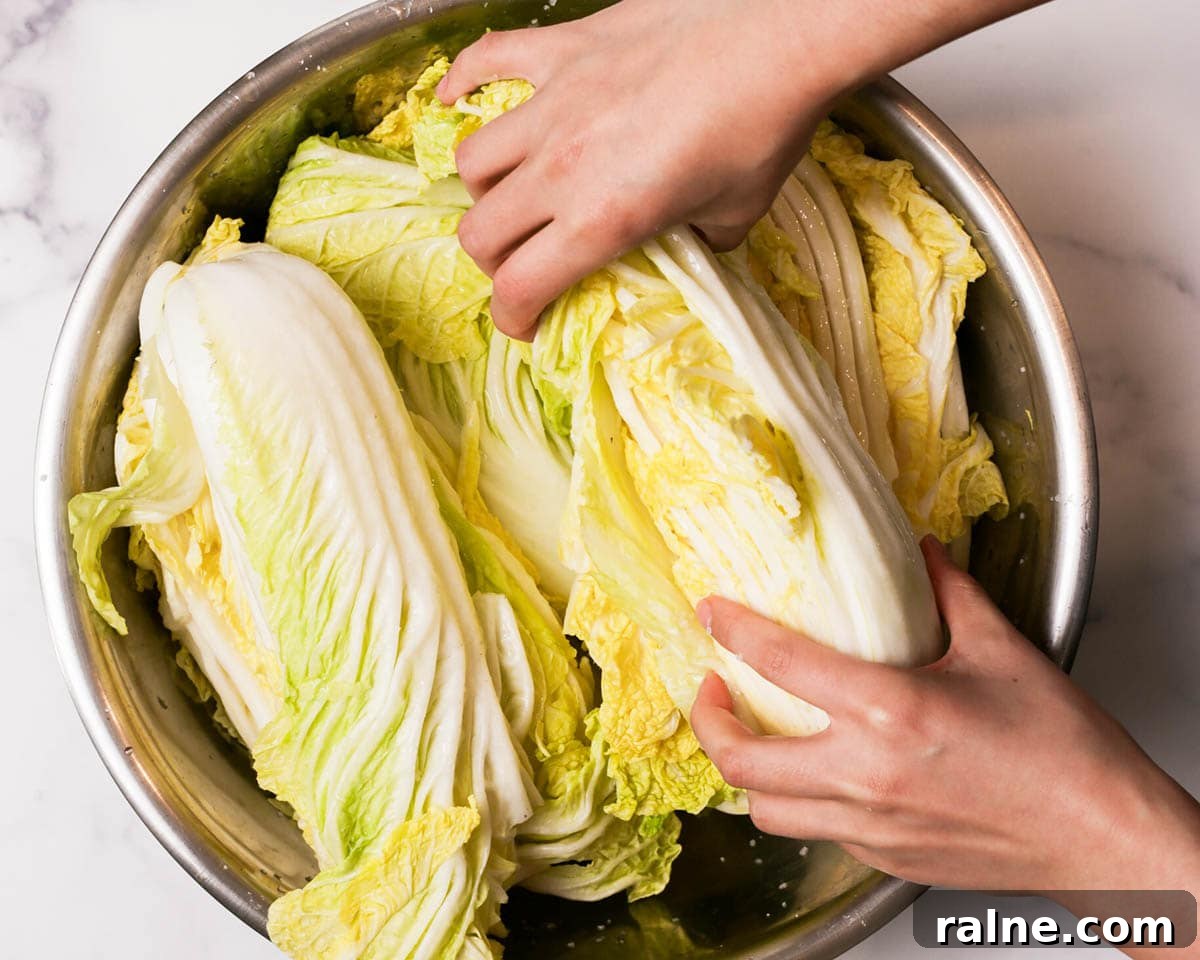
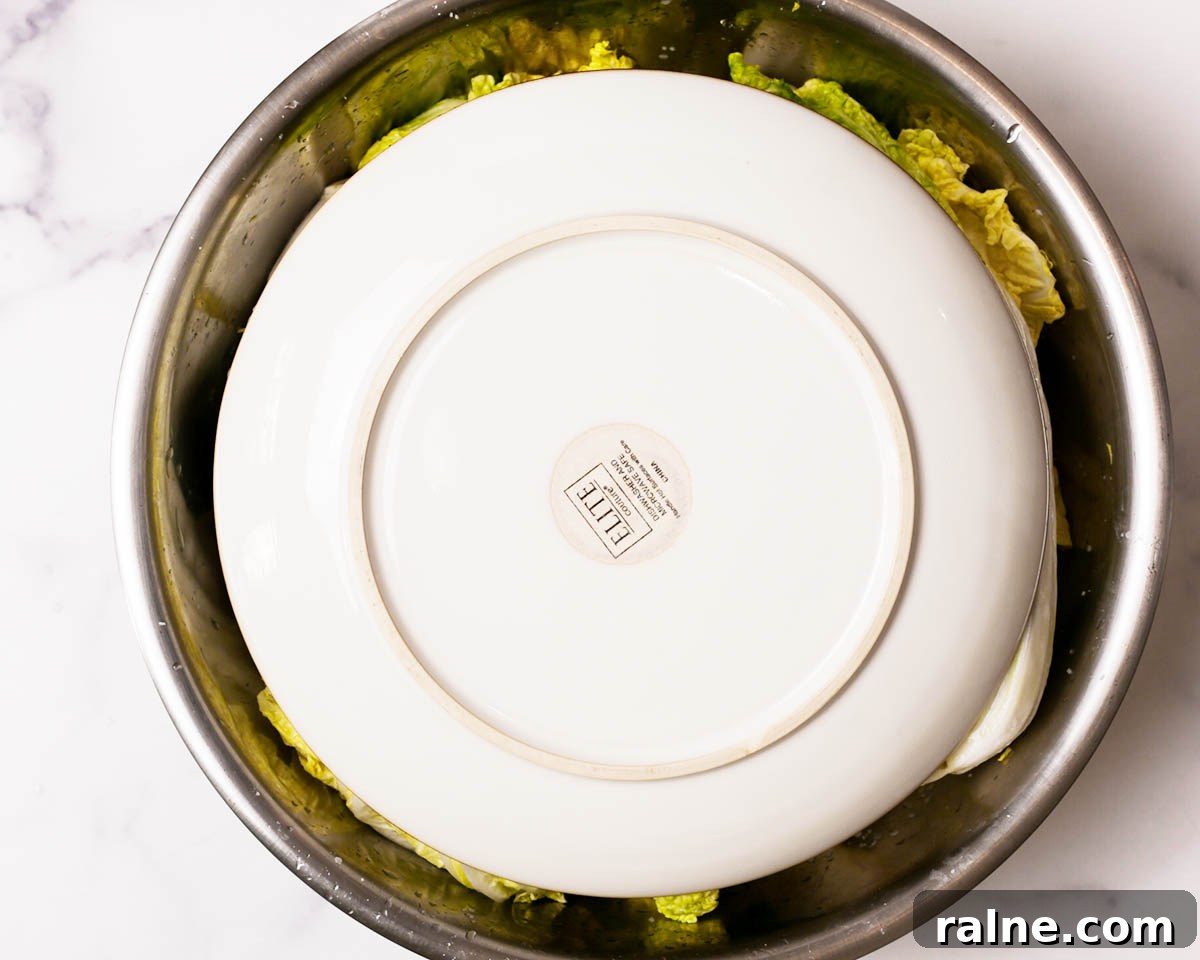
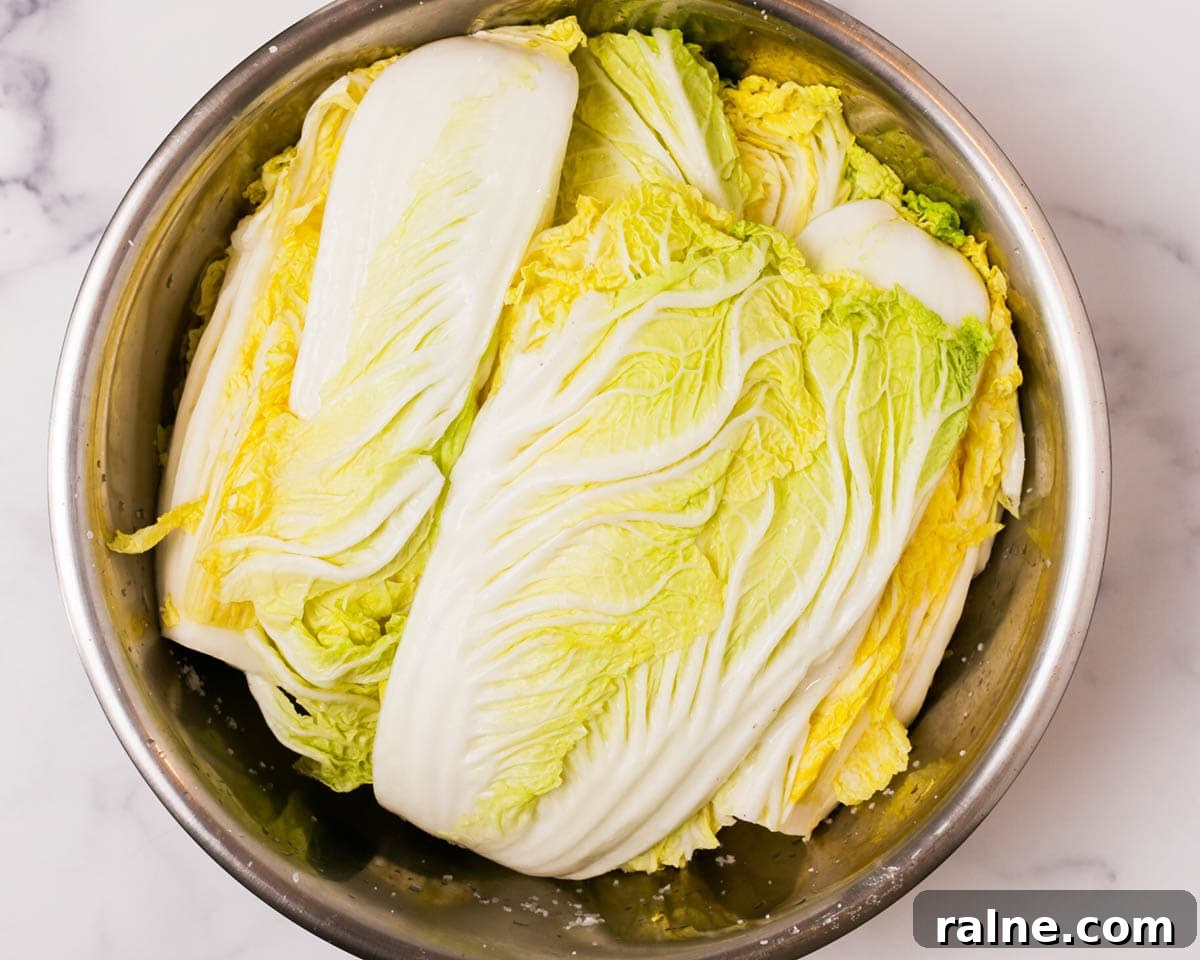
6. To test, rinse a small leaf and taste it: the stem should be well seasoned while the leaf is slightly saltier but not overpowering. If not salty enough, continue salting another 30–60 minutes.
Make the kimchi marinade:
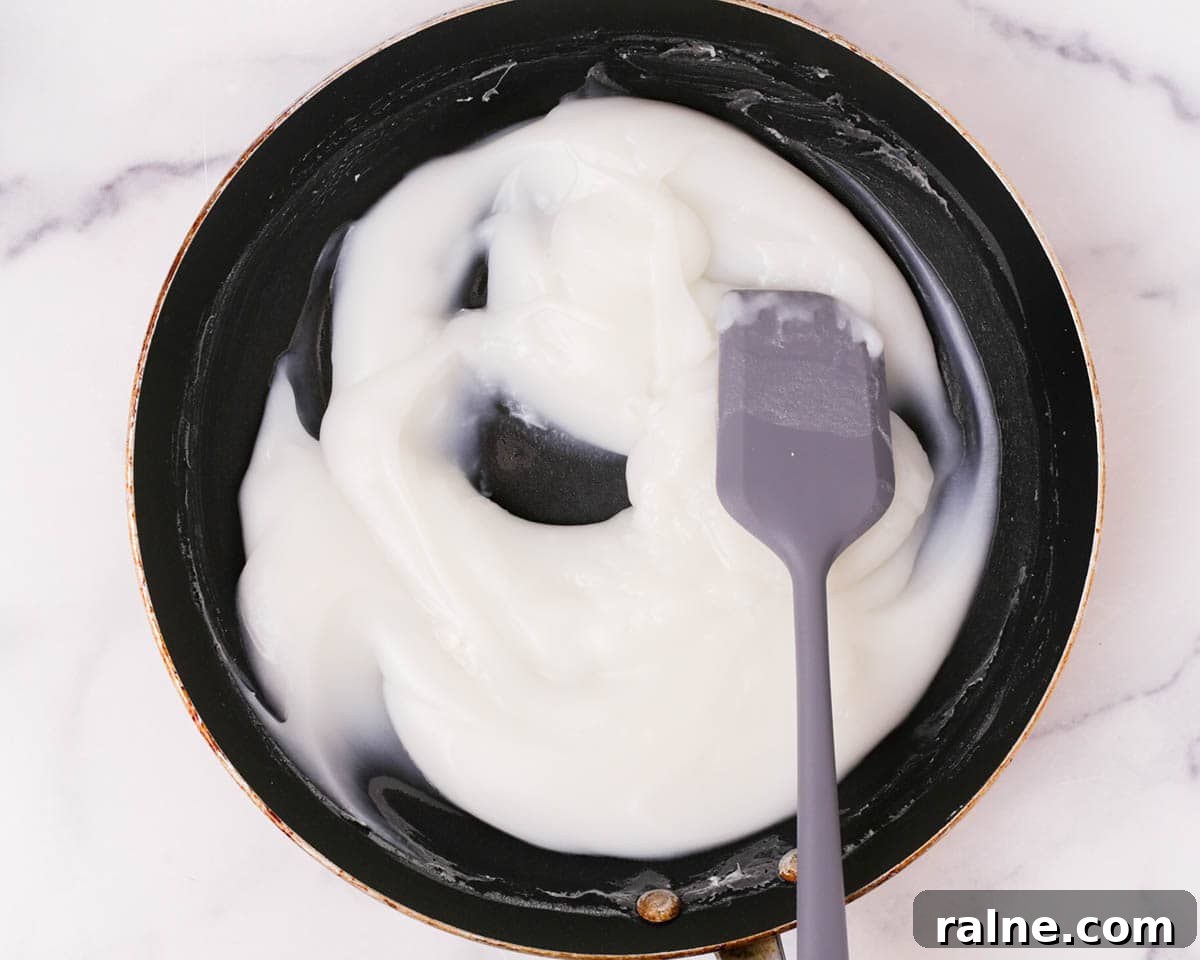
7. While the cabbage salts, whisk rice flour with water and cook over medium heat until it forms a thick, slightly translucent paste. Transfer to a bowl and cool.

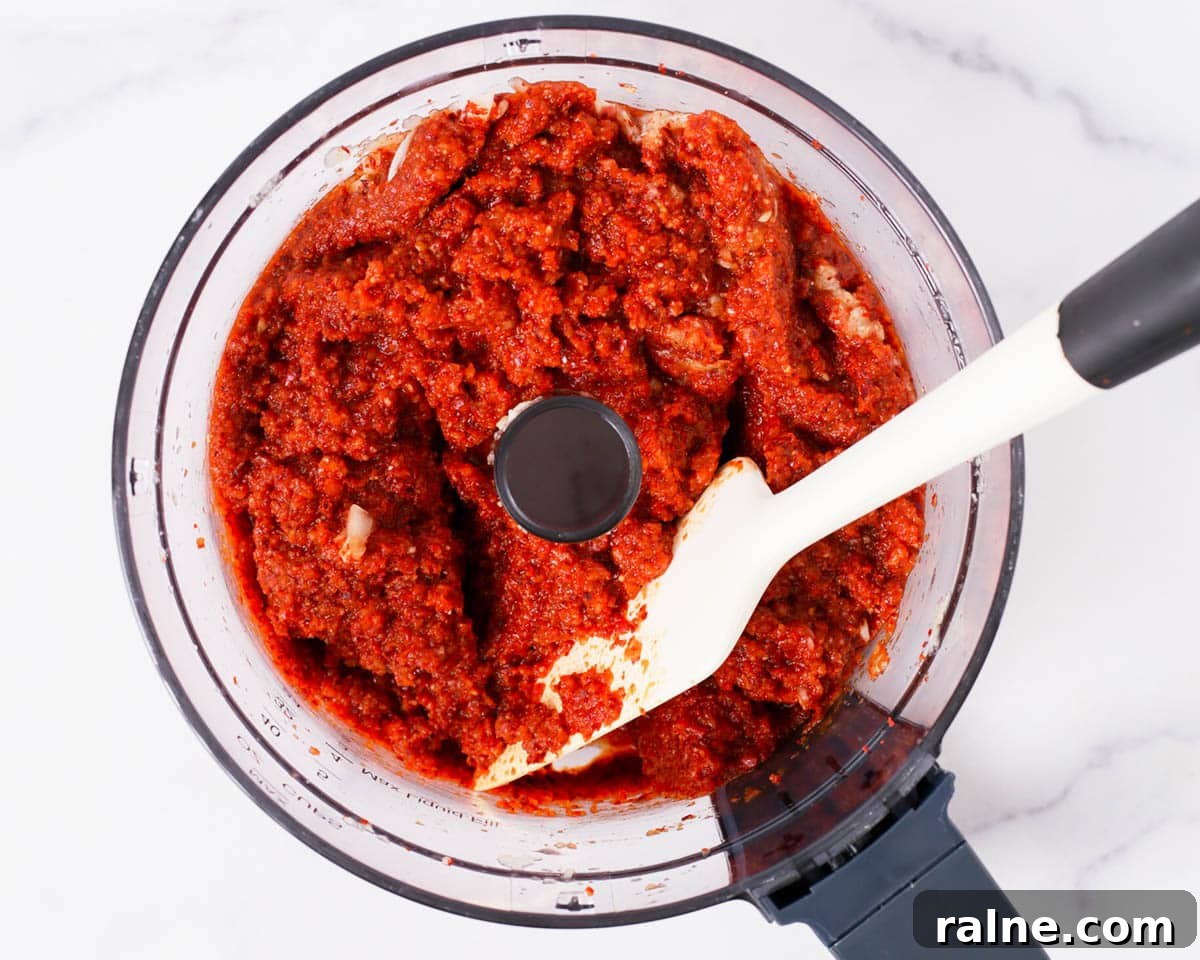
8. Blend apple (or pear), onion, garlic, ginger, and fish sauce (or saeujeot) until smooth. Add half the gochugaru and blend again. Scrape down the sides as needed.
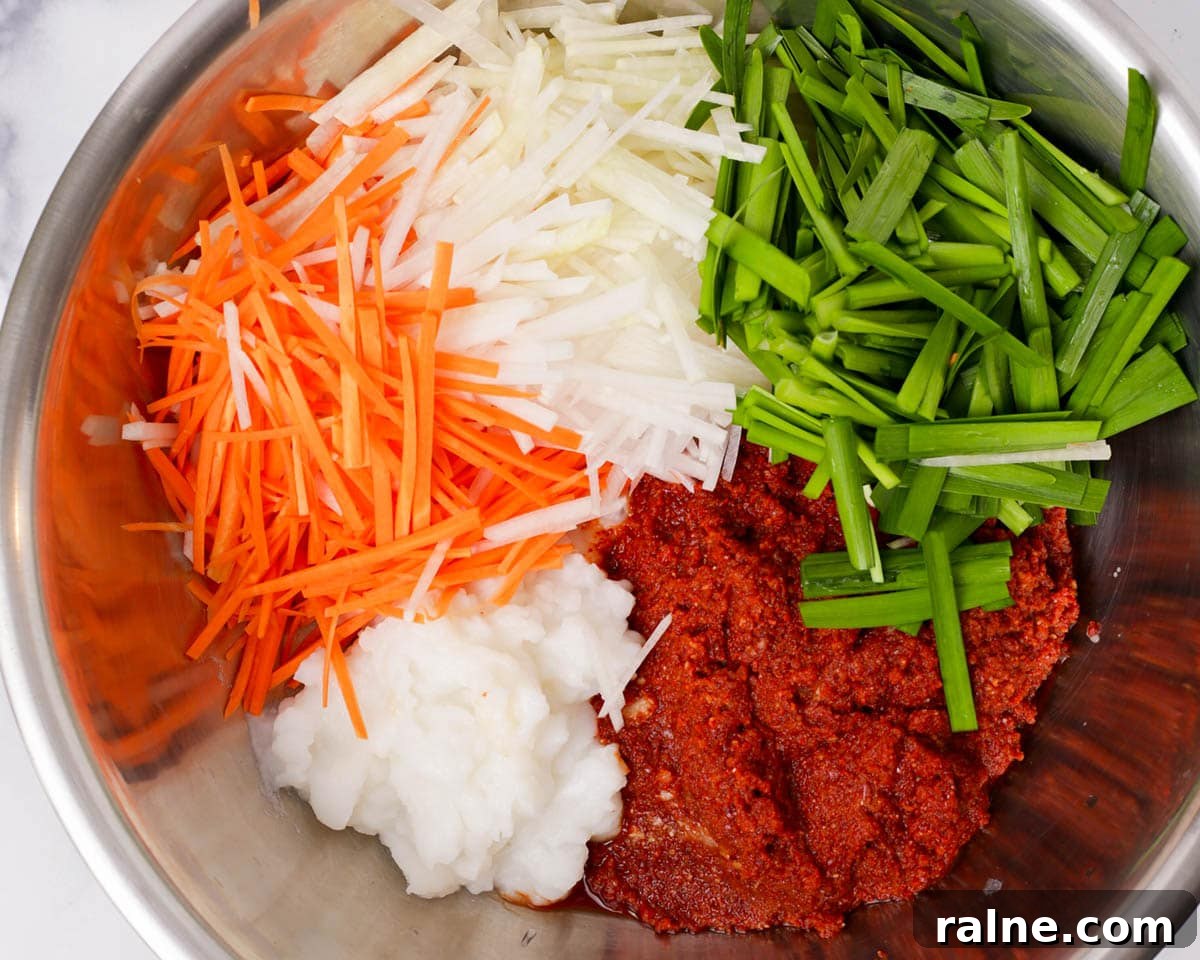
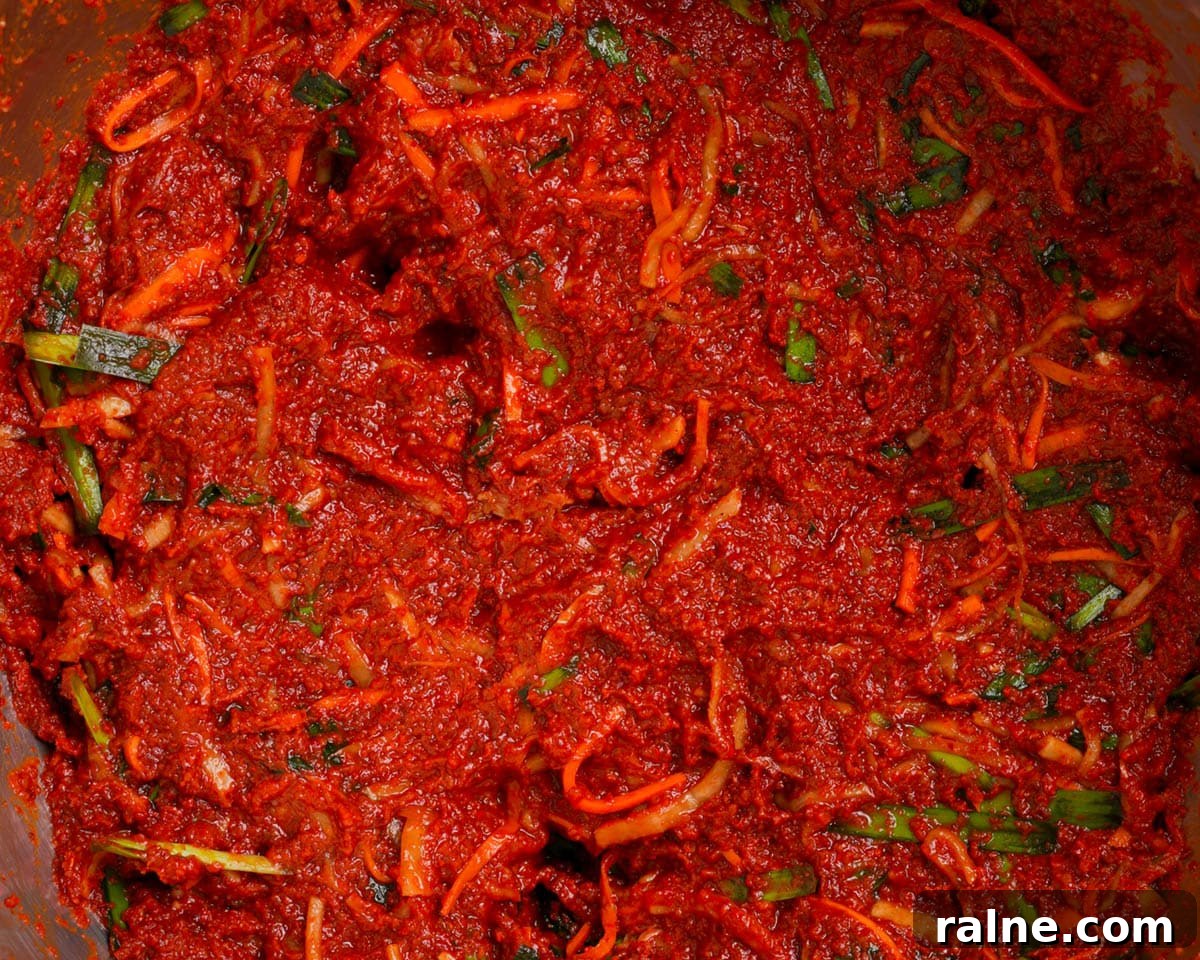
9. Combine the blended mixture with the cooled rice flour paste, remaining gochugaru, julienned radish, carrot, and chopped chives. Mix until evenly combined and set aside.
Rinse the napa cabbage:
10. Rinse the salted cabbage thoroughly to remove excess salt, getting between each leaf. Many cooks rinse in several changes of water and taste after the last rinse to confirm saltiness.
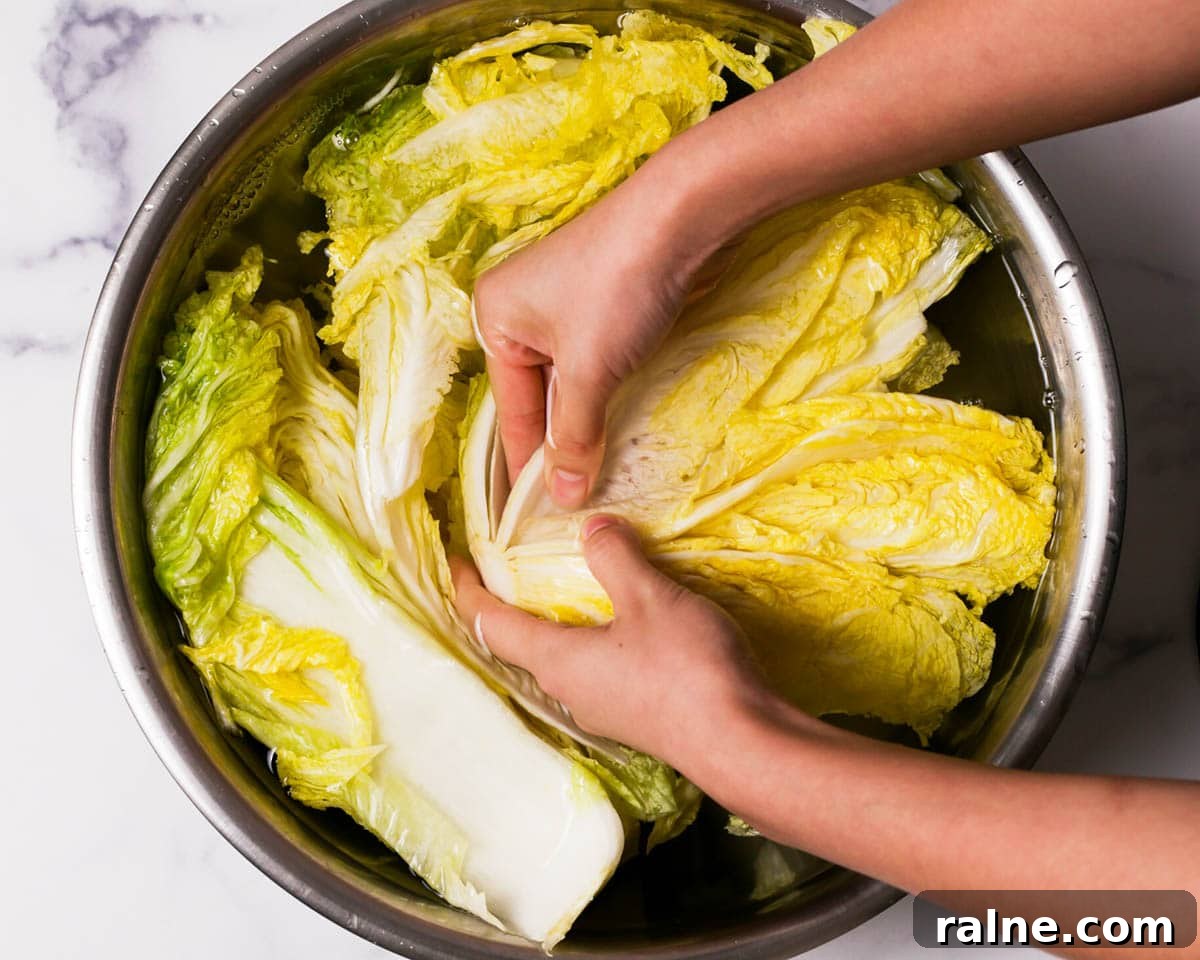
🌟 Pro tip: Rinse in a large bowl and repeat 2–3 times if needed, tasting after the final rinse.
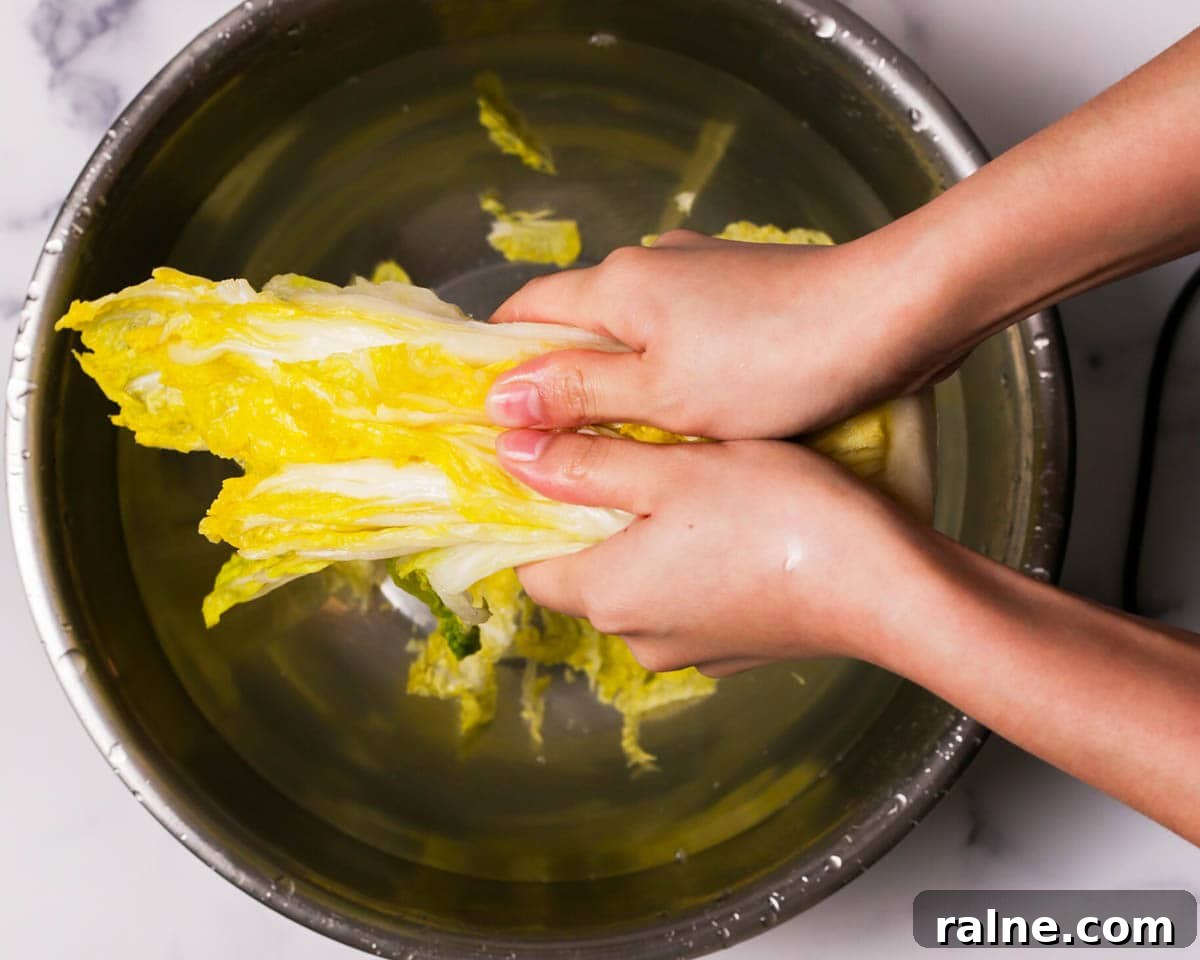
11. Gently squeeze each quarter to remove most excess water, especially from the leaves, being careful not to bruise the stems.
Marinate the napa cabbage:
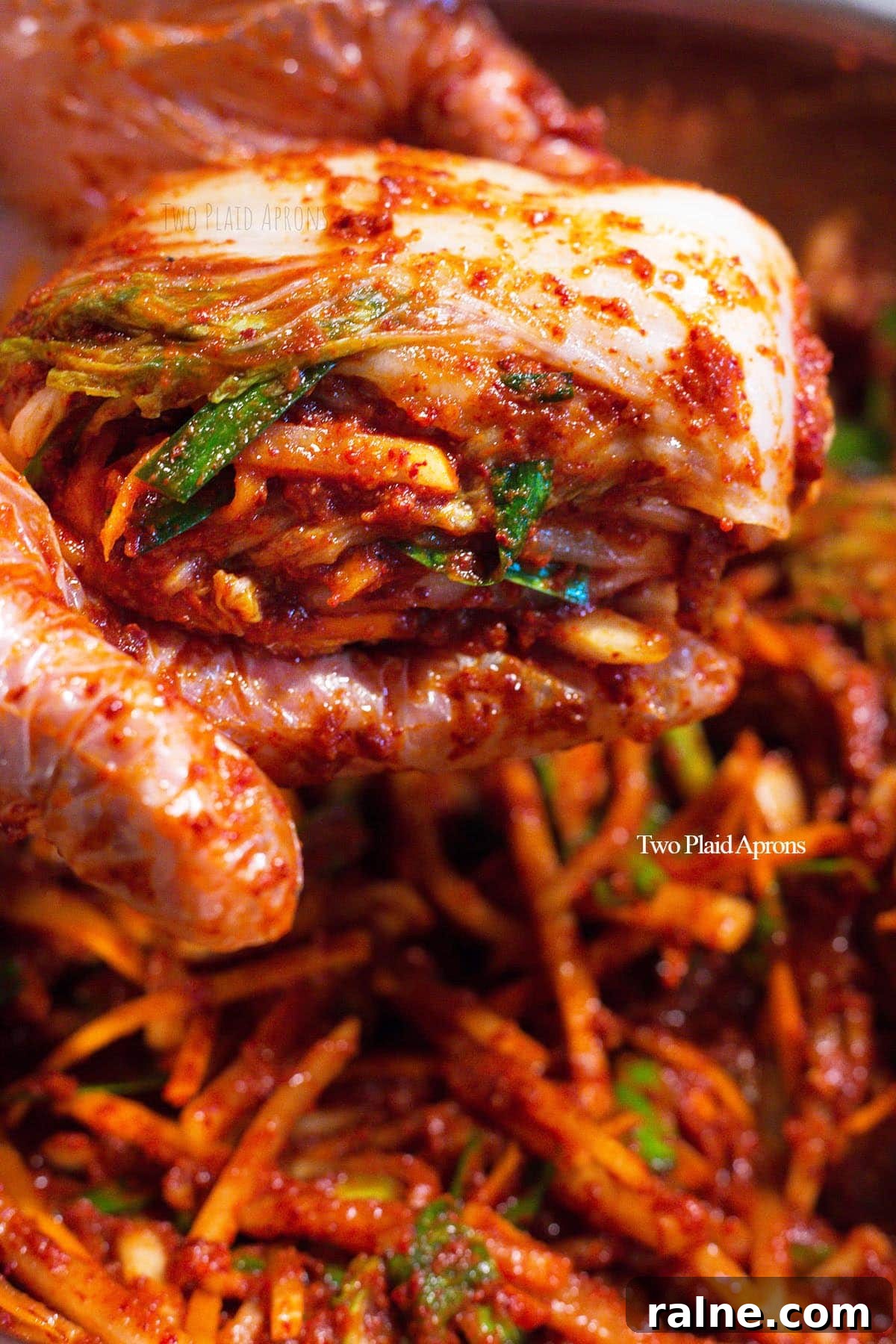
12. Wearing disposable gloves, work with one quarter at a time. Rub the marinade between each leaf and tuck some julienned veggies between layers.
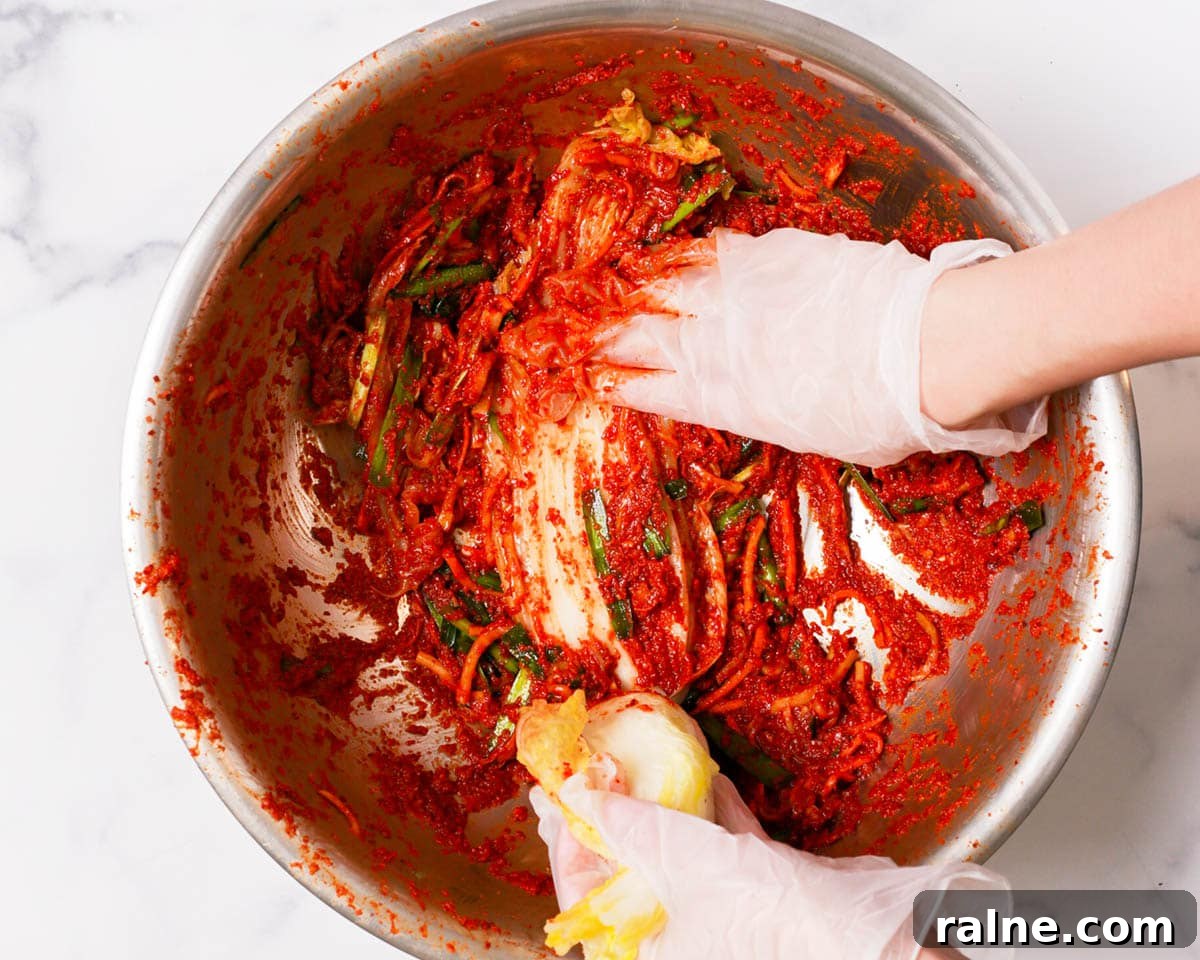
13. Fold each quarter over itself to keep it compact and repeat with remaining quarters.
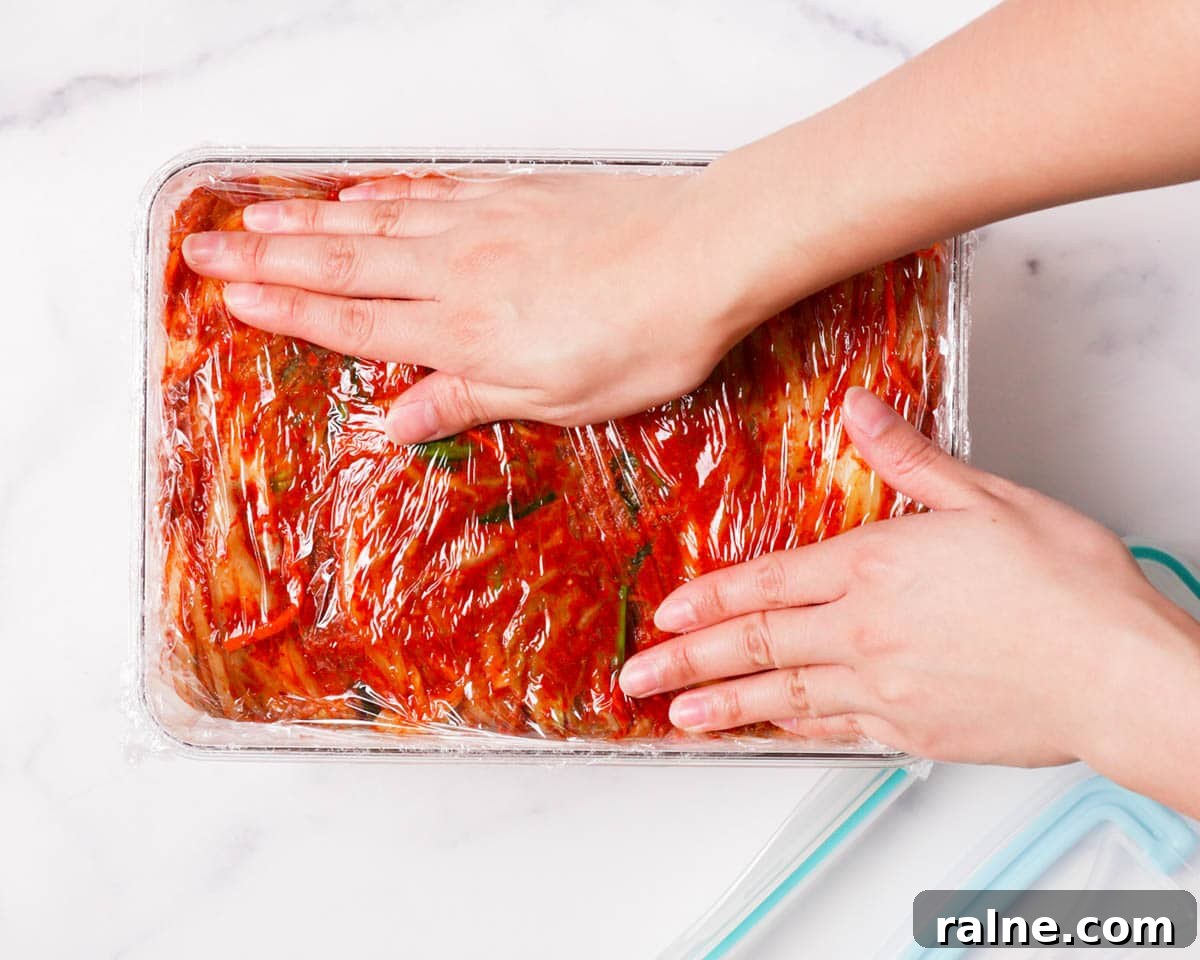
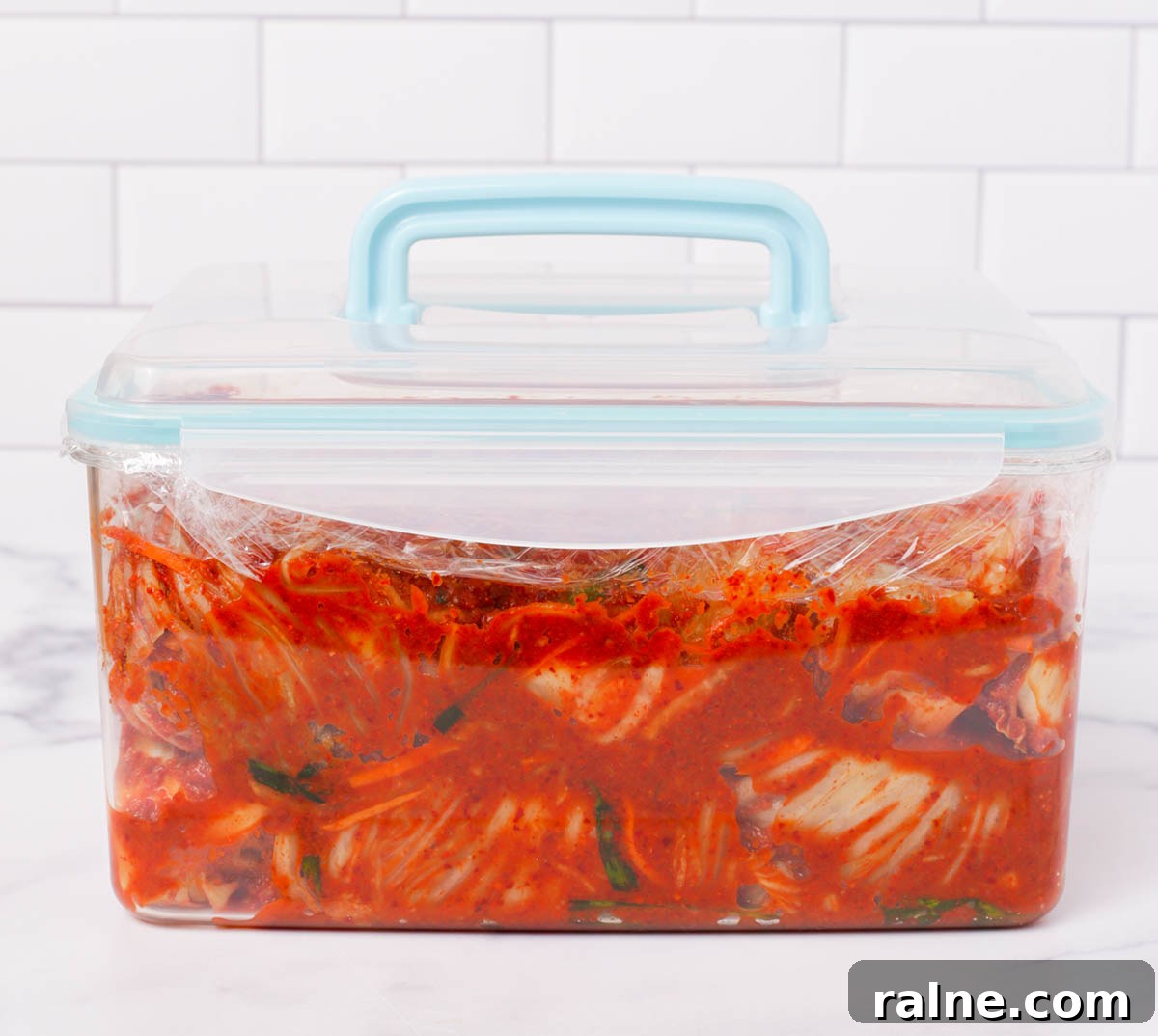
14. Pack the kimchi tightly into sterilized glass jars or BPA-free containers, leaving at least 1 inch of headspace for fermentation gases and expanding juices. If using a kimchi tote, press a sheet of cling film directly onto the kimchi to minimize oxidation.
🌟 Pro tip: Tuck cling film so it touches the kimchi to reduce air exposure.
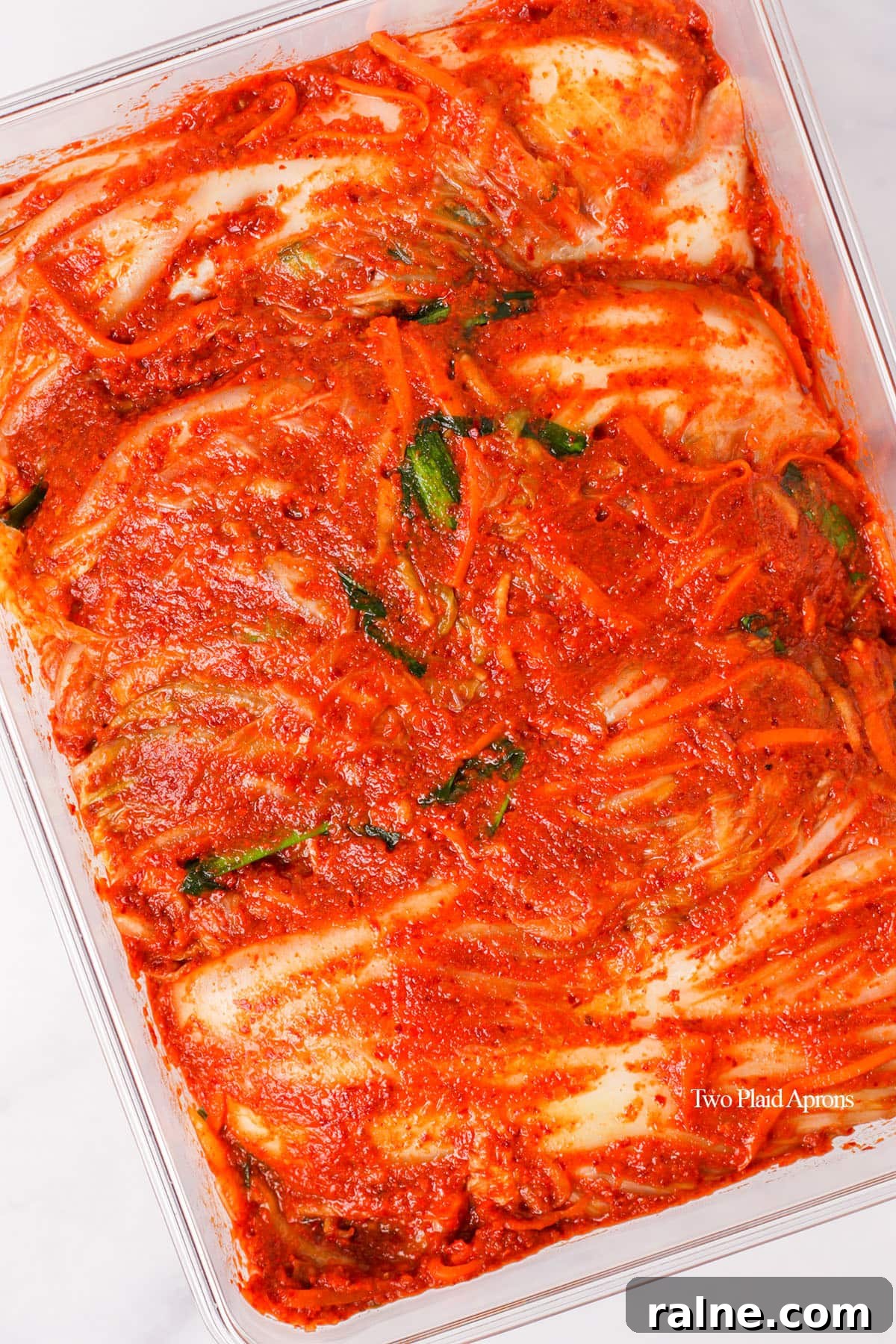
15. Enjoy the kimchi immediately, after chilling, or let it ferment to your preferred tanginess before using in cooking.
Recipe tips
- Use kosher or coarse salt for easier, more even salting.
- Wear disposable gloves when handling the paste — it stains skin and surfaces.
- Use weights to compress cabbages while salting so the brine penetrates evenly.
- Leave at least 1 inch headspace in containers to prevent overflow during fermentation.
Storage
If you prefer a more acidic, store-bought style kimchi, leave jars at room temperature for 1–2 days to jump-start fermentation, then refrigerate. For a milder, fresher kimchi, refrigerate immediately for a slower fermentation.
Store kimchi in clean, sterilized glass jars or BPA-free containers dedicated to kimchi (plastic will likely stain and retain odor). Press the kimchi down each time you use it to minimize oxygen exposure and extend shelf life.
🌟 Pro tip: Double- or triple-wrap containers in plastic bags if storing kimchi in a shared refrigerator to limit odor transfer.
How to sterilize jars
The easiest method is boiling. Submerge jars in boiling water and simmer for 10 minutes at low altitudes; add about one minute per additional 1,000 feet elevation. For large gallon jars, steam them upside-down over simmering water for 15 minutes. Use a rack to prevent direct contact with the pot bottom. Let jars cool and dry completely before filling.
FAQ
Most kimchi are at least moderately spicy. Spice level depends on the gochugaru; add fresh chiles if you want extra heat.
Properly prepared and stored kimchi can keep for six months or longer. Flavor shifts from sweet to tangy to very sour as it ferments; very sour kimchi is excellent for stews.
They’re optional but recommended. Radish, carrot, and chives add texture, sweetness, and characteristic funk.
Rinse and taste a rinsed leaf: the stem should be well seasoned while the leaf is slightly salty but not unpleasant.
Fermented, sour, or fizzy kimchi is normal. Discard kimchi with mold or severe discoloration.
No — gochugaru has a unique flavor and texture that differs from common red pepper flakes, so it’s not recommended to substitute them.
If you make this recipe, please tag us on Instagram using #twoplaidaprons or mention @two_plaid_aprons. We’d love to see your creations! 🥰
📖 Recipe

Kimchi (Napa Cabbage Kimchi)
Ingredients
For the napa cabbage:
- 8 pounds napa cabbage (about two large heads)
- Kosher salt (about 2 cups, or as needed for salting)
For the kimchi marinade:
- 1½ cup water
- ⅓ cup rice flour (regular or glutinous)
- 1 large apple, cored and cut into pieces (or Korean pear)
- 1 large onion, peeled and chopped
- 20 garlic cloves, peeled (about 3 oz / 85 g)
- 2 inch knob ginger, peeled and chopped
- ½ cup fish sauce (or ¾ cup saeujeot)
- 2 cups gochugaru (coarse), divided
Additional veggies:
- 1 pound Korean radish, peeled and julienned
- 6 oz carrot, peeled and julienned
- 4 oz Asian chives, cut into 1-inch pieces
Instructions
Clean and salt the napa cabbage:
- Remove undesirable outer leaves. Quarter each cabbage lengthwise (or trim the stem and split by hand).
- Trim excess core, rinse between leaves, and drain.
- Sprinkle salt between every leaf, concentrating around the stem. Repeat for all quarters.
- Stack quarters in a large bowl, weigh down with a heavy plate, and salt 1½–2 hours, rotating every 30–60 minutes.
- Test a rinsed leaf for seasoning; if not salty enough, continue salting 30–60 minutes more.
Make the kimchi marinade:
- Whisk rice flour into water and cook over medium heat until a thick, slightly translucent paste forms. Cool.
- Blend apple (or pear), onion, garlic, ginger, and fish sauce until smooth. Add half the gochugaru and blend again.
- Combine the blended mix with the rice flour paste, remaining gochugaru, julienned radish, carrot, and chives. Mix thoroughly.
Rinse the napa cabbage:
- Rinse salted cabbages thoroughly to remove excess salt, repeating with fresh water as needed. Taste after final rinse.
- Gently squeeze quarters to remove excess water without bruising stems.
Marinate and store:
- Wearing gloves, spread marinade between each leaf and tuck in some julienned veggies. Fold quarters to keep compact.
- Pack tightly into sterilized jars or BPA-free containers, leaving at least 1 inch of headspace. Cover with a sheet of cling film touching the kimchi if desired.
- Enjoy immediately, after chilling, or let ferment to preferred tanginess before refrigerating for storage.
Notes
- Fish sauce: Saeujeot is traditional, but fish sauce is a good substitute. If using saeujeot, use about 1½–2 tablespoons of saeujeot per tablespoon of fish sauce and adjust to taste.
- Apple or Korean pear: Juicy apples add moisture and sweetness. If using Korean pear, peel the skin.
- Wear disposable gloves when applying the marinade to avoid staining hands.
Refer to the main post above for step-by-step photos, tips, storage guidance, and FAQs.
Equipment recommended
- Wide-mouth mason jars (recommended for packing)
- Extra-large bowl
- Blender
- Disposable gloves
Nutrition
Estimated nutrition per batch (approximate): Calories 1306 kcal; Carbohydrates 253 g; Protein 65 g; Fat 39 g; Sodium high — see label for detailed breakdown.
Tried this recipe? Mention @two_plaid_aprons or tag #twoplaidaprons on Instagram!