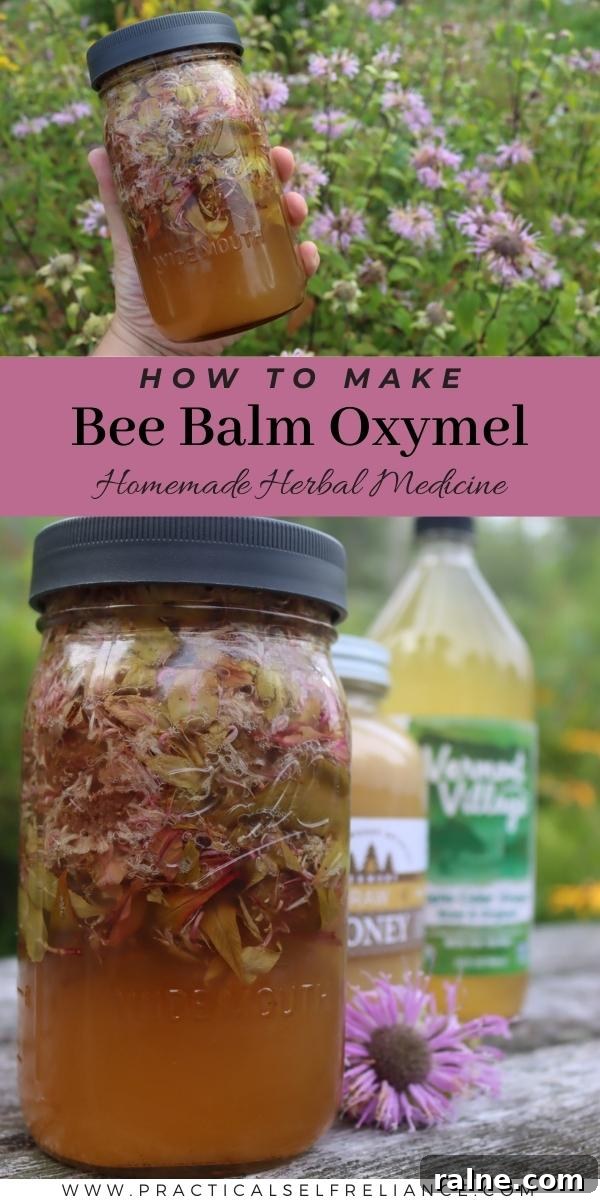
Bee balm oxymel is easy to prepare and stores well, making it a handy herbal remedy for soothing coughs and sore throats throughout cold and flu season.
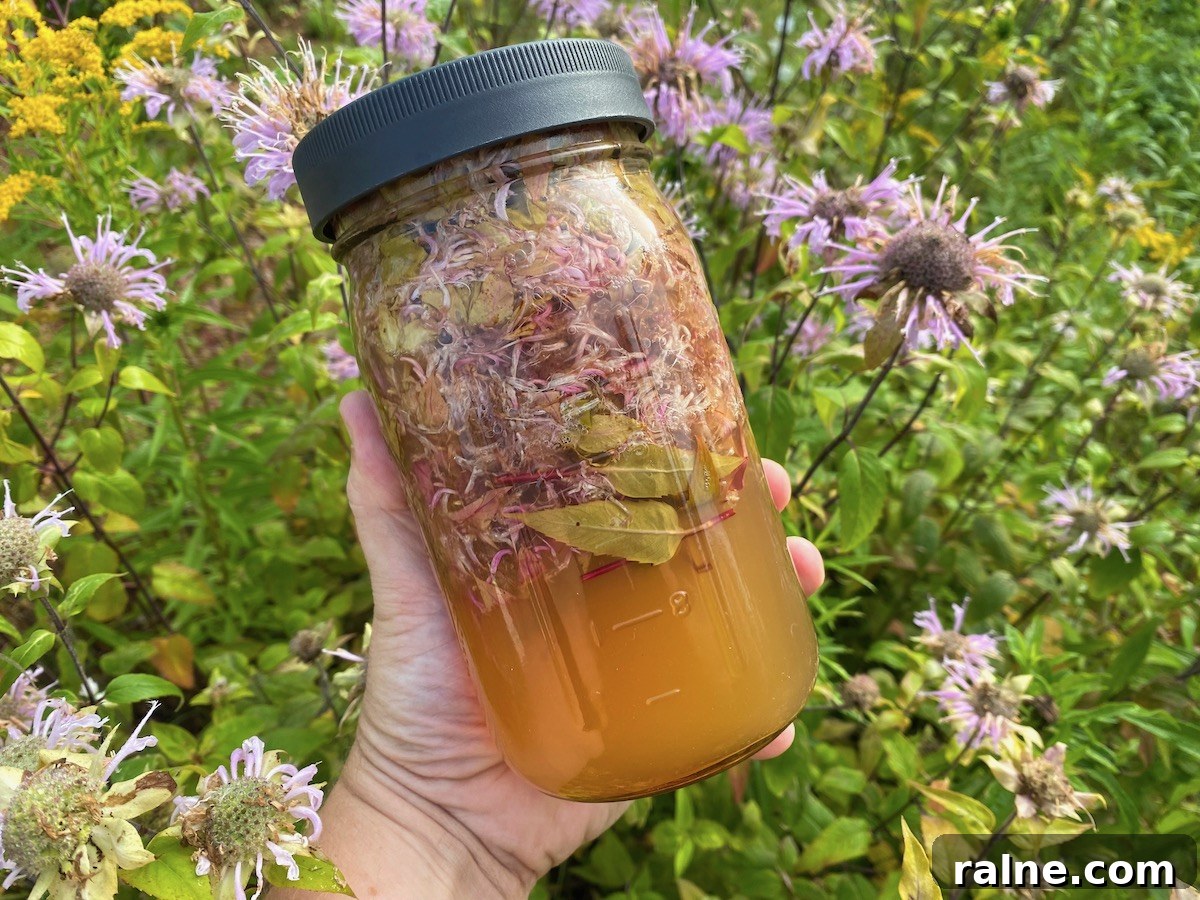
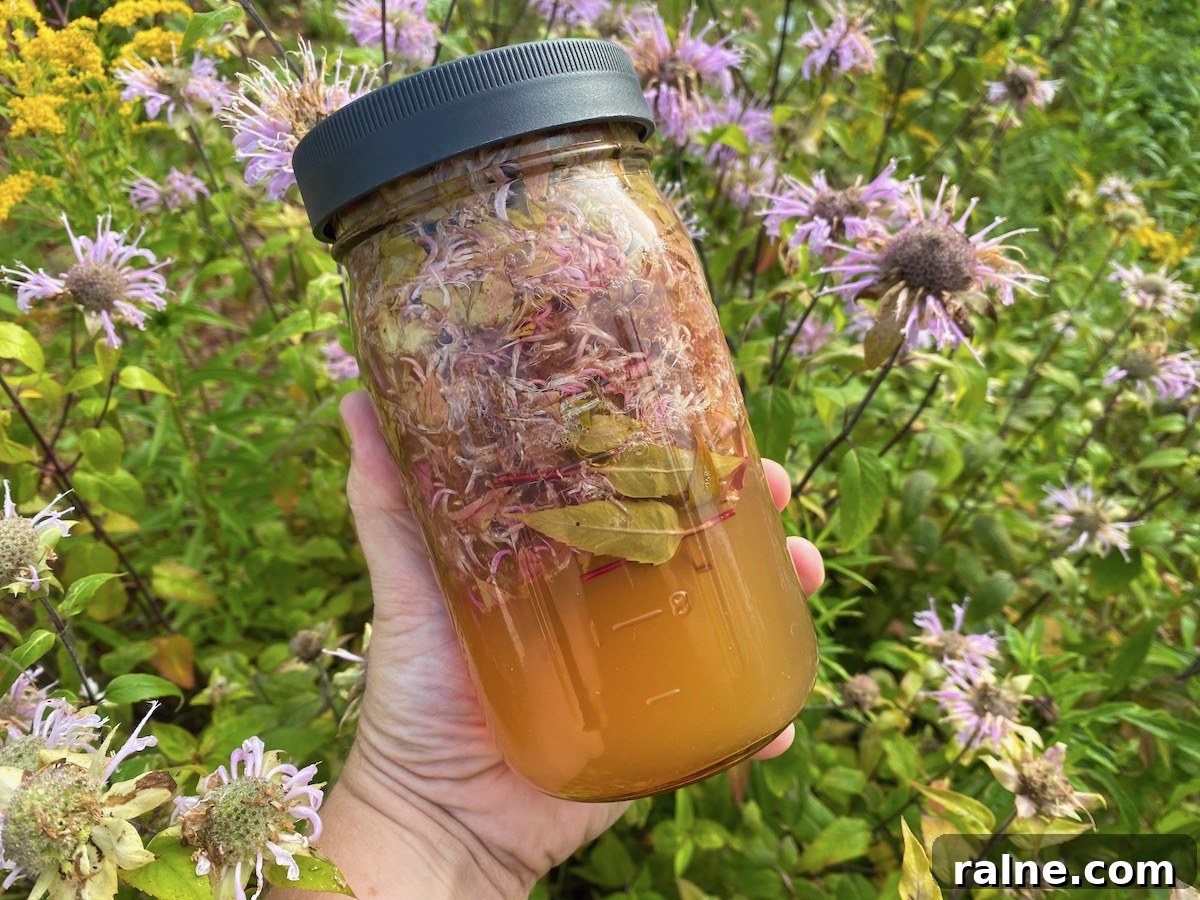
Bee balm (Monarda sp.) is a brightly flowering native herb common in gardens and the wild across the United States. Its leaves and blossoms are easy to harvest, which makes bee balm a frequent ingredient in simple home remedies like this soothing oxymel.
All species of bee balm share similar medicinal qualities, from the delicate wild bergamot (Monarda fistulosa) to the cultivated scarlet bee balm (Monarda didyma). The plant’s aroma and flavor recall mint and oregano, and both leaves and flowers can be used in preparations.
Traditionally used to calm coughs, sore throats, and respiratory congestion, bee balm also has calming effects on the nervous system and can ease mild anxiety. In an oxymel, a mild spicy herbaceous quality helps open the sinuses while honey soothes and coats the throat.
What is an Oxymel?
An oxymel is an ancient herbal preparation made from vinegar and honey, often infused with medicinal herbs. It’s essentially an alcohol-free tincture: the vinegar extracts water-soluble compounds like tannins and bitters, while honey adds antimicrobial and anti-inflammatory benefits and helps preserve the mixture. Apple cider vinegar with the “mother” is commonly used today.
Oxymels can be made with many herbs and edible ingredients, including garlic, citrus, horseradish, ginger, and elderberry. Fire cider is a well-known example used to relieve coughs and congestion.
Types of Bee Balm (Monarda sp.)
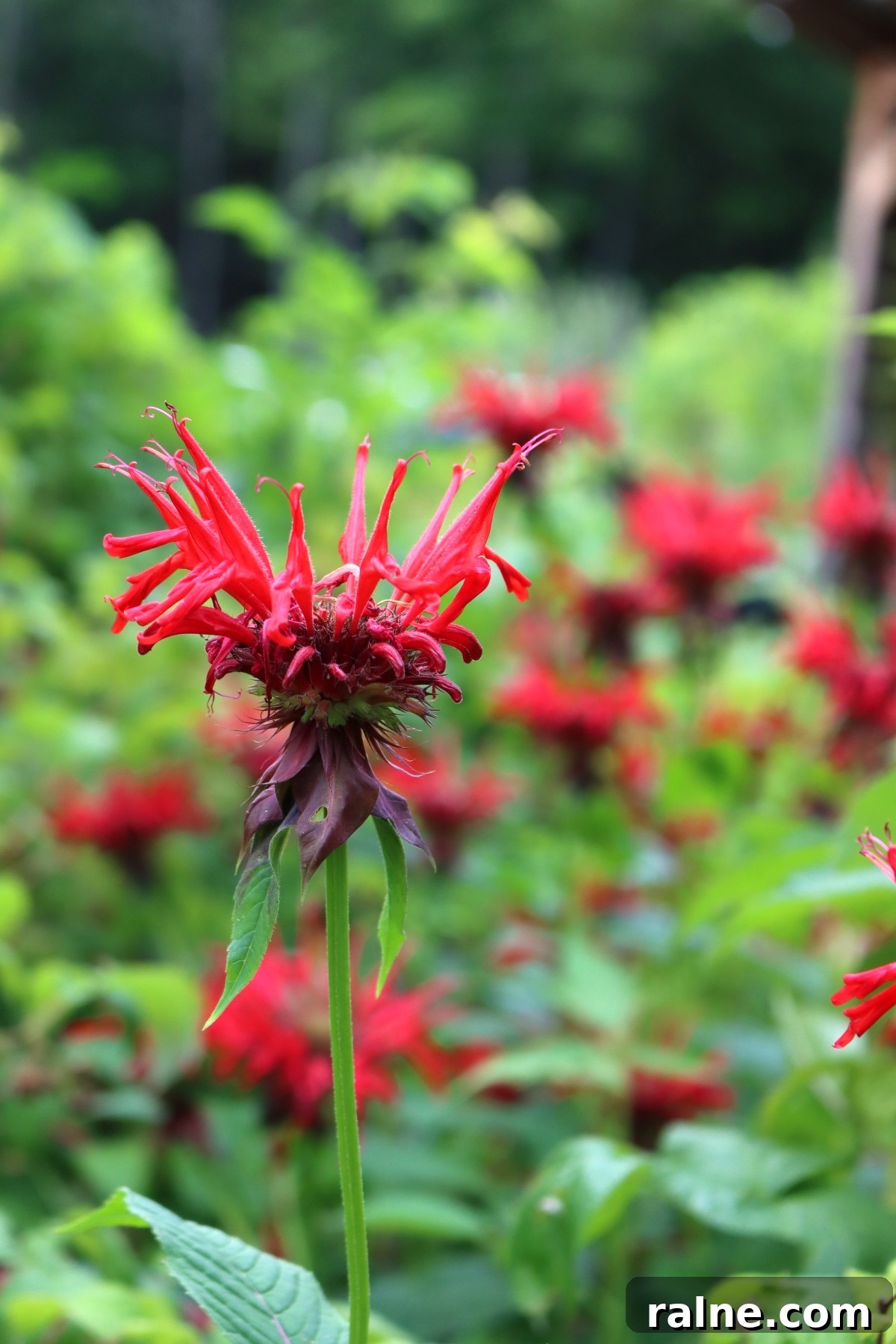
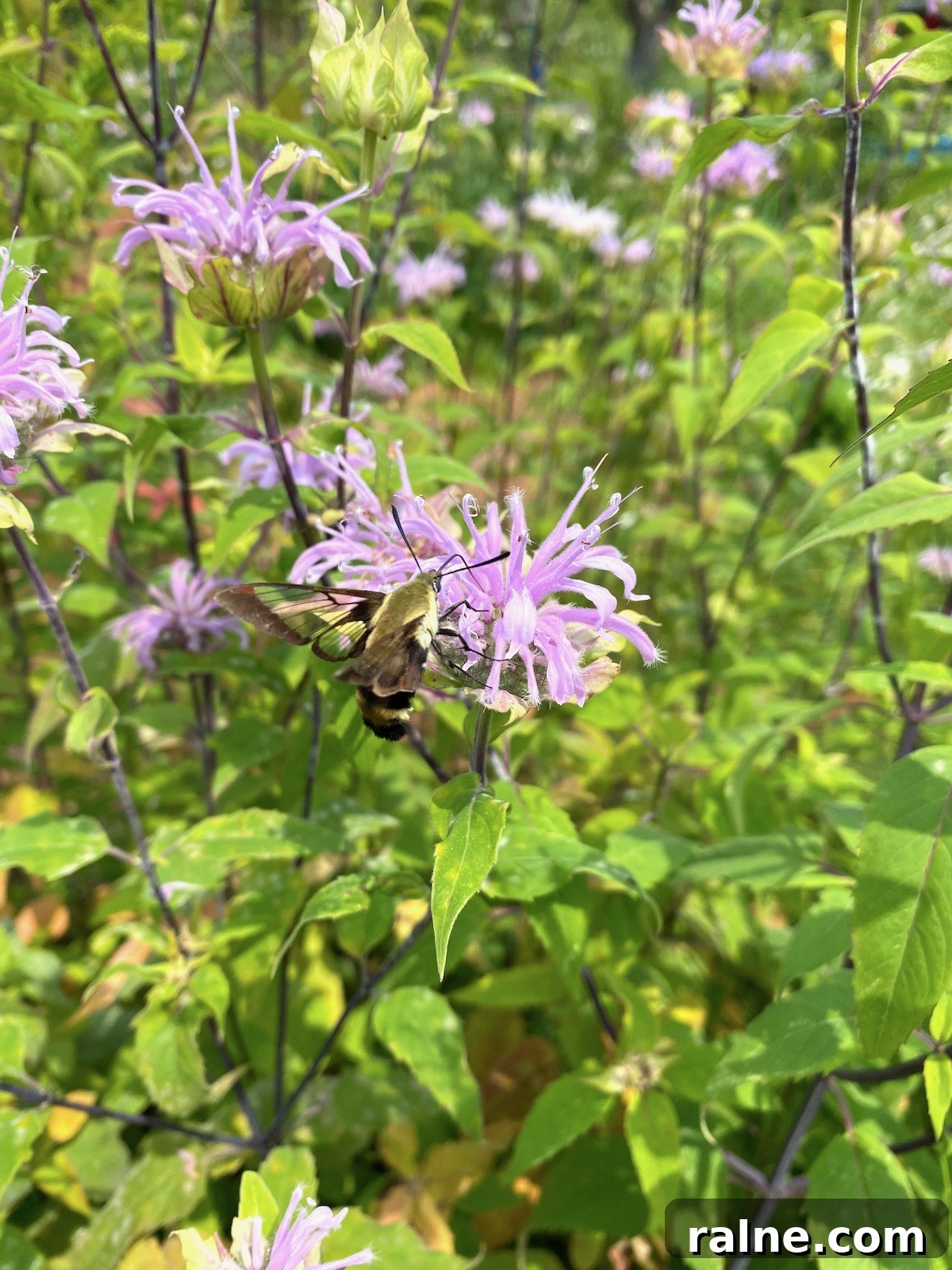
Both cultivated and wild Monarda species have similar medicinal uses and can be used to make oxymels. Monarda didyma, the scarlet bee balm, is commonly grown in gardens and produces vibrant red flowers. Monarda fistulosa, wild bergamot, grows naturally in many areas and bears purple blossoms with a slightly stronger flavor.
This vigorous species frequently escapes cultivation and can be foraged where it grows wild, or grown easily from seed for a reliable home supply.
Bee Balm Medicinal Uses
Bee balm is prized for its antimicrobial and soothing properties, making it useful during cold and flu season. It can ease sore throats, calm coughs, and relieve mild congestion. The herb also supports digestion—helping with bloating, indigestion, and nausea—and its antispasmodic action may reduce menstrual cramp pain.
Additionally, bee balm acts as a nervine, gently calming the nervous system and helping with anxiety and stress in mild cases. Note: never give honey to infants under one year due to the risk of infant botulism.
Making Bee Balm Oxymel
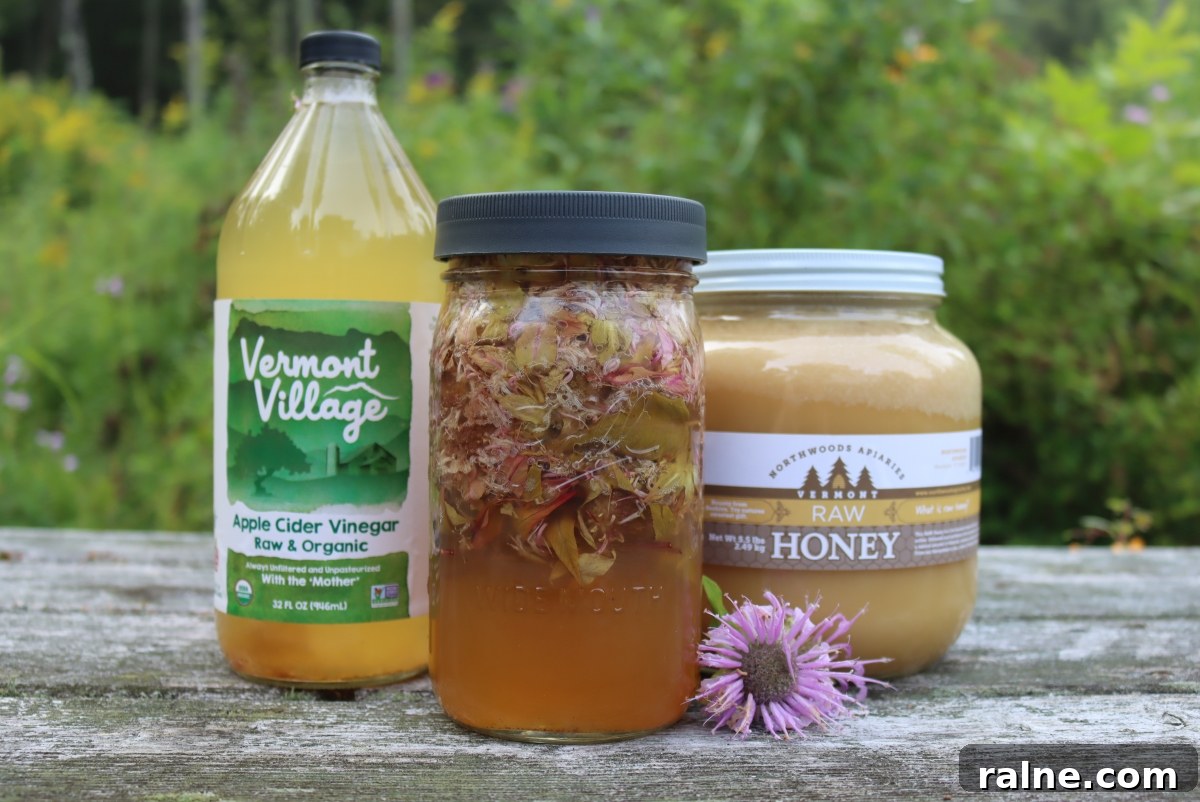
Preparing a bee balm oxymel is simple and requires only a few ingredients and tools. You’ll need:
- Fresh or dried bee balm (flowers and leaves; avoid woody stems)
- Raw honey, preferably local
- Apple cider vinegar with the mother
Basic equipment: a mason jar and a fine mesh strainer. Plastic or BPA-free lids are preferable to metal lids during steeping, as vinegar can corrode metal.
How to make it:
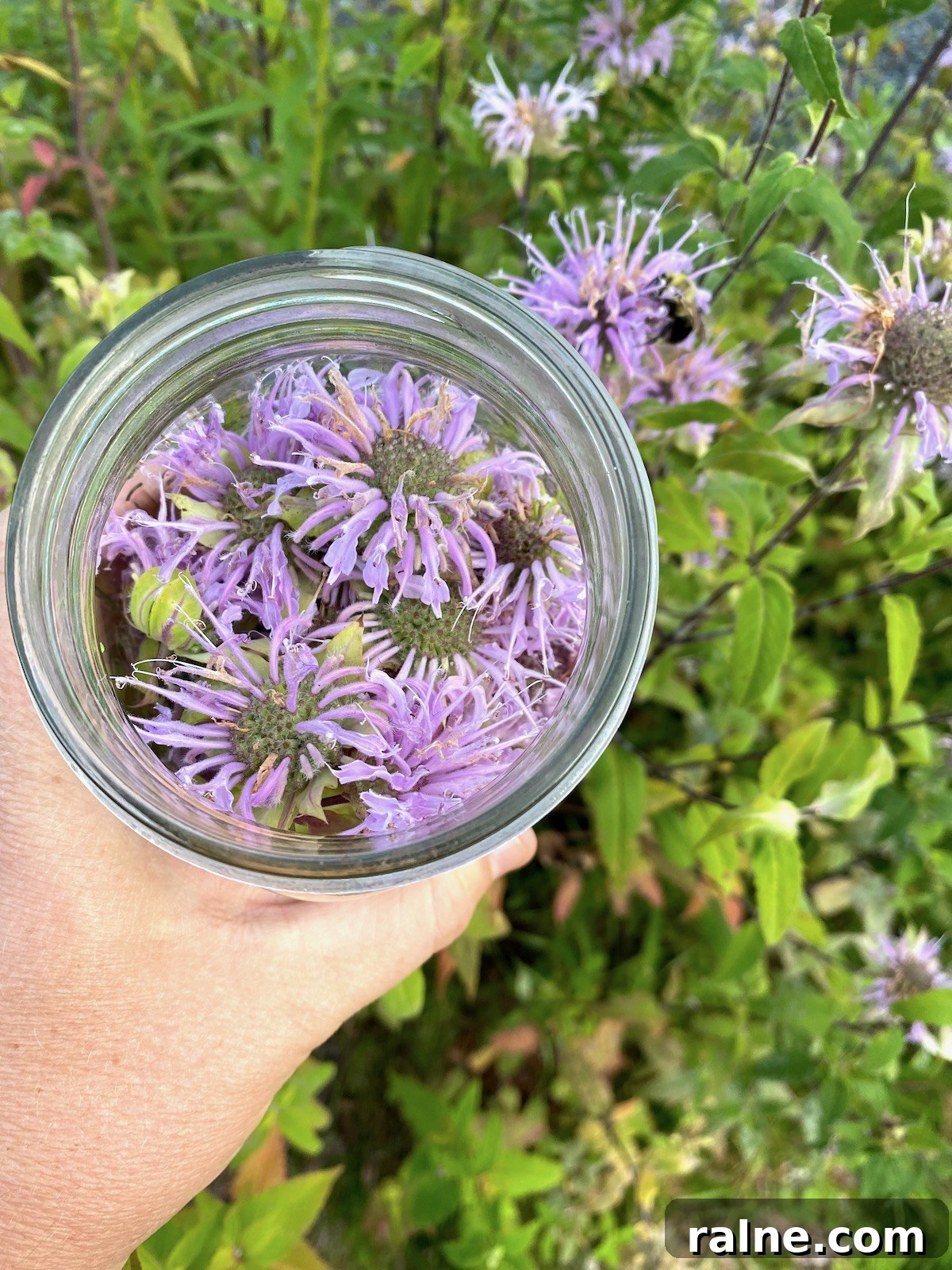
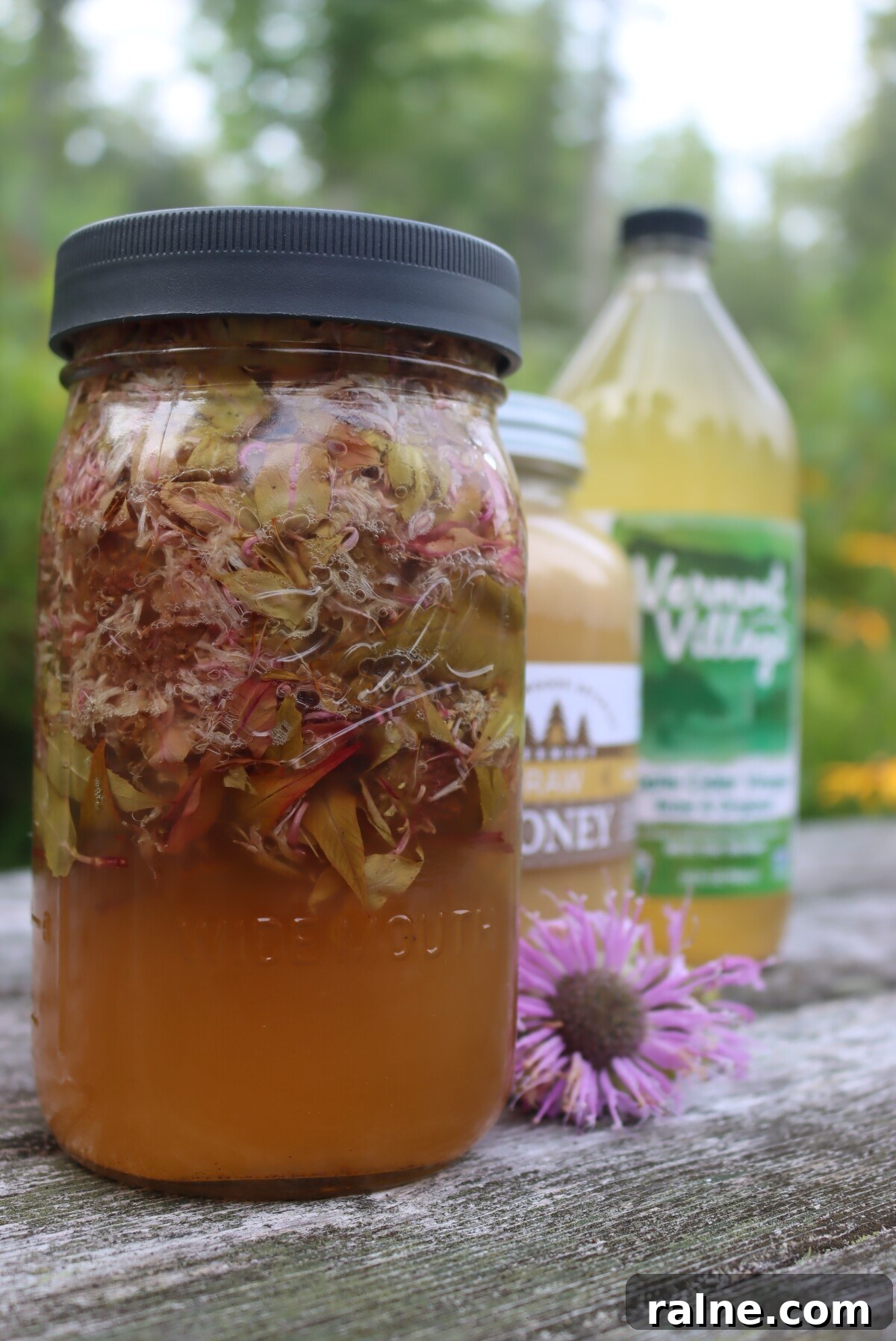
- Fill the jar half to three-quarters full with fresh bee balm (or about one-quarter full if using dried material).
- Add honey and vinegar. Ratios vary: 2:1 honey-to-vinegar for a sweeter oxymel, or 1:1 for a balanced flavor. For 1:1, fill the jar halfway with honey, then top with apple cider vinegar.
- Screw on the lid tightly and shake until ingredients are combined.
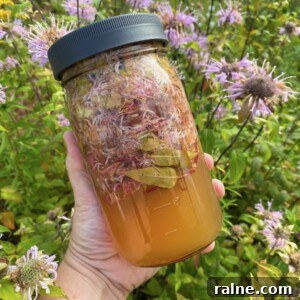
- Store the jar in a cool, dark place for 4–6 weeks, shaking occasionally to redistribute the herbs.
- When ready, strain through a fine mesh sieve into a clean jar with a plastic lid, label it, and store in a cool, dark spot.
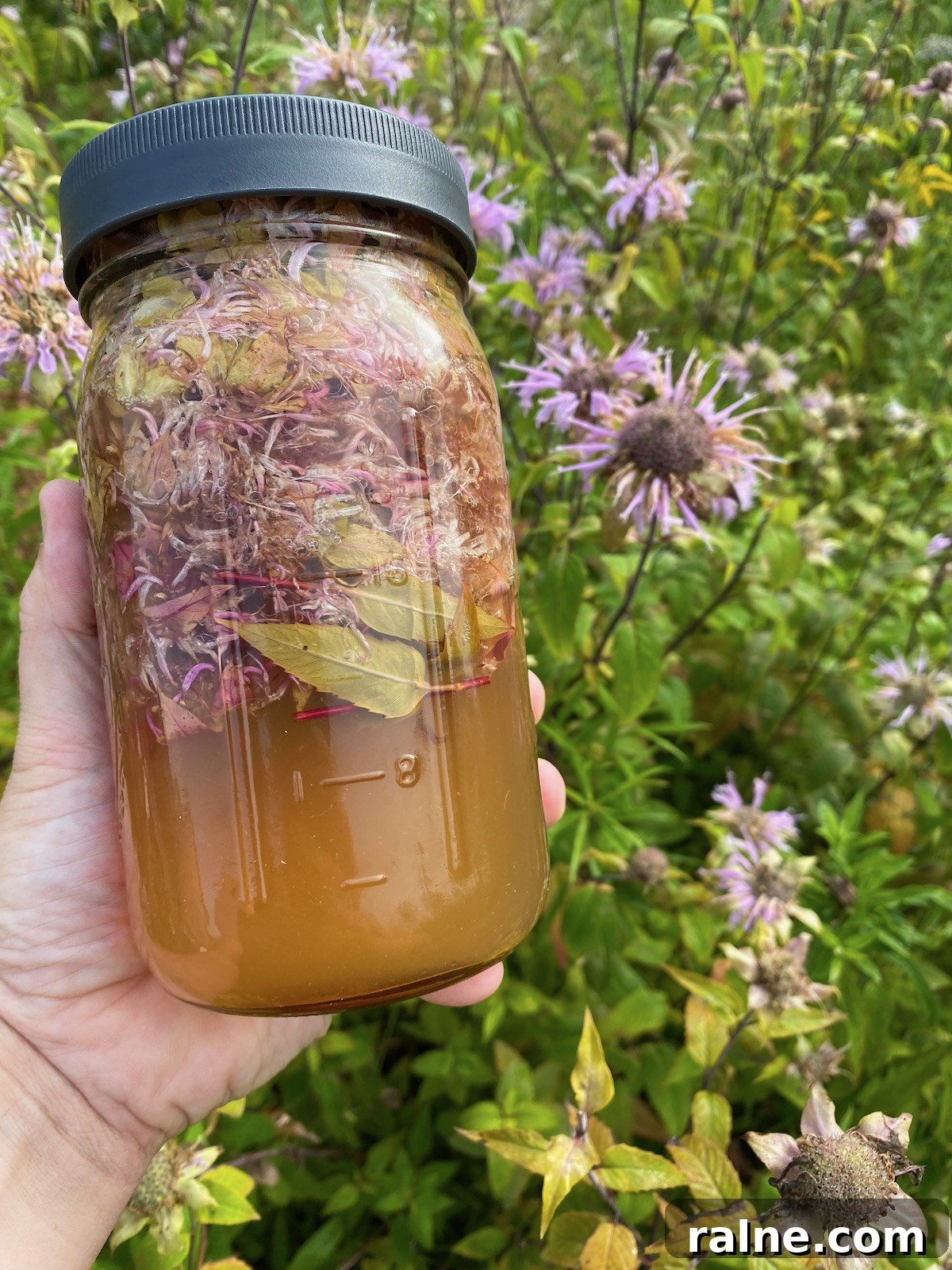
The oxymel will be most potent for about six months; kept cool and dark it may retain usefulness longer. If you have a cellar or consistently cool pantry, store it there for best results.
How to Use Bee Balm Oxymel
There aren’t strict rules, but a common adult dose for sore throats is one tablespoon, three times daily. Reduce the amount for children and the elderly as needed. You can also stir a tablespoon into sparkling water for a refreshing, shrub-style drink.
Ways to Use Bee Balm
Bee balm’s pleasant flavor and gentle medicinal profile make it useful in many forms: teas, tinctures, oxymels, savory dishes (it can substitute for oregano), and even fermented beverages. It’s also suitable for poultices and simple syrups.
Below is a concise recipe card with equipment, ingredients, and instructions to make one jar of bee balm oxymel.
Bee Balm Oxymel
Equipment
- Quart mason jar (wide mouth)
- Fine mesh strainer
Ingredients
- Raw honey, local if possible
- Apple cider vinegar, with the mother
- Fresh or dried bee balm (flowers and leaves)
Instructions
- Add bee balm to a mason jar. Fresh: fill the jar 1/2 to 3/4 full. Dried: fill about 1/4 full.
- For a 1:1 ratio, fill the jar halfway with honey, then add apple cider vinegar to reach the top of the jar.
- Screw on the lid tightly and shake the jar vigorously to combine.
- Let the jar steep in a cool, dark place for 4–6 weeks, shaking occasionally.
- Strain the oxymel through a fine mesh sieve into a clean jar with a plastic lid. Label it.
- Store in a cool, dark place. Use within six months for best potency.
Summer Herbal Remedies
If you enjoy making oxymels and herbal preparations, try other DIY remedies this season such as yarrow tincture, elderflower vinegar, nasturtium tincture, or plantain salve.
- Yarrow Tincture
- Elderflower Vinegar
- Nasturtium Tincture
- Plantain Salve
Herbal Guides
For those new to herbalism, in-depth guides can help you learn about medicinal plants, immune-supporting herbs, and common herbal preparations. These resources cover how to identify, harvest, and use herbs safely at home.
- 100+ Medicinal Plants (and How to Use Them)
- 20+ Immune Boosting Herbs
- 20+ Herbal Preparations for Medicine Making
- 18+ Herbal Remedies Anyone Can Make at Home
- 16+ Medicinal Trees for Your Herbal Medicine Chest