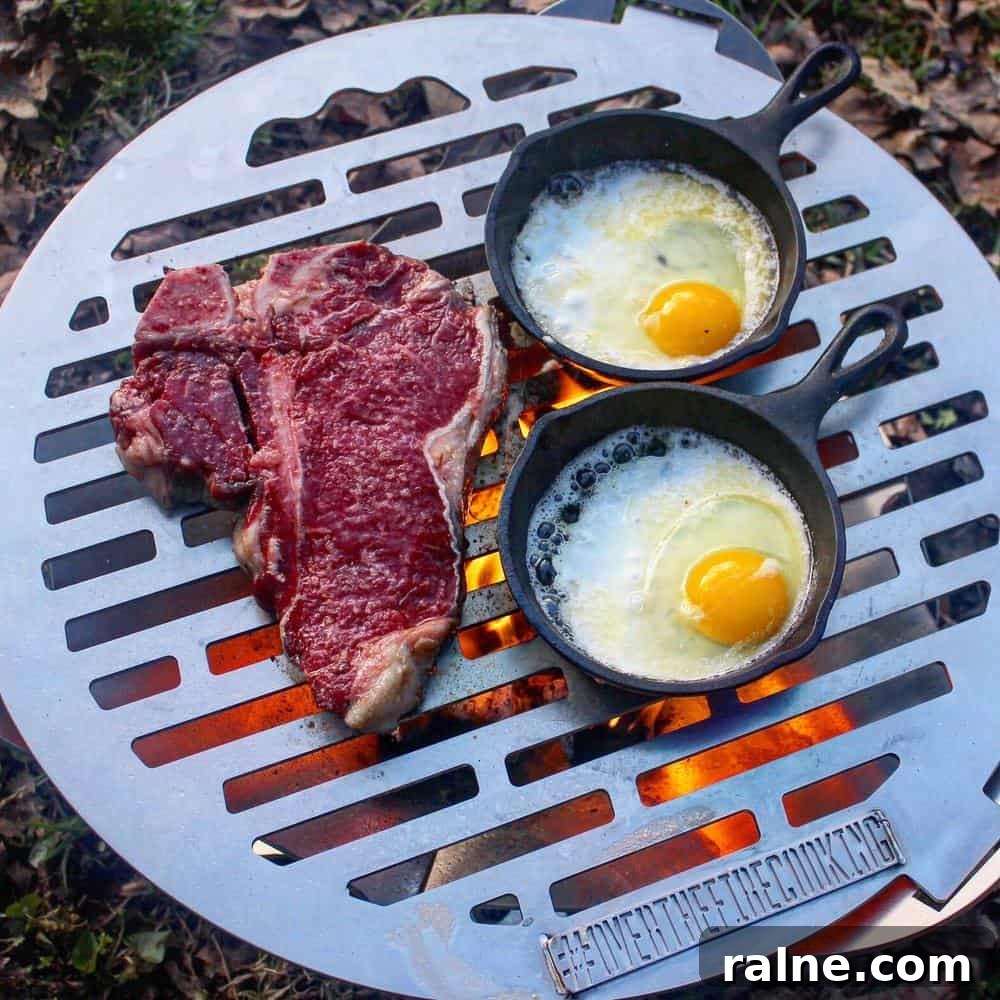
Let’s be honest — cooking eggs over a campfire should be easy. It’s just eggs, right? Yet many of us have struggled: eggs that stick, broken yolks, burnt bottoms, or unintended scramble. If that sounds familiar, you’re in the right place.
Cooking eggs over a campfire is simple when you know a few reliable tricks.
Below are five practical tips that help you avoid the common pitfalls of campfire egg cooking. With these, your cast iron skillet will produce perfectly cooked eggs more consistently. Grab your skillet and get your fire ready — let’s make great eggs.
1. Use Plenty of Butter
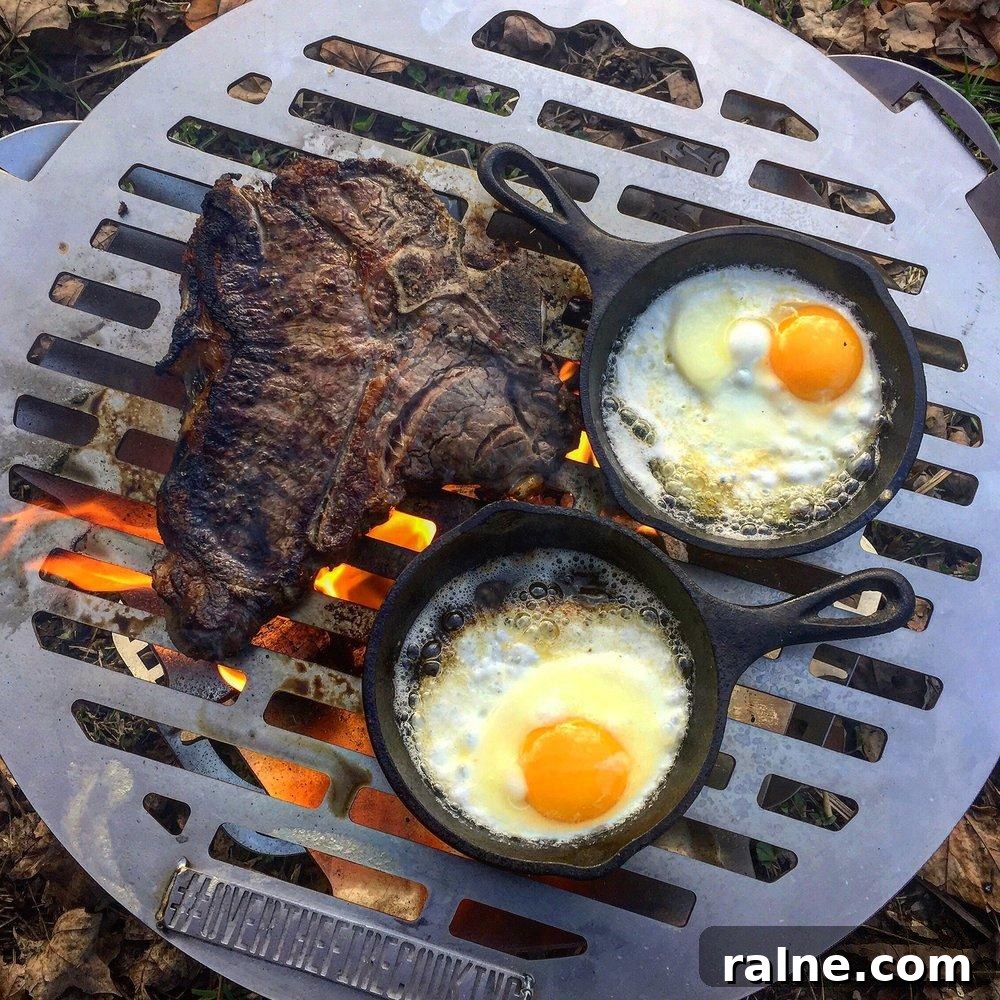 Sizzling in that butter!
Butter is key. It protects the skillet, prevents sticking, and adds flavor. Aim for roughly 1/2 tablespoon of butter per egg. That amount gives a protective layer between the egg and the iron so the whites don’t cling or tear. Combine this with a well-seasoned pan for best results.
2. Use a Well-Seasoned Skillet
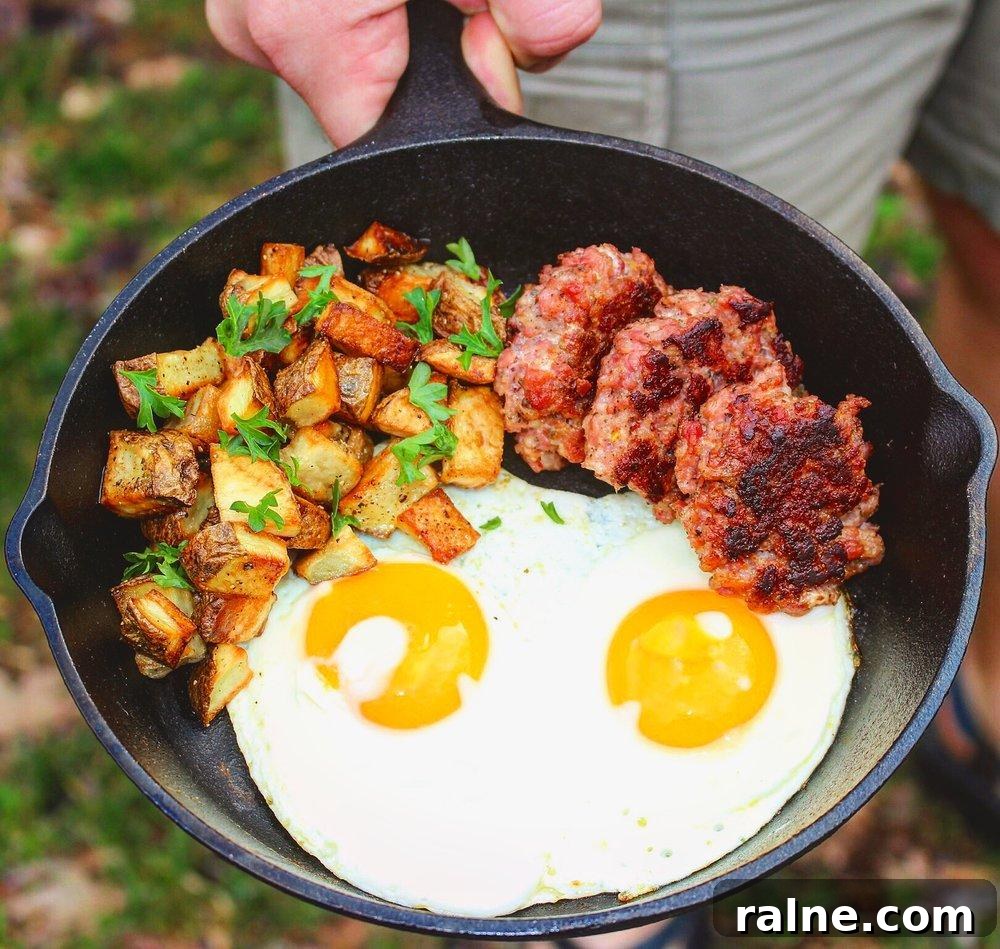 Makes a huge difference!
Not all cast iron performs the same, and seasoning matters. A well-seasoned skillet releases food better and cooks more evenly. If possible, start with a pre-seasoned skillet. After cooking, clean with water only, coat lightly with a neutral oil like canola, and wipe dry — this helps the seasoning improve with each use.
3. Preheat the Pan
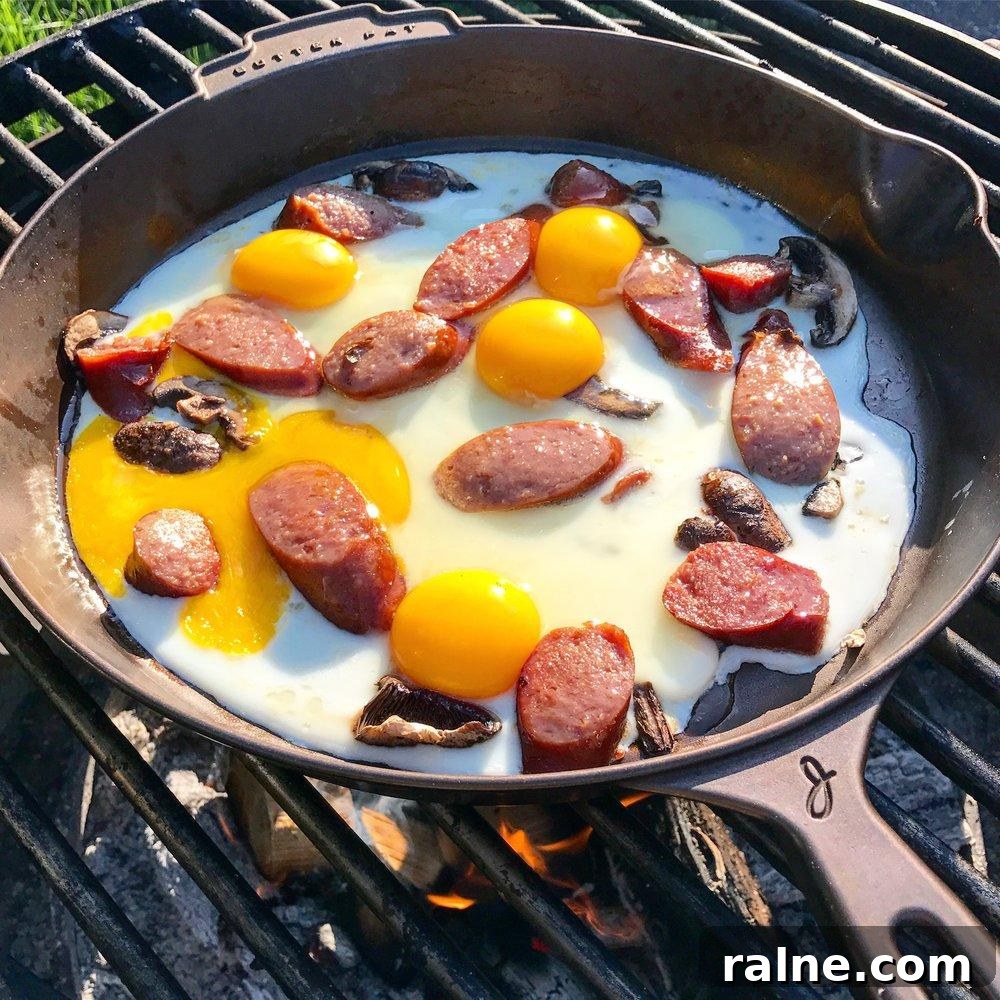 Important tip!
Preheat your cast iron for a few minutes before adding butter or eggs. Preheating helps food cook more evenly, but be careful not to overheat. If the skillet becomes too hot, butter will brown or burn quickly and can give the eggs an off, burnt flavor. Check the pan temperature before adding fat — it should be warm, not scorching.
4. Size Matters
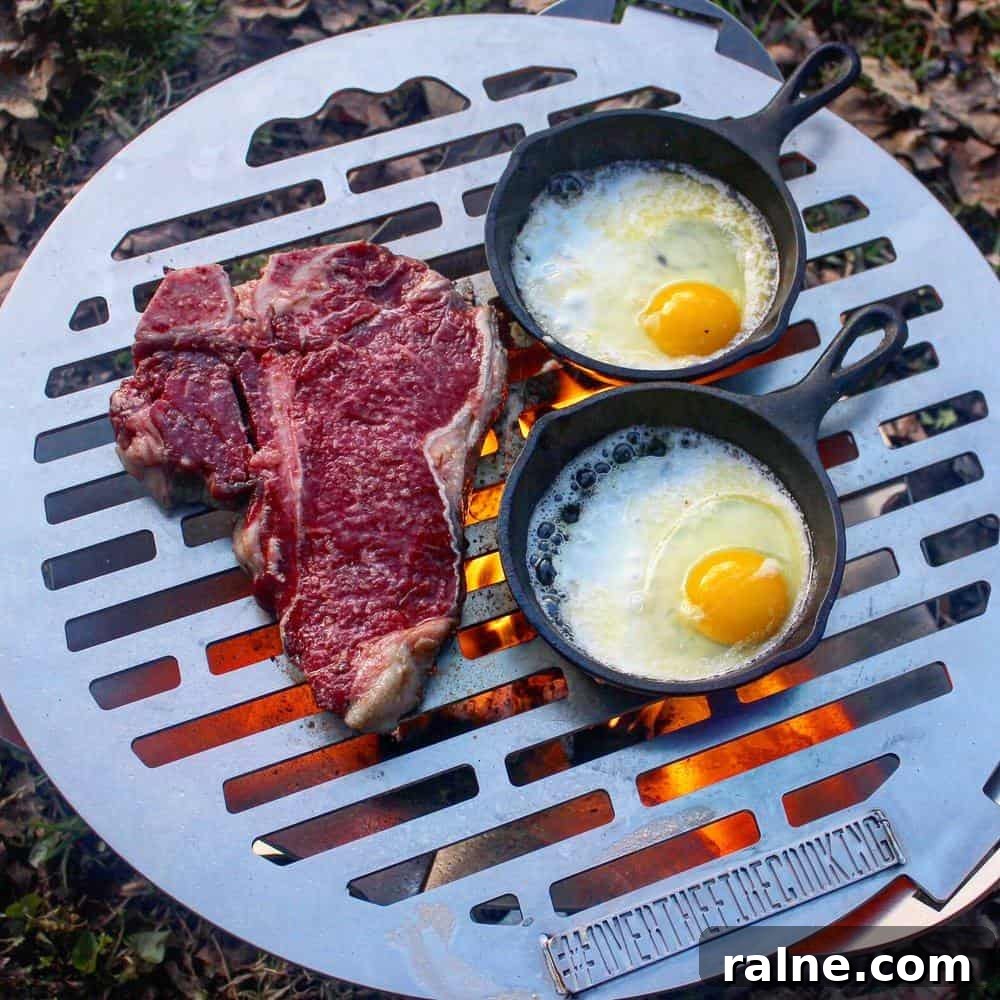 Look at that little skillet!
Choose the right skillet size for the number of eggs you’re cooking. An 8″ skillet comfortably handles 3 eggs (4 is possible but tight). Overcrowding forces longer cooking times and increases the chance of burning or uneven cooking. For single servings, a small skillet—such as a mini cast iron—works great and makes managing heat much easier.
5. Cook Eggs After the Meat
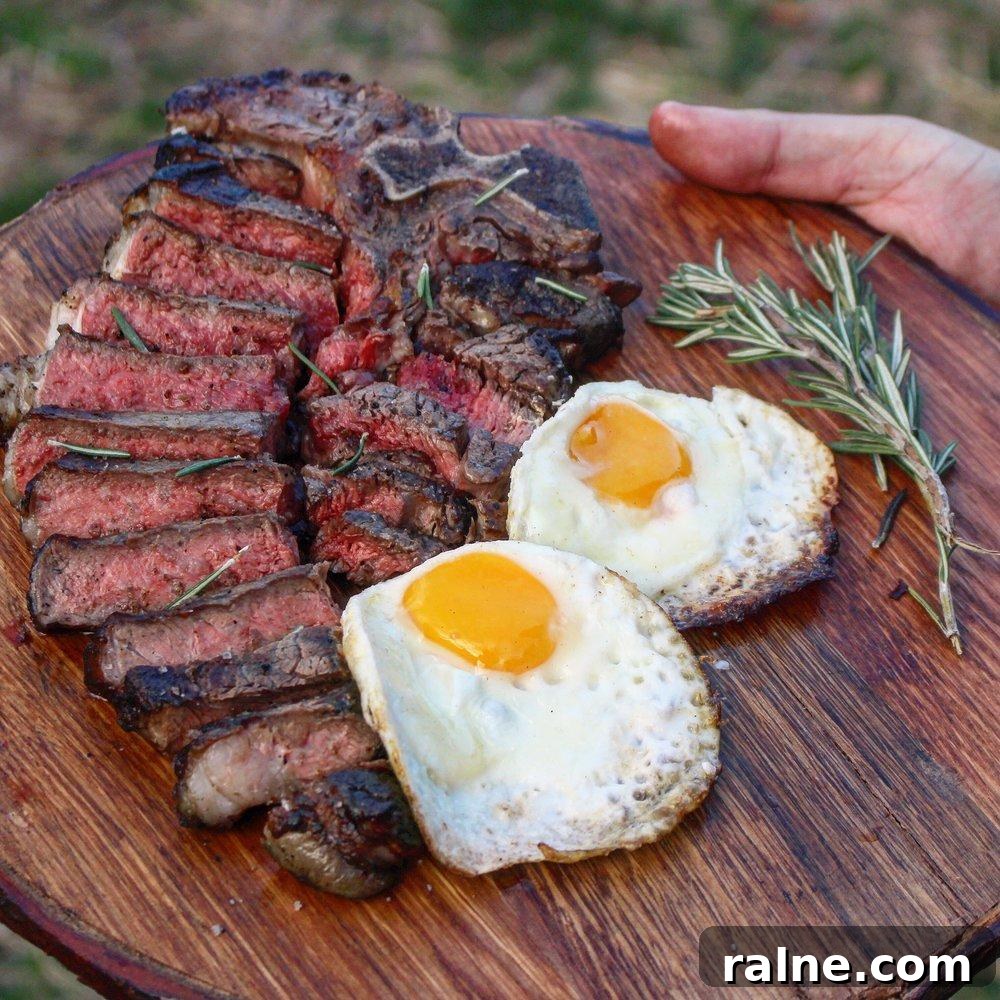 So you get clean white eggs!
If you’re cooking meat like bacon or sausage, cook it first, then use the residual heat and fat for the eggs. Meat drippings add flavor, and cooking the eggs after the meat prevents the eggs from getting cold while the meat finishes. If there’s excessive grease, blot a little out so the eggs brown properly instead of turning dark and greasy.
Conclusion
Cooking eggs over a campfire is straightforward once you master a few fundamentals: ample butter, a well-seasoned skillet, proper preheating, the right pan size, and sequencing eggs after meat. With these tips, you’ll avoid the usual fails and enjoy reliably delicious campfire eggs. Try them out next time you’re at the fire, and practice building skillet seasoning to get even better results.