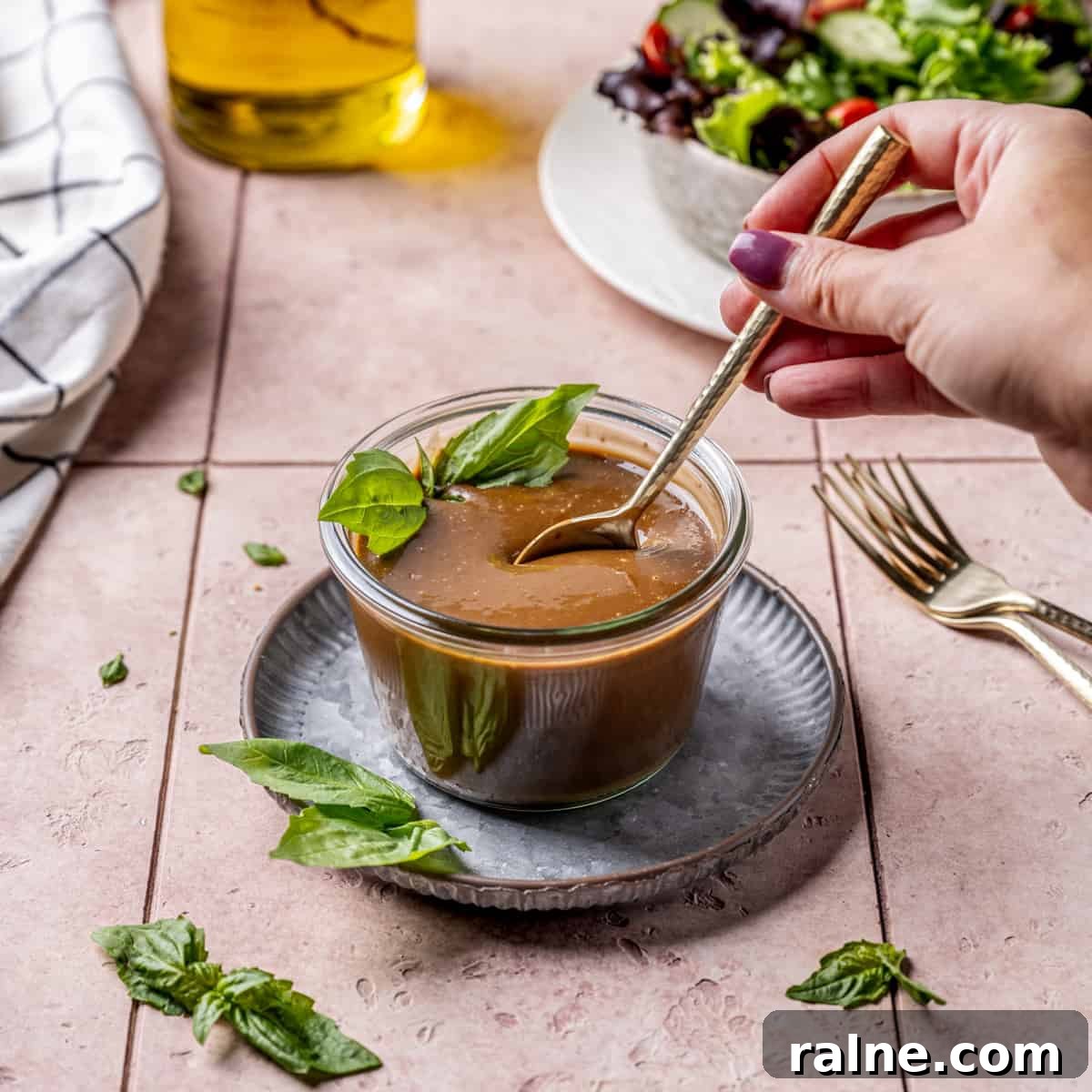
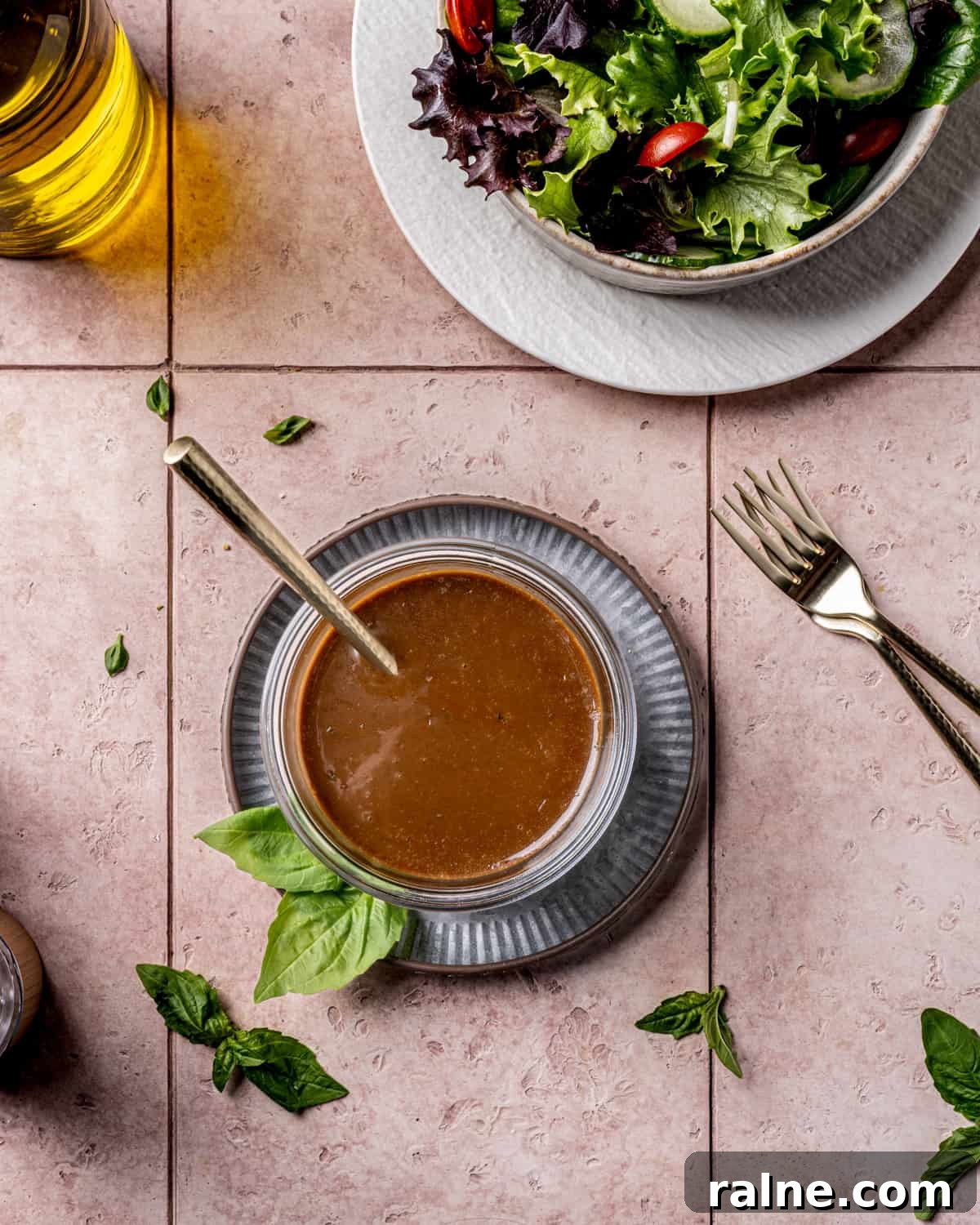
Everybody loves a great salad dressing, and homemade is the best. Store-bought dressings often contain preservatives and unnecessary additives, so we prefer simple, fresh preparations. This vibrant basil balsamic vinaigrette takes about five minutes to make and highlights bright basil and rich balsamic flavor. You’ll love this basil balsamic vinaigrette recipe for salads, sandwiches, and as a marinade.
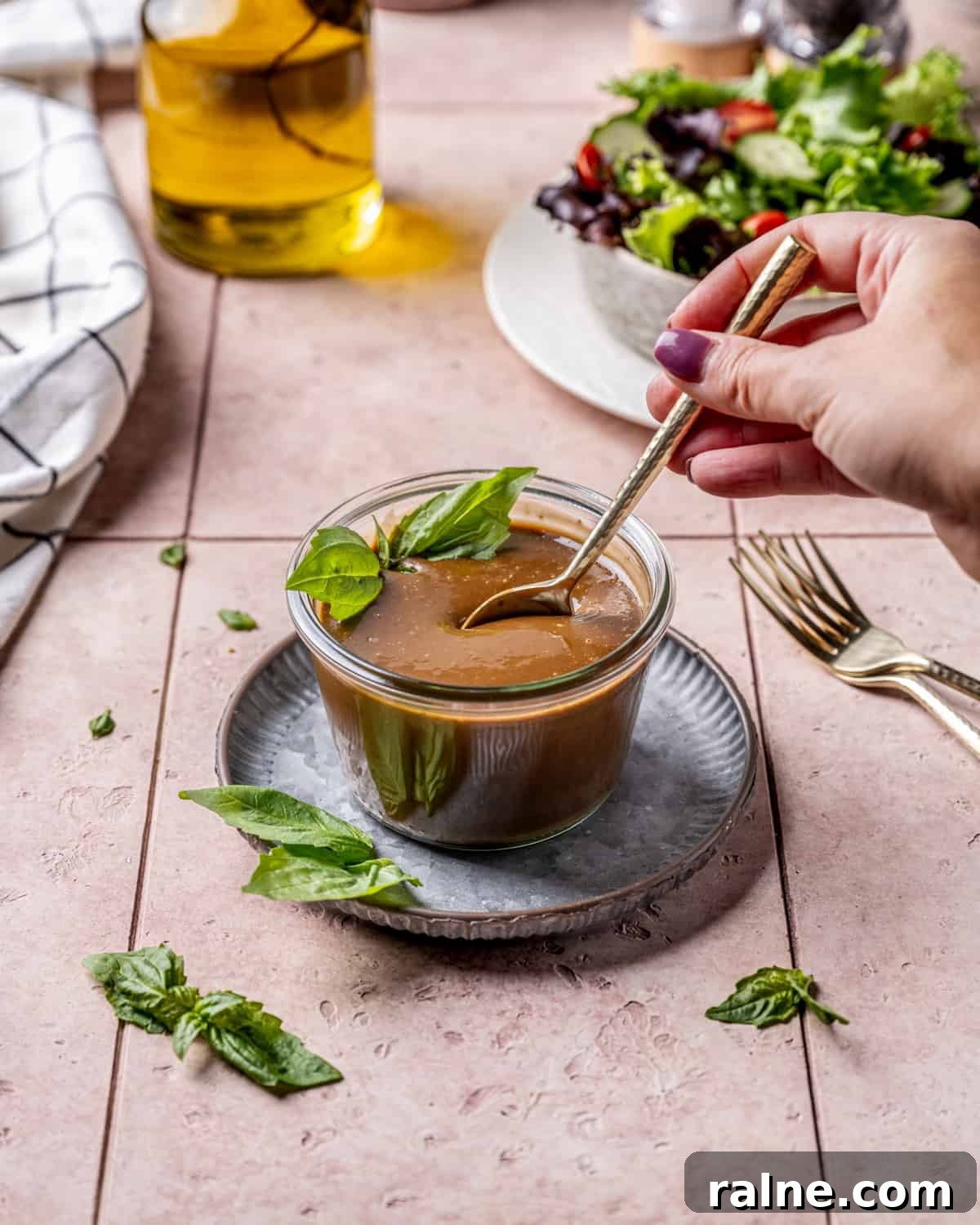
Looking for another fresh dressing? Try a cilantro ginger lime dressing for a different bright flavor.
Why You’ll Love This Recipe
Store-bought dressings are convenient but often full of preservatives and hidden ingredients. Making your own vinaigrette lets you control the flavors and use fresh, wholesome ingredients.
This fresh basil balsamic vinaigrette is simple, fast, and requires only common pantry items. It’s ready in about five minutes and needs no special equipment—just a blender, immersion blender, or a whisk and bowl.
What is a vinaigrette?
A vinaigrette is an emulsion of oil and an acid such as vinegar or lemon juice. Because oil and vinegar separate, you create an emulsion by whisking vigorously or blending. Vinaigrettes are generally unstable emulsions, meaning they will separate over time, unlike stable emulsions such as mayonnaise.
Classic French vinaigrette often uses a 3:1 oil-to-acid ratio, but many cooks prefer 2:1 depending on acidity and desired flavor. You can add herbs, spices, shallots, garlic, fruit, or mustard to customize the dressing. Homemade vinaigrette is best made within an hour of serving unless you include an emulsifier like mustard or egg yolk.
Ingredients
This Fresh Basil Balsamic Vinaigrette comes together in five minutes. Here’s what you need:
- Neutral oil (grapeseed, safflower, or avocado) to let the basil and balsamic shine.
- Balsamic vinegar — use a good-quality condiment-style balsamic for balanced sweetness and complexity.
- White wine vinegar — a touch to brighten and balance the balsamic.
- Shallot — for a gentle onion note.
- Fresh basil — one of the stars; it pairs beautifully with balsamic.
- Garlic — a small clove, minced.
- Kosher salt and black pepper to season.
- Water (optional) — a tablespoon or two to thin and mellow the dressing if needed.
See the recipe card below for exact quantities.
Substitutions
Common swaps to suit what you have on hand:
- Oil: Use a good extra virgin olive oil if you want a more pronounced oil flavor; it works well with basil and balsamic.
- White wine vinegar: Red wine, champagne, or rice vinegar can substitute—watch the acidity level.
- Fresh basil: Dried basil can be used in a pinch; let it steep in the vinegars before blending to improve flavor.
- Shallot: Mild sweet yellow onion works if you don’t have shallot; avoid sharp white or red onion for this recipe.
How to Make Fresh Basil Balsamic Vinaigrette
A blender or immersion blender gives the easiest, creamiest emulsion and quickly chops the herbs and aromatics. For small batches, an immersion blender is ideal; for more servings, use a regular blender. If you don’t have either, whisk vigorously by hand after finely chopping the ingredients.
Equipment
All you really need is a blender or immersion blender. A food processor or hand whisk will also work.
Step-by-Step Instructions
Step 1: Prepare and measure
- Measure ingredients. If you’re blending by hand, mince the shallot and garlic and roughly chop the basil. If using a blender, you can add them whole and let the blender do the work.
Step 2: Combine vinegars and aromatics
- Place the balsamic vinegar, white wine vinegar, minced shallot, garlic, basil, salt, and pepper in the blender or a container suitable for an immersion blender. Blend briefly until smooth, about 30 seconds.
Step 3: Emulsify
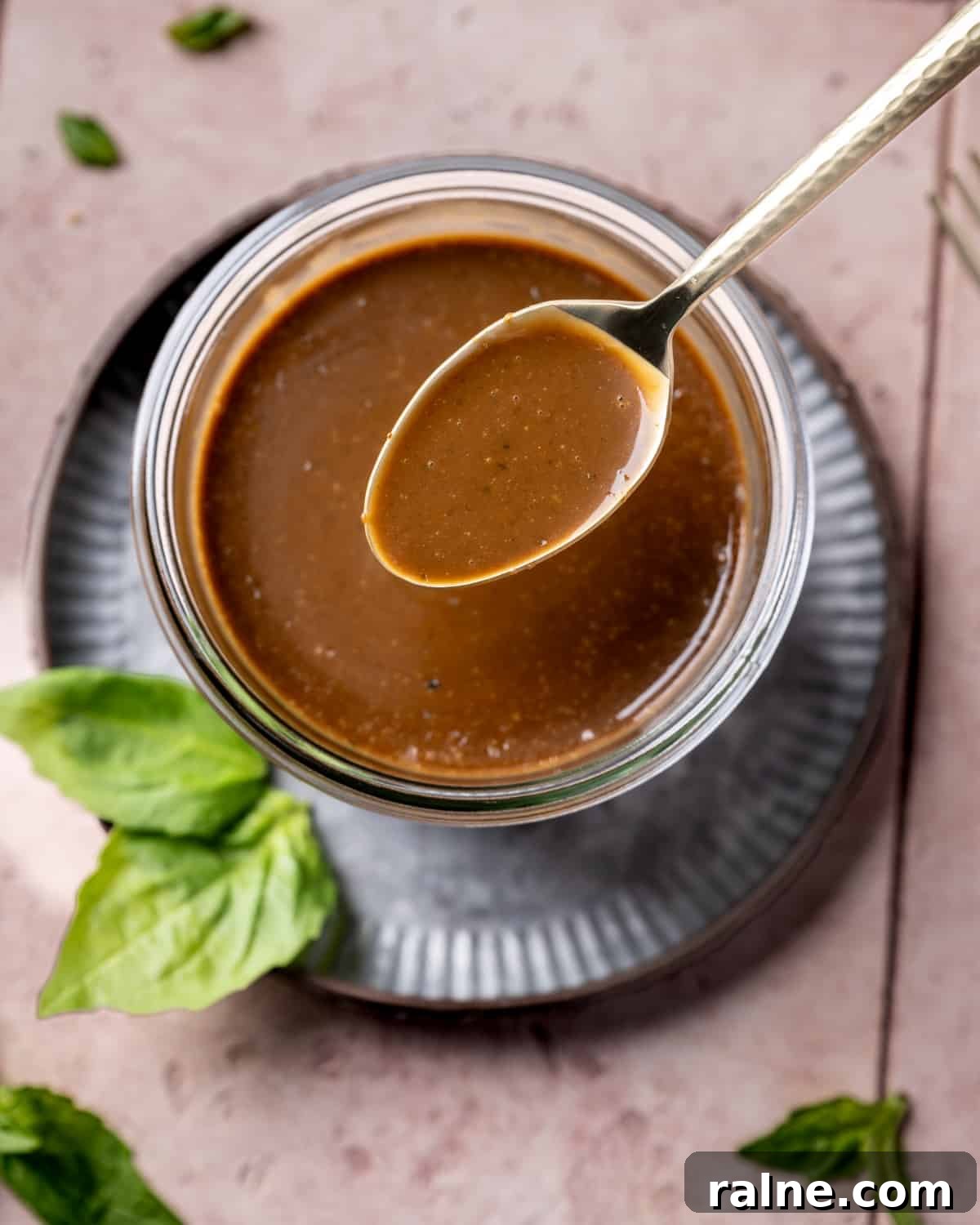
- With the blender running, pour the oil in a slow, steady stream to create a smooth emulsion. Taste and adjust seasoning. If the dressing is too thick or intense, add water, one tablespoon at a time, blending until you reach the desired consistency and flavor.
Variations
Try these simple variations to change the flavor profile:
- Use a high-quality extra virgin olive oil for a fuller, more peppery oil presence.
- Swap in white balsamic vinegar for a lighter, fruitier finish.
- Add a few strawberries for a subtle fruity-sweet twist—just a handful is enough.
- Stir in ½ to 1 teaspoon Dijon mustard to help the emulsion last longer and add a complementary tang.
Storage
How to store: Keep vinaigrette in a sealed glass jar or airtight container in the refrigerator. Bring it to room temperature and shake, whisk, or blend briefly before using to re-emulsify.
How long it lasts: Because this dressing contains fresh basil, shallot, and garlic, we recommend using it within about 10 days.
Freezing: You can freeze vinaigrette, but it may separate when thawed and will need re-emulsifying. Flavor can diminish slightly after freezing.
Top tip
If using a conventional blender, you can skip pre-chopping the basil, garlic, and shallot—the blender will process them. For manual whisking, chop and mince first for the best texture and integration.
Troubleshooting
If the vinaigrette separates or “breaks,” simply shake it in a jar, whisk vigorously, or re-blend to re-emulsify. If it’s too thick, add a little water or more vinegar to adjust texture and brightness—taste as you go.
What to Make with Fresh Basil Balsamic Vinaigrette?
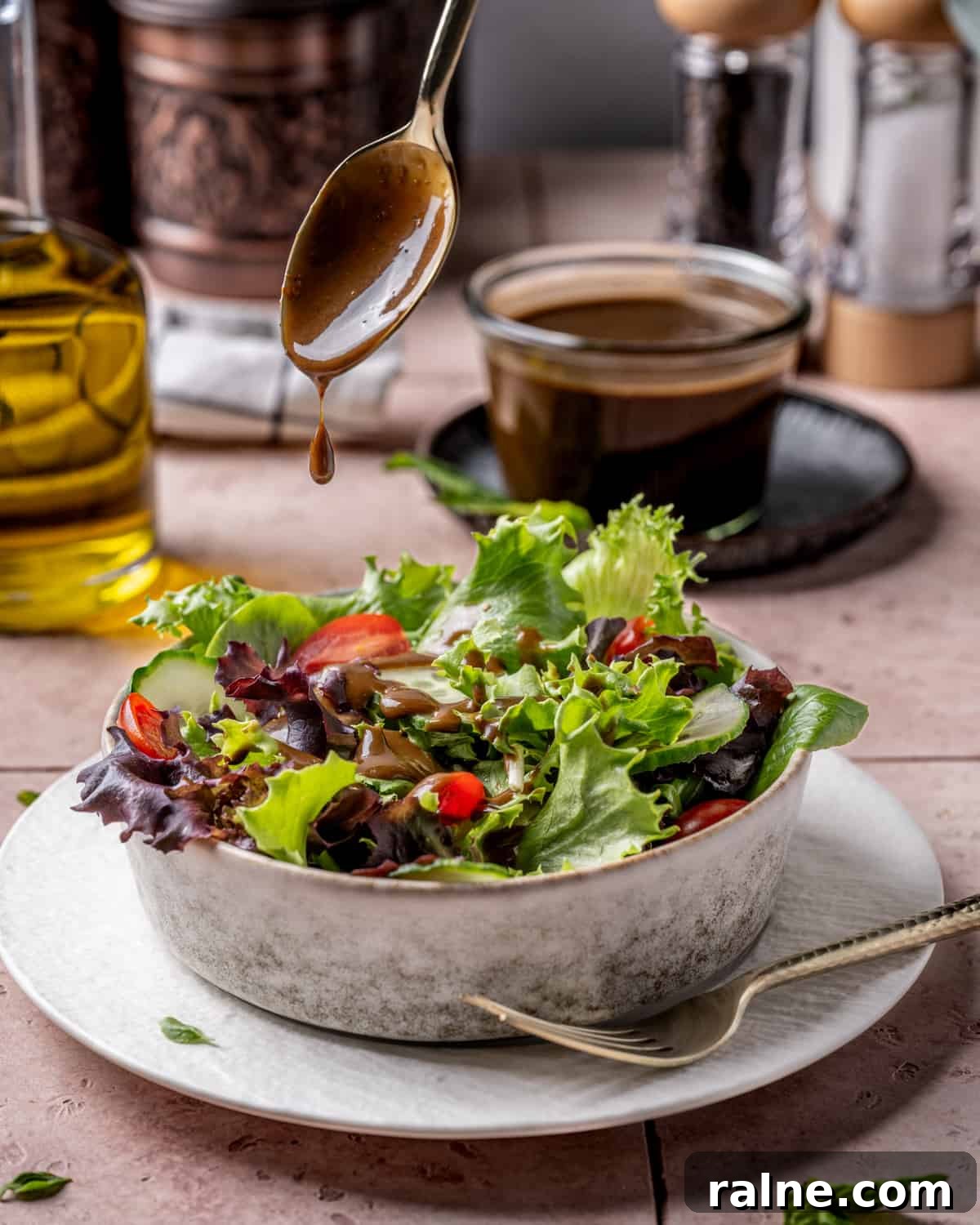
This vinaigrette is versatile. Use it on mixed greens, arugula with feta, caprese-style tomatoes and mozzarella, or as a sandwich drizzle. It also makes an excellent marinade or glaze for grilled chicken or pork—brush it on while grilling for a flavorful finish.
Looking for more Italian recipes?
If you enjoy Italian flavors, explore classic Italian recipes and Italian-inspired dishes in cookbooks that collect traditional and modern favorites.
FAQ
Balsamic vinaigrette combines balsamic vinegar and oil, usually with a secondary acidic component like white wine vinegar for balance. Shallot, garlic, mustard, or herbs are optional additions to enhance flavor.
Homemade vinaigrettes are generally healthier than many store-bought versions since you control the ingredients and avoid added sugars and preservatives. Use a healthy oil and watch portion size—vinaigrette is flavorful but calorie-dense.
Balsamic vinegar is a distinct, aged vinegar from Italy. Balsamic vinaigrette is a dressing that uses balsamic vinegar as an ingredient, combined with oil and other flavorings.
Properly made and aged balsamic vinegar keeps very well. For the best flavor, use an opened bottle within a few years, though it’s generally stable and unlikely to spoil quickly.
Related
Looking for appetizers? Try these dishes that pair well with fresh dressings and sauces.
- Grilled Mortadella Skewers with Burrata & Italian Herb Sauce
- Mini New England Lobster Rolls with Jalapeño Dressing
- Roasted Beets with Whipped Goat Cheese You’ll Crave
- Baked Italian Herb Stuffed Shrimp with Lime Butter
Pairing
These mains pair nicely with a fresh basil balsamic vinaigrette:
- Lobster and Shrimp Mac and Cheese (Restaurant Quality)
- Blackened Salmon Penne Primavera
- Homemade Butternut Squash Ravioli
- Carbone-Style Spicy Vodka Pasta with Chicken
📖 Recipe
Fresh Basil Balsamic Vinaigrette
Equipment
- Blender or immersion blender
Ingredients
- 1/3 cup balsamic vinegar (condiment-style)
- 2 Tablespoons white wine vinegar
- 1 Tablespoon minced shallot
- 1 small garlic clove, minced
- 12 fresh basil leaves, roughly chopped
- 1/2 teaspoon kosher salt
- Pinch freshly ground black pepper
- 1 cup neutral-flavored oil (grapeseed, avocado, or safflower)
- 1 Tablespoon to 1/4 cup water, optional as needed
Instructions
- Place both vinegars, shallot, garlic, basil, salt, and pepper in a blender or container for an immersion blender. Blend about 30 seconds until smooth.
- With the blender running, add the oil in a slow steady stream until emulsified. Taste and adjust seasoning. If the dressing is too thick, add water 1 tablespoon at a time and blend until you reach the desired consistency. Serve.
Notes
If whisking by hand, chop and mince all ingredients first and slowly whisk in the oil. This recipe yields about 1.5 cups of dressing; a serving is roughly 2 tablespoons.
Nutrition
Serving: 30 g • Calories: 168 kcal • Carbohydrates: 1 g • Protein: 0.1 g • Fat: 18 g • Sodium: 99 mg
Let us know how it turned out!
Food safety
- Wash hands and sanitize cutting boards before preparation.
Follow standard safe food handling guidelines for best results.