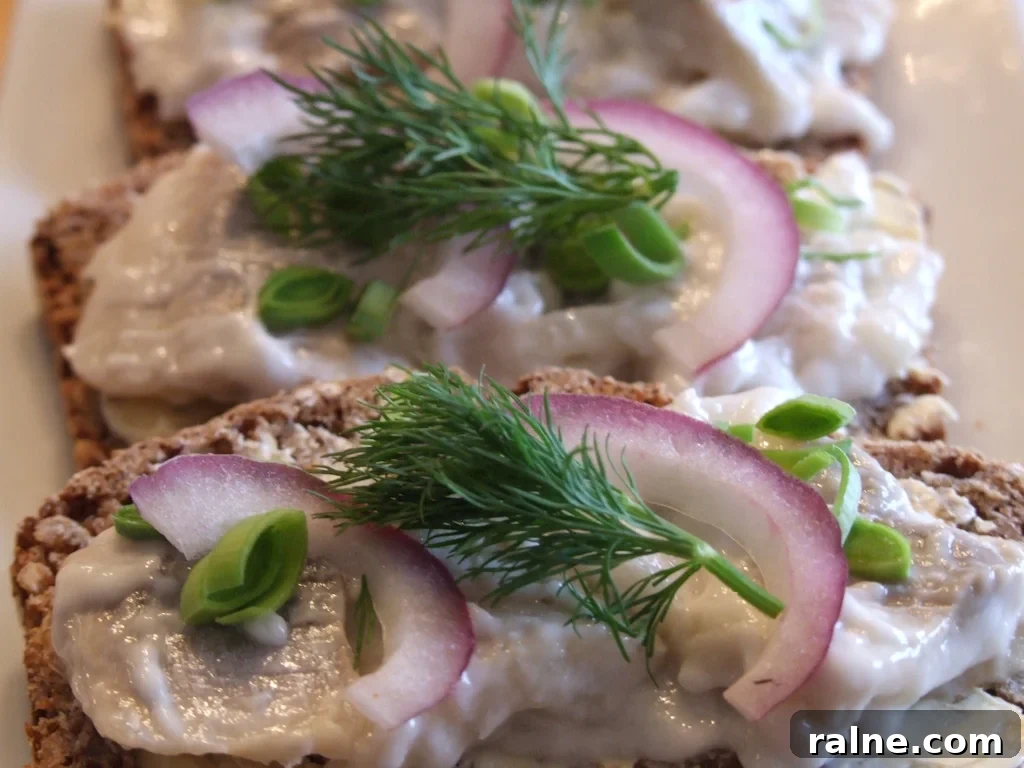
Smørrebrød literally means “butter and bread” in Danish (smør og brød) and refers to the country’s traditional open-faced sandwiches. If you’ve visited Copenhagen, you’ve likely seen shop windows lined with carefully arranged smørrebrød—a staple of Danish food culture. The foundation of a good smørrebrød is rugbrød, a dense dark rye sourdough bread. I’ve been baking rugbrød recently, which inspired this post.

CC Image courtesy of Nillerdk on Wikipedia
Common toppings for smørrebrød include pickled herring, cheese, boiled eggs, liver pâtés, various vegetables, smoked salmon, cold meats and sausages. They are often finished with garnishes like sliced red onion, fresh dill or fish roe. Because smørrebrød are open-faced, they are typically eaten with a knife and fork rather than held in the hand.
My own version may not match a Dane’s exacting standards, but smørrebrød invites creativity within its tradition. I smeared butter onto slices of rugbrød, added generous chunks of creamed herring, and topped each slice with chopped baby leeks, thin rings of red onion, and a small sprig of fennel. The tang of the sourdough rye complements the herring beautifully, while the red onion added sharpness without overwhelming the other flavors.
We paired these sandwiches with a small glass of aquavit—an aromatic Scandinavian spirit. In our case it was a Norwegian bottle, handed down at a friend’s party. Aquavit can be an intense accompaniment, and personal tolerance varies, but its caraway and herb notes can pair nicely with pickled fish and rich rye bread. Overall, the combination of dense rugbrød, creamy herring, and fresh garnishes showcases why smørrebrød remains a beloved and versatile part of Danish cuisine.