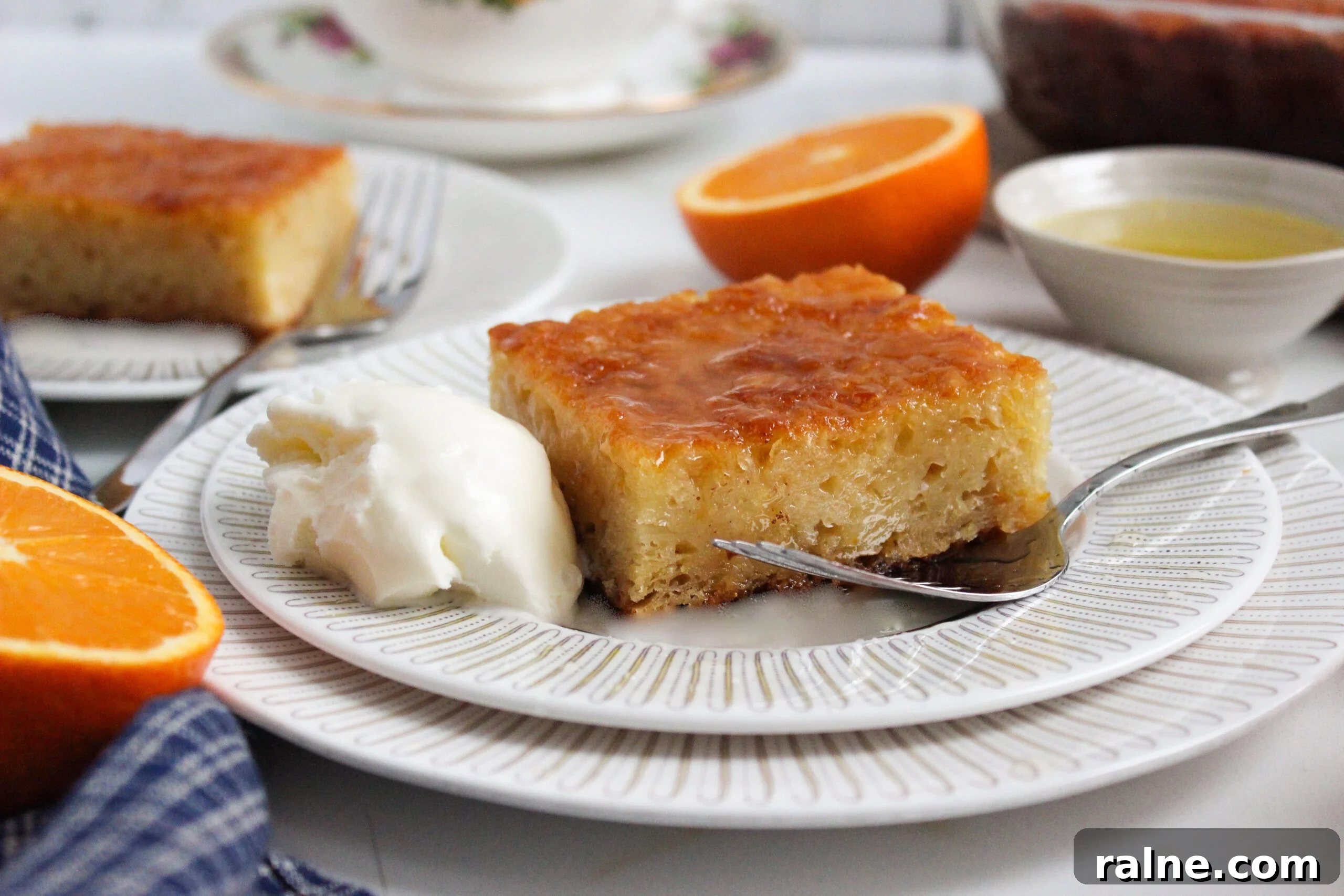
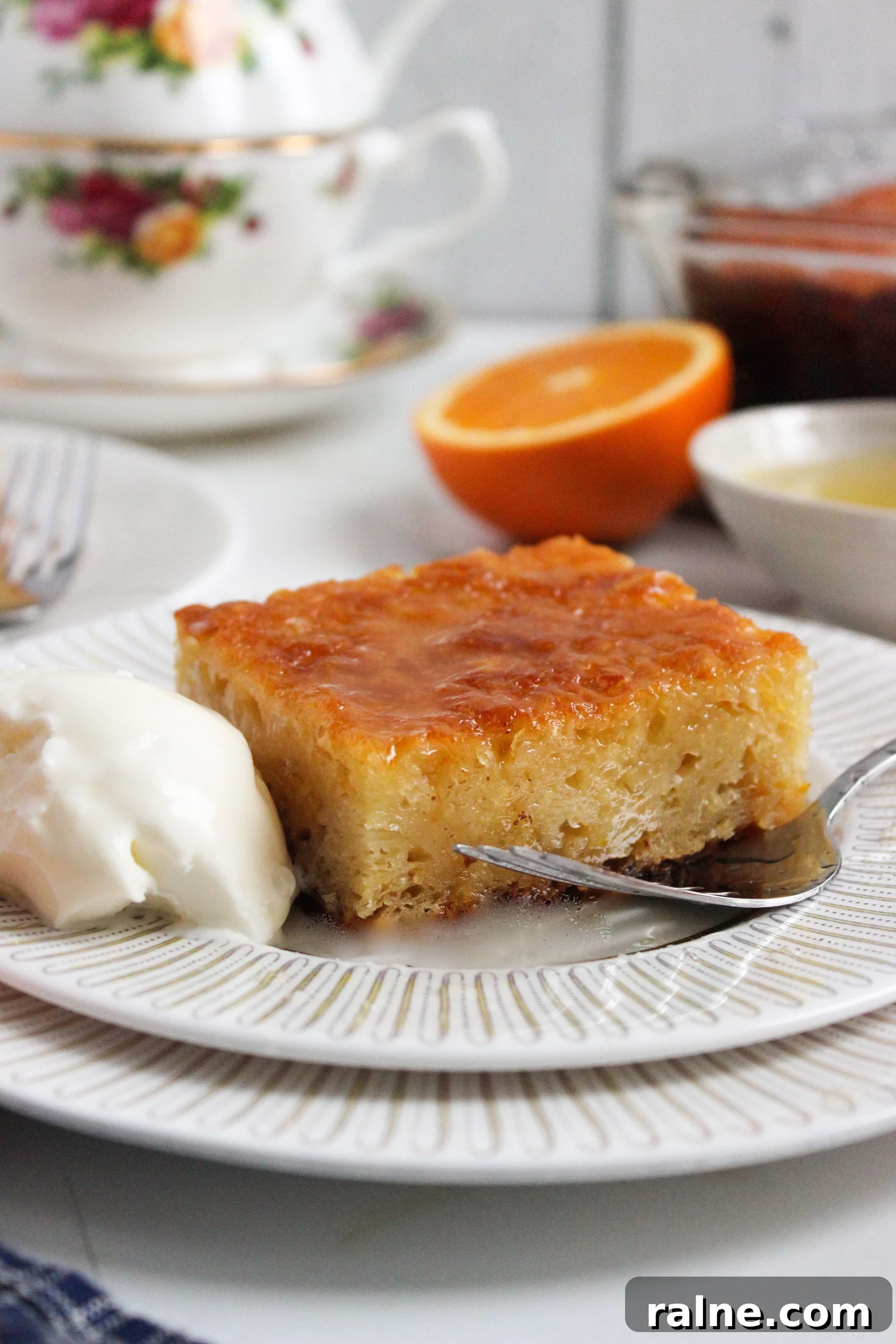
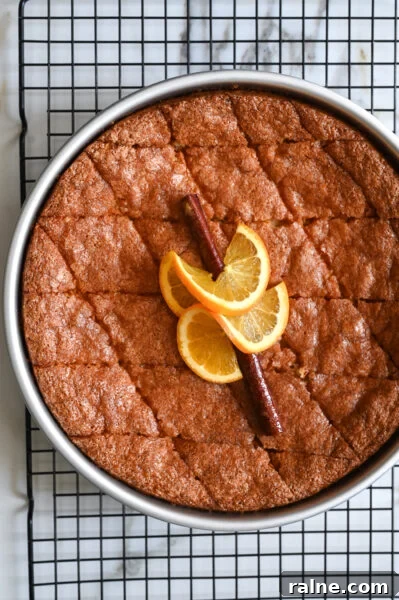
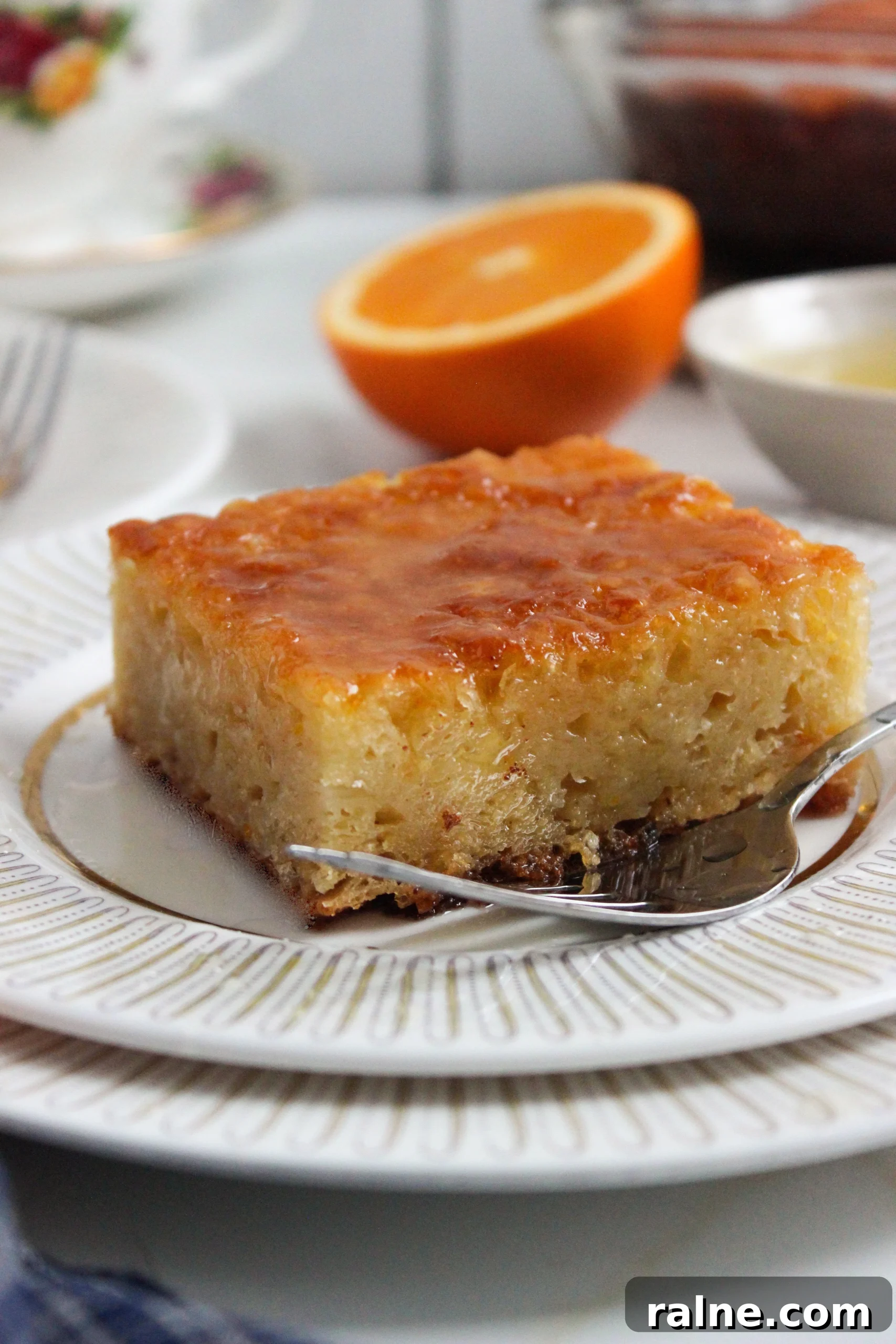
Portokalopita is a classic Greek syrup-soaked cake made using phyllo that’s dried, torn and mixed into the batter to replace flour. The result is a moist, orange-scented siropiasto (syrup cake) with a unique texture and bright citrus flavour.
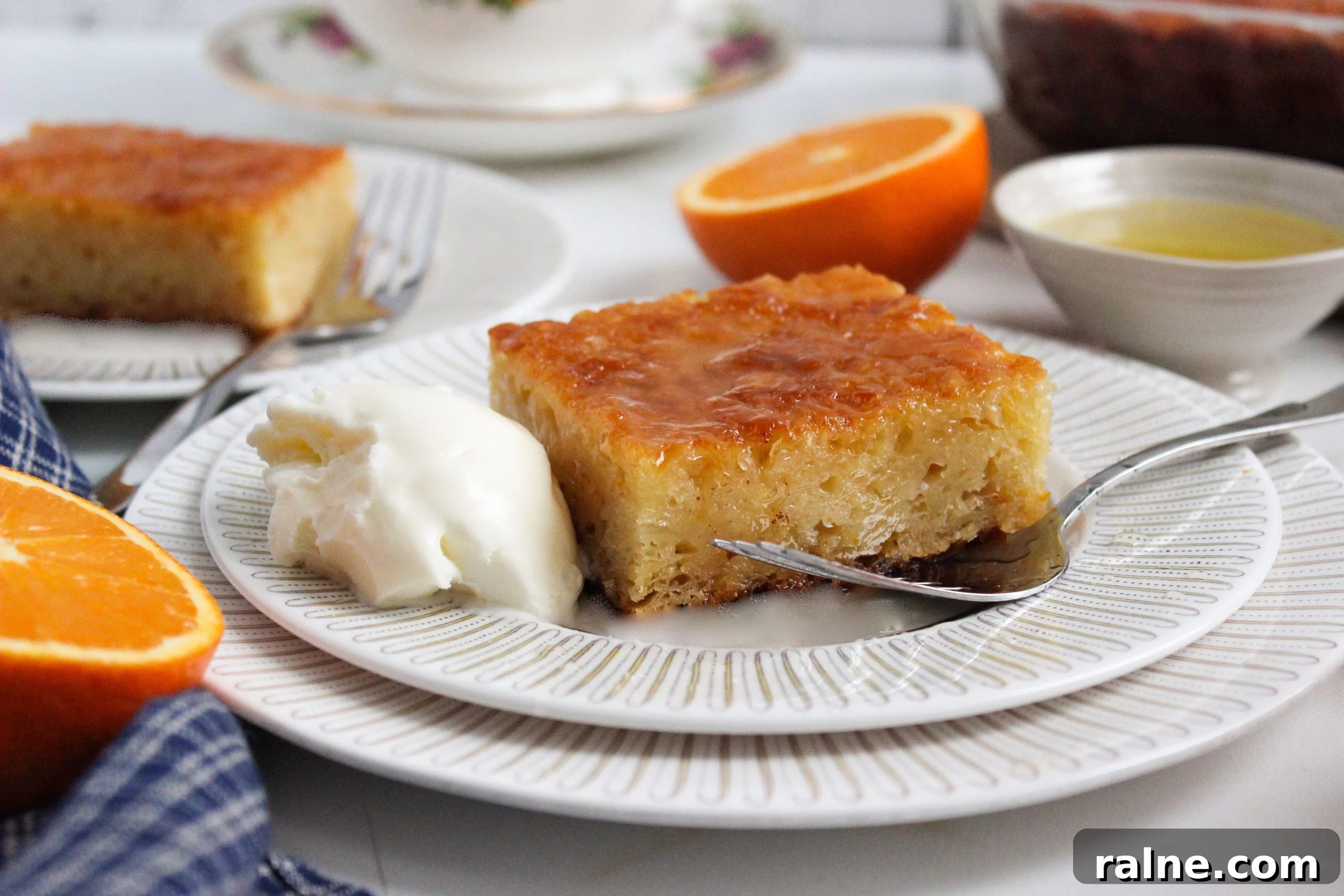
In Greek homes desserts soaked in syrup are beloved — portokalopita sits alongside other siropiasta such as karydopita (walnut cake), baklava and pantespani. Dense and sweet, portokalopita is wonderful on its own or served with vanilla ice cream or thick Greek yogurt for contrast.
You don’t need to travel to Greece to taste this dessert. With simple ingredients and a little patience you can bake a fragrant portokalopita at home that keeps well and often tastes even better the next day after the syrup has had time to fully absorb.
Why this recipe works
Phyllo is usually used to wrap fillings in recipes like spanakopita or bougatsa, but here it serves a different role. The phyllo is intentionally dried and crumbled, then folded into the batter to replace conventional flour. Dried phyllo absorbs moisture and syrup differently than flour, producing the cake’s characteristic density and syrupy mouthfeel while delivering delicate layers of crispness and chew.
Key ingredients
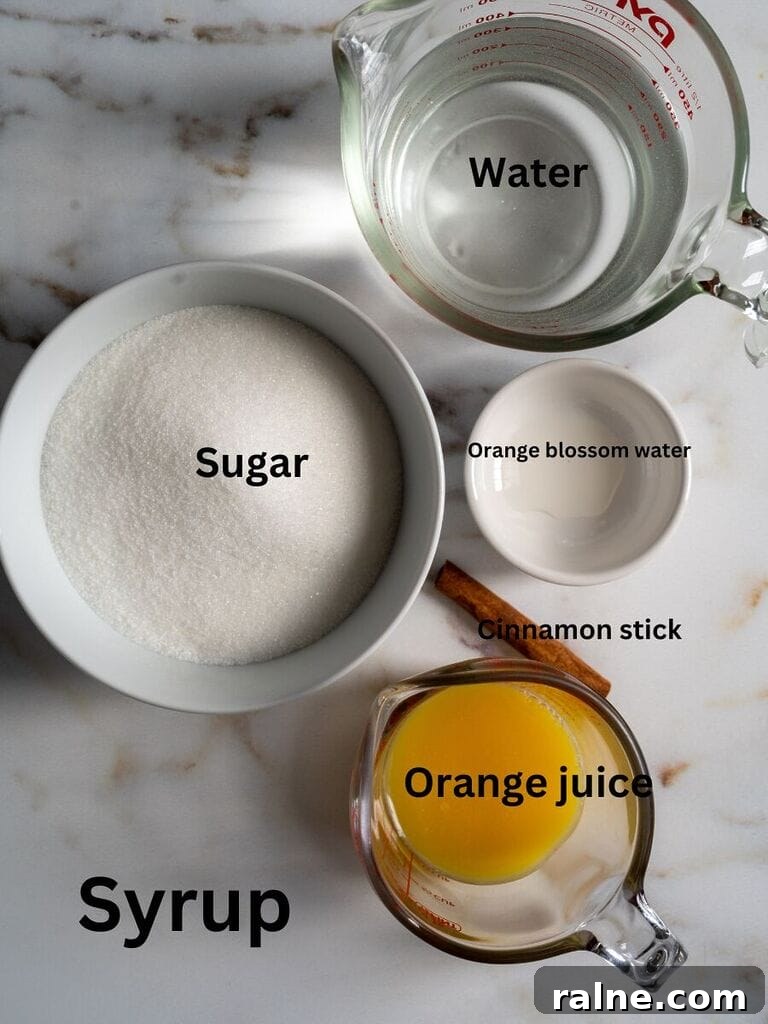
For the syrup
- Water – the syrup base; tap water is fine.
- Sugar – plain granulated sugar for a clean sweetness.
- Orange juice – fresh juice when possible for the brightest flavour.
- Cinnamon stick – adds warm spice without clouding the syrup.
- Orange blossom water (optional) – a splash heightens the floral citrus aroma if you have it.
For the cake
- Phyllo sheets – dried and torn to replace flour; fresh phyllo is ideal but thawed frozen phyllo works.
- Eggs – large eggs for structure and richness.
- Sugar – granulated sugar for sweetness.
- Oranges – use good, juicy oranges for zest and juice.
- Greek yogurt – plain, preferably thick yogurt for moisture and tang.
- Vanilla extract – adds depth; use what you have on hand.
- Baking powder & baking soda – provide lift and tenderness.
- Salt – enhances all flavours.
- Vegetable oil – a neutral oil for moist crumb (olive oil can be substituted for a more pronounced flavour).
- Orange juice – additional juice to amplify the citrus profile in the batter.
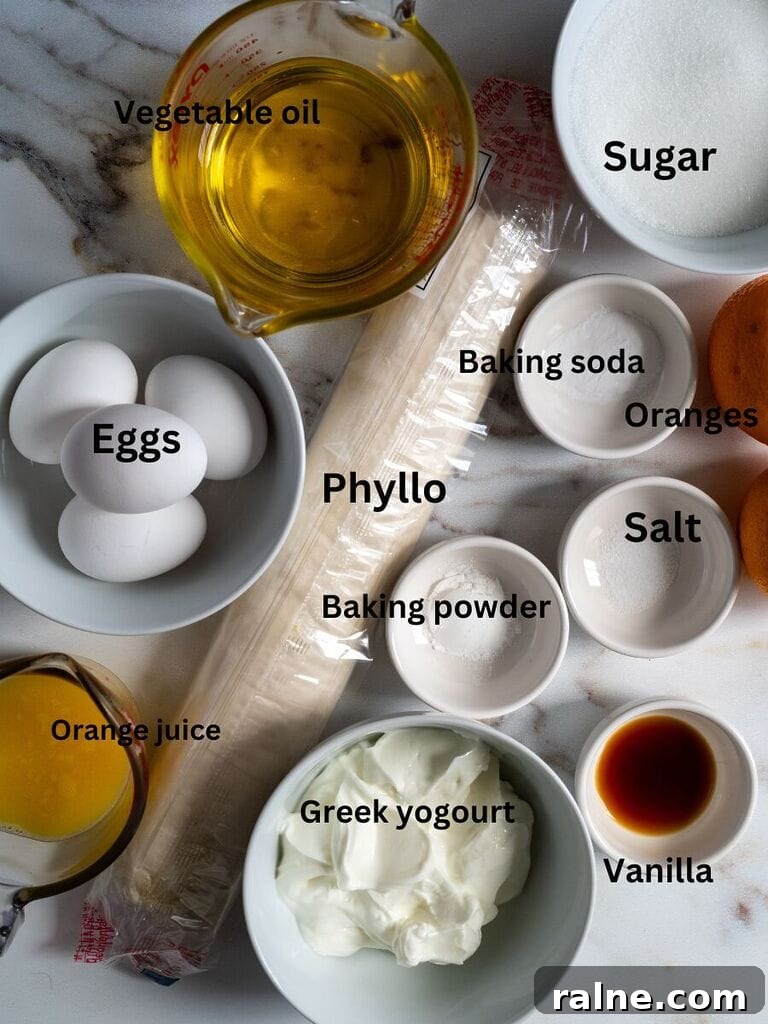
How to make
Step 1
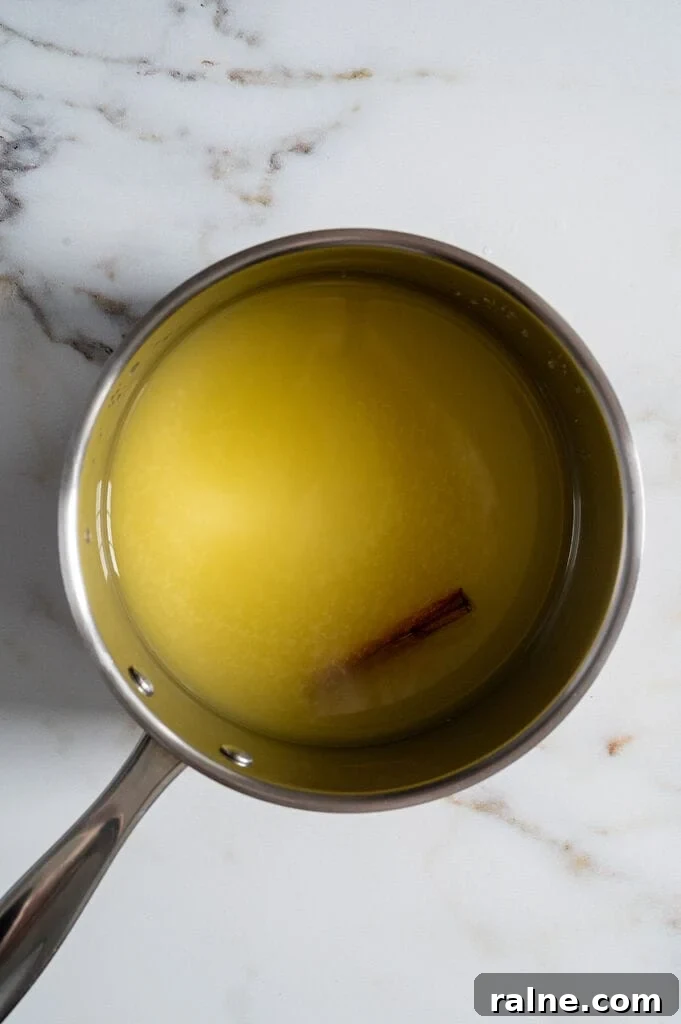
Prepare the syrup: combine water, sugar, orange juice, cinnamon stick and orange blossom water (if using). Bring to a boil, then reduce heat and simmer uncovered for 15 minutes. Remove from heat and cool completely.
Step 2
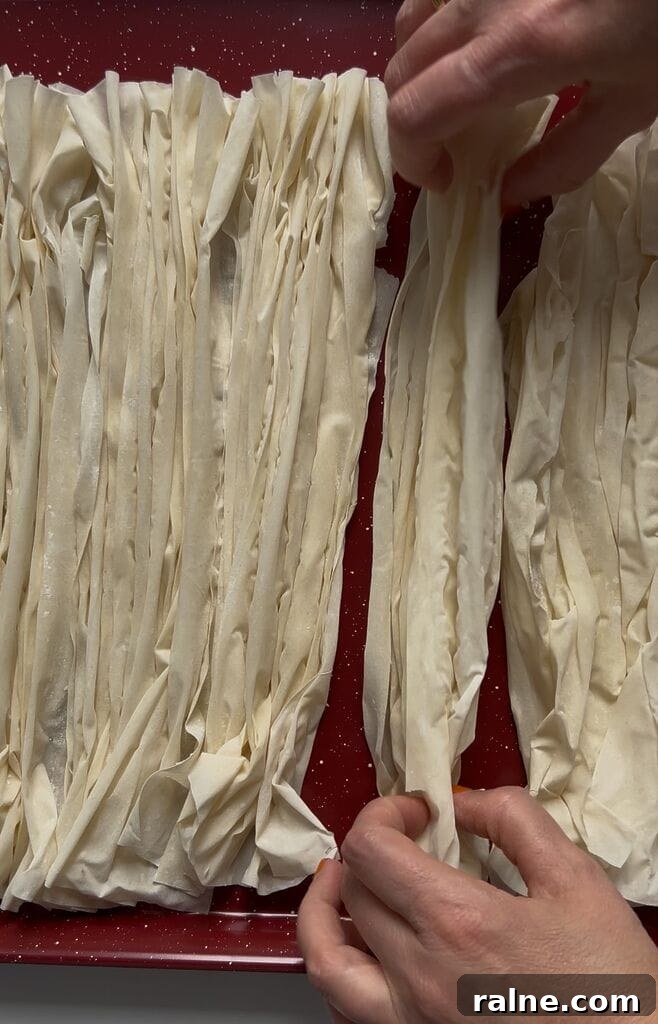
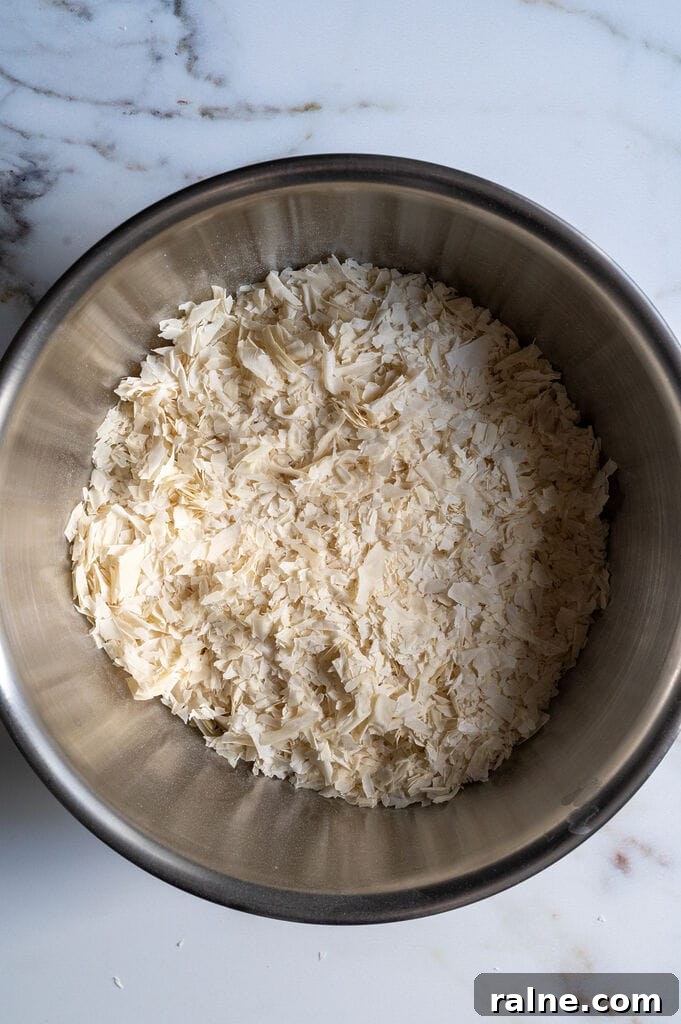
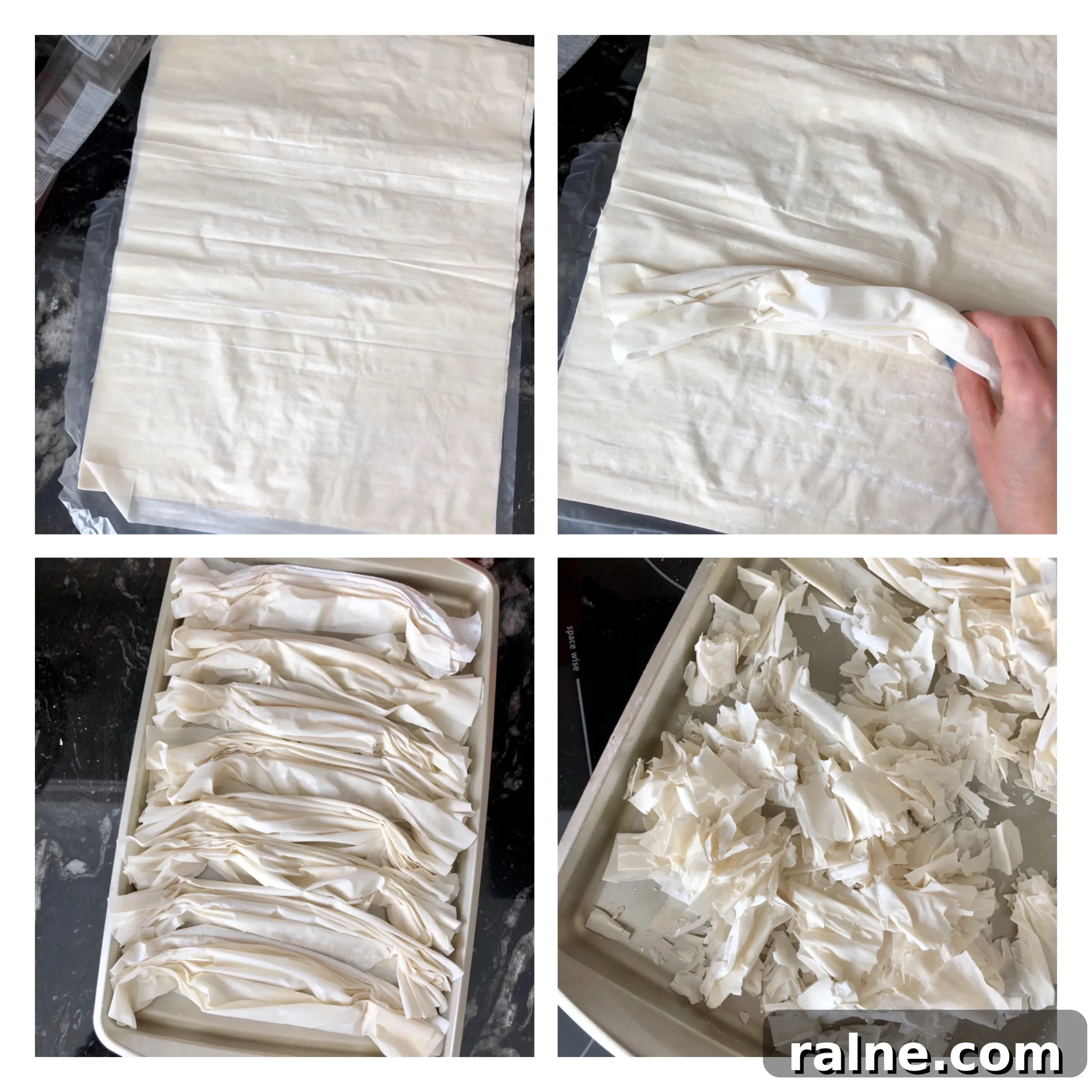
Dry the phyllo: preheat the oven to 200°F (about 95°C). Unfold sheets and loosely scrunch each one along the short side, placing them on baking sheets without compressing them too tightly. Use two trays if needed. Bake on middle and bottom racks for 10 minutes, flip sheets, switch rack positions, and bake another 8 minutes. Turn the oven off and leave the phyllo inside with the door slightly ajar to finish drying. When cool, crumble into small pieces.
Step 3
Preheat the oven to 350°F (175°C).
Step 4
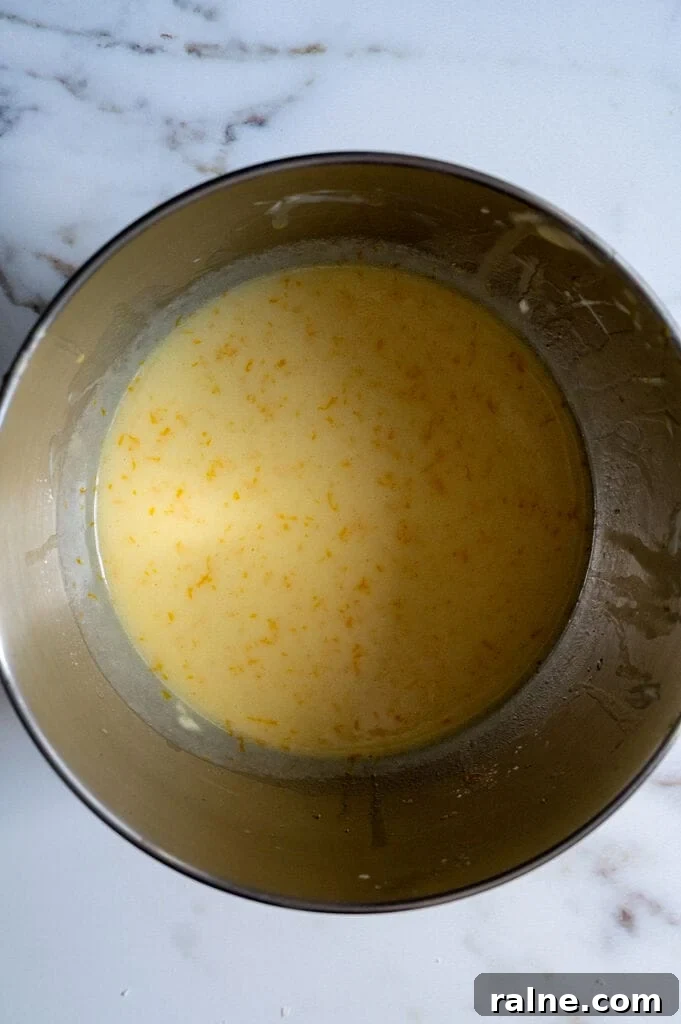
In a bowl, beat the eggs and sugar for 3–4 minutes until pale and slightly thickened.
Step 5
Stir in orange zest, Greek yogurt, vanilla, baking powder, baking soda and salt just until combined.
Step 6
Add the oil and orange juice and mix to combine.
Step 7
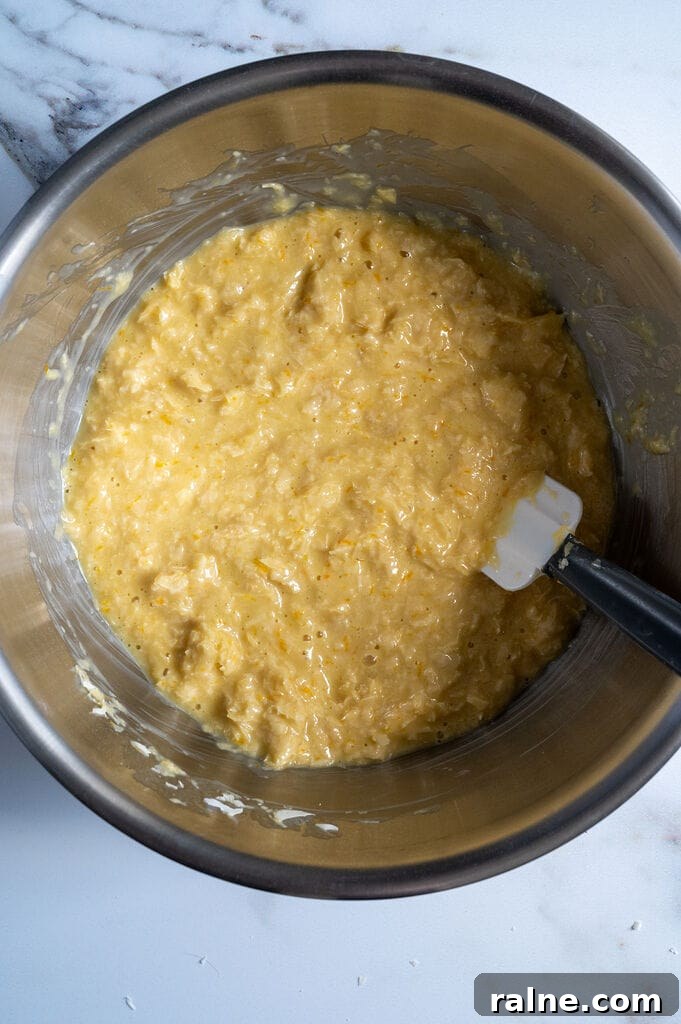
Fold the dried, torn phyllo into the batter gradually with a rubber spatula so pieces don’t clump. Transferring the wet ingredients to a larger bowl can make this easier but isn’t required.
Step 8
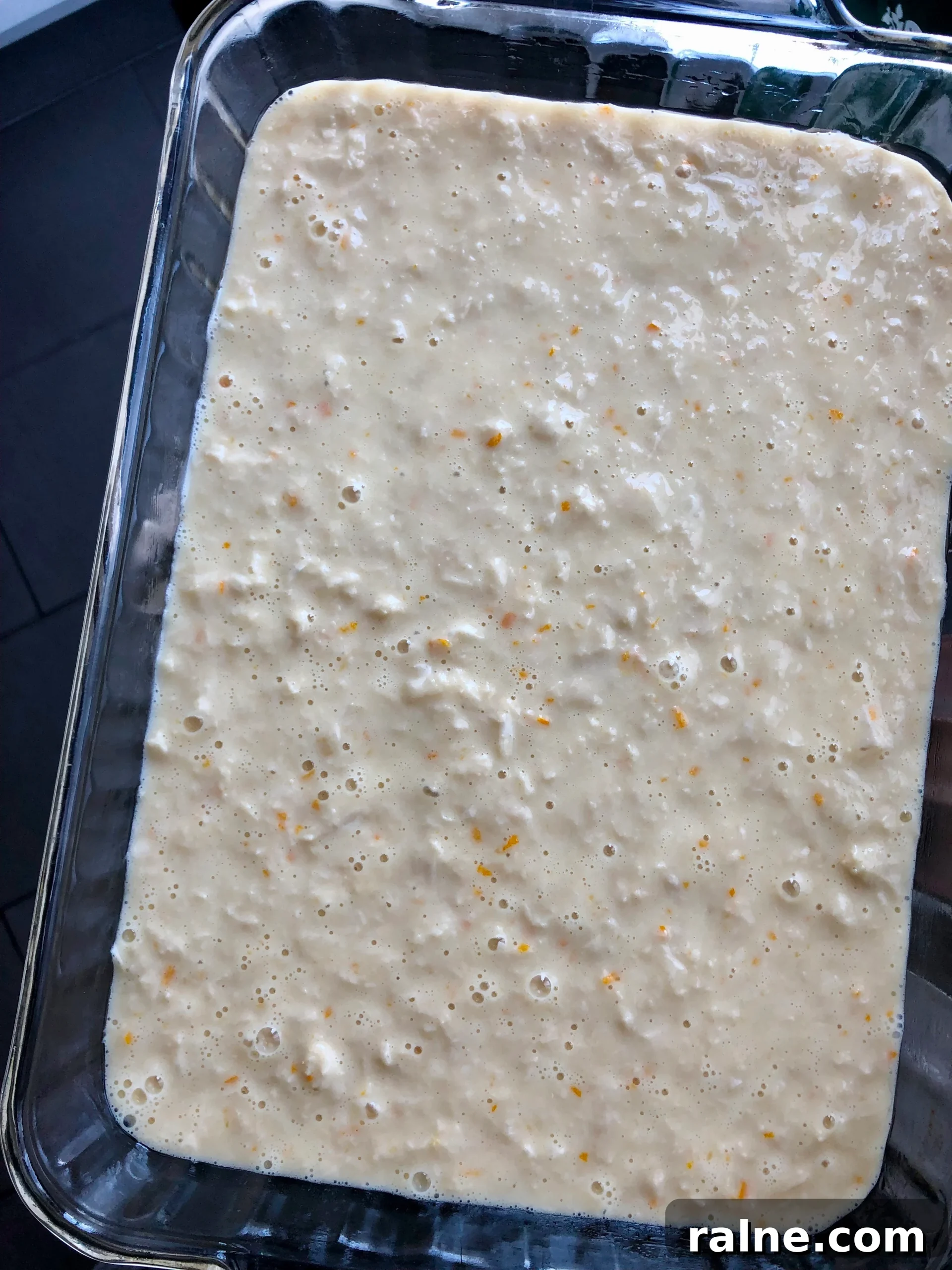
Pour the batter into a well-greased 9 x 13-inch (or similar) baking pan and bake on the middle rack for 50–60 minutes until golden. Check at 50 minutes to avoid over-browning.
Step 9
Remove the cake and immediately pierce it several times with a long clean skewer.
Step 10
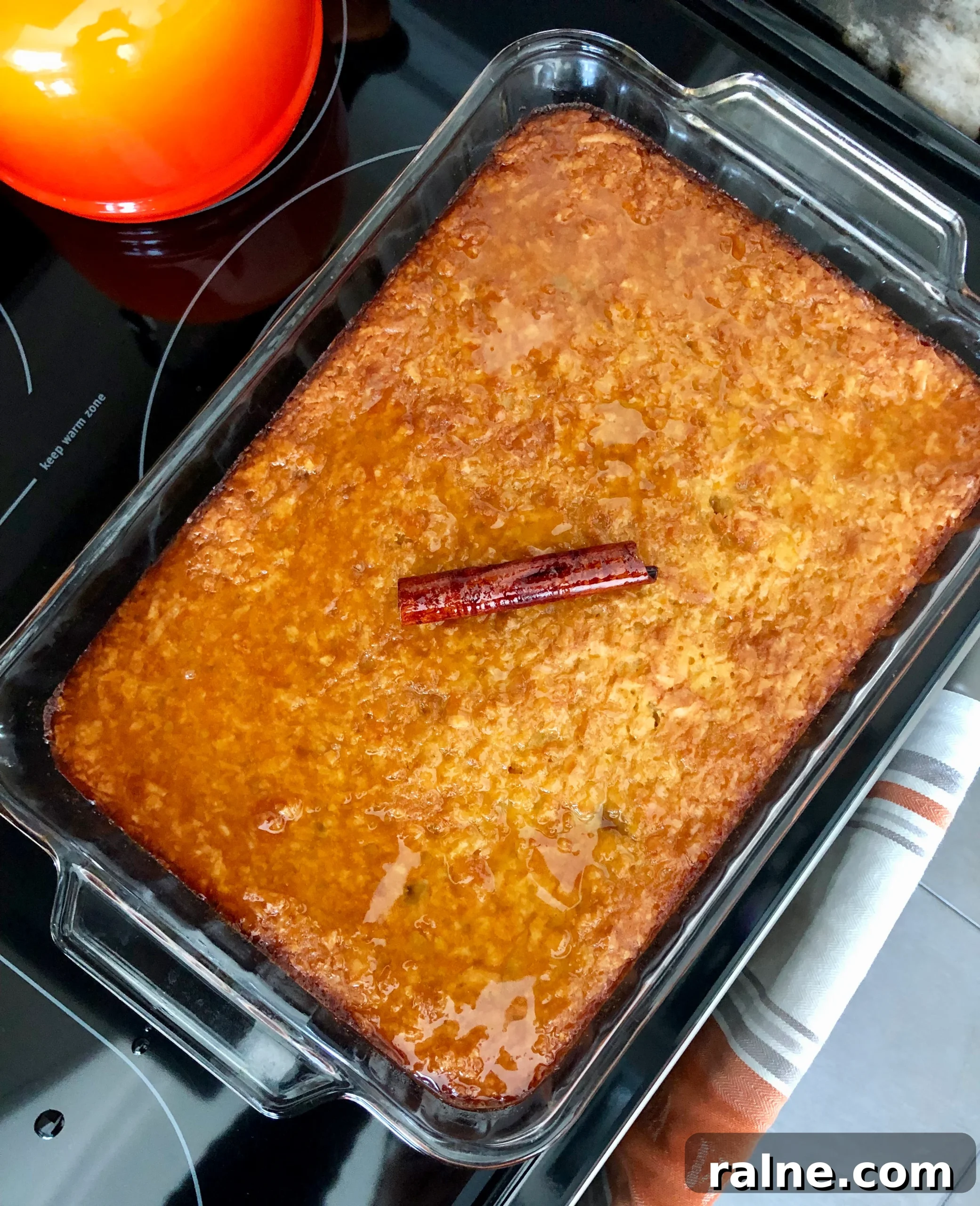
Ladle the cooled syrup over the hot cake, one small ladle at a time, allowing each addition to absorb before adding more. Continue until all syrup is used.
Step 11
Let the cake cool completely to allow the syrup to settle before cutting and serving.
Recipe substitutions
Use olive oil
Olive oil may be used instead of vegetable oil. It gives a more pronounced, fruity flavour and can darken the cake slightly but is a delicious alternative.
Use vanilla powder
Vanilla powder can replace extract—use about half the volume of powder compared to liquid extract.
Baking tips and helpful hints
Baking the phyllo at low temperature is quicker and more reliable than air-drying. Scrunch sheets loosely rather than compressing them so they dry evenly. Freshly squeezed juice gives the brightest flavour, but a good-quality store-bought orange juice works fine.
If you buy frozen phyllo, thaw it overnight in the refrigerator rather than at room temperature to avoid sogginess.
Frequently asked questions
How is portokalopita different from other orange cakes?
Portokalopita uses dried phyllo instead of flour and is soaked with an orange syrup after baking, creating a dense, syrupy cake with a distinct texture compared with standard flour-based orange cakes.
Is fresh or frozen phyllo better?
Fresh phyllo from the refrigerated section is preferred, but frozen phyllo is perfectly fine for this cake—just defrost it in the refrigerator overnight.
Can you make portokalopita ahead of time?
Yes. The cake often improves after a day as the syrup soaks in fully, making the texture and flavour more cohesive.
Recipe variations
Make a lemonipita
Swap lemons for the oranges (juice and zest) to create lemonopita, a similar cake with a brighter, tangier finish.
How to store
Store leftover portokalopita refrigerated. It can be served cold, at room temperature, or gently warmed. Many people prefer it after 1–3 days as the flavours meld further.
How to serve
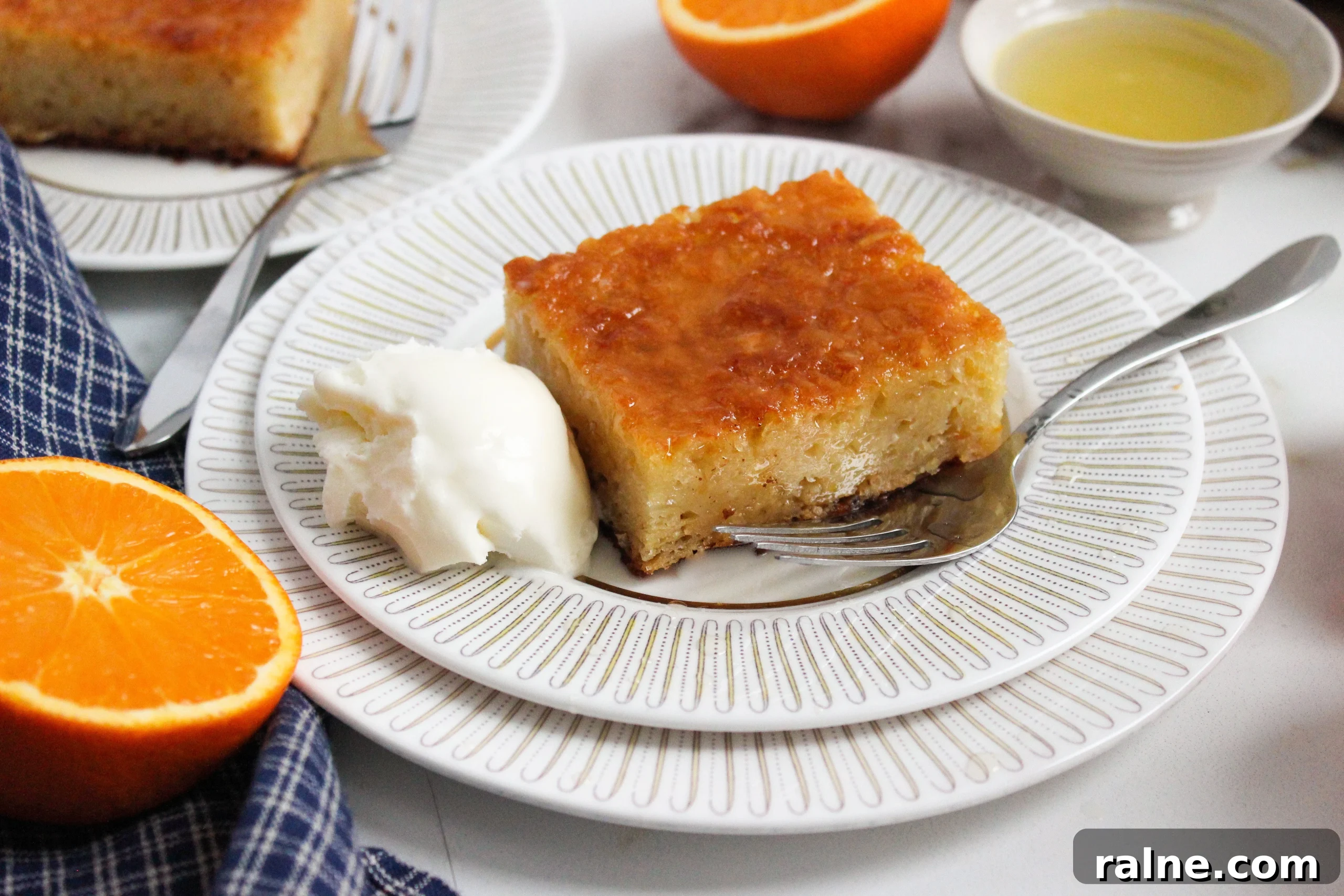
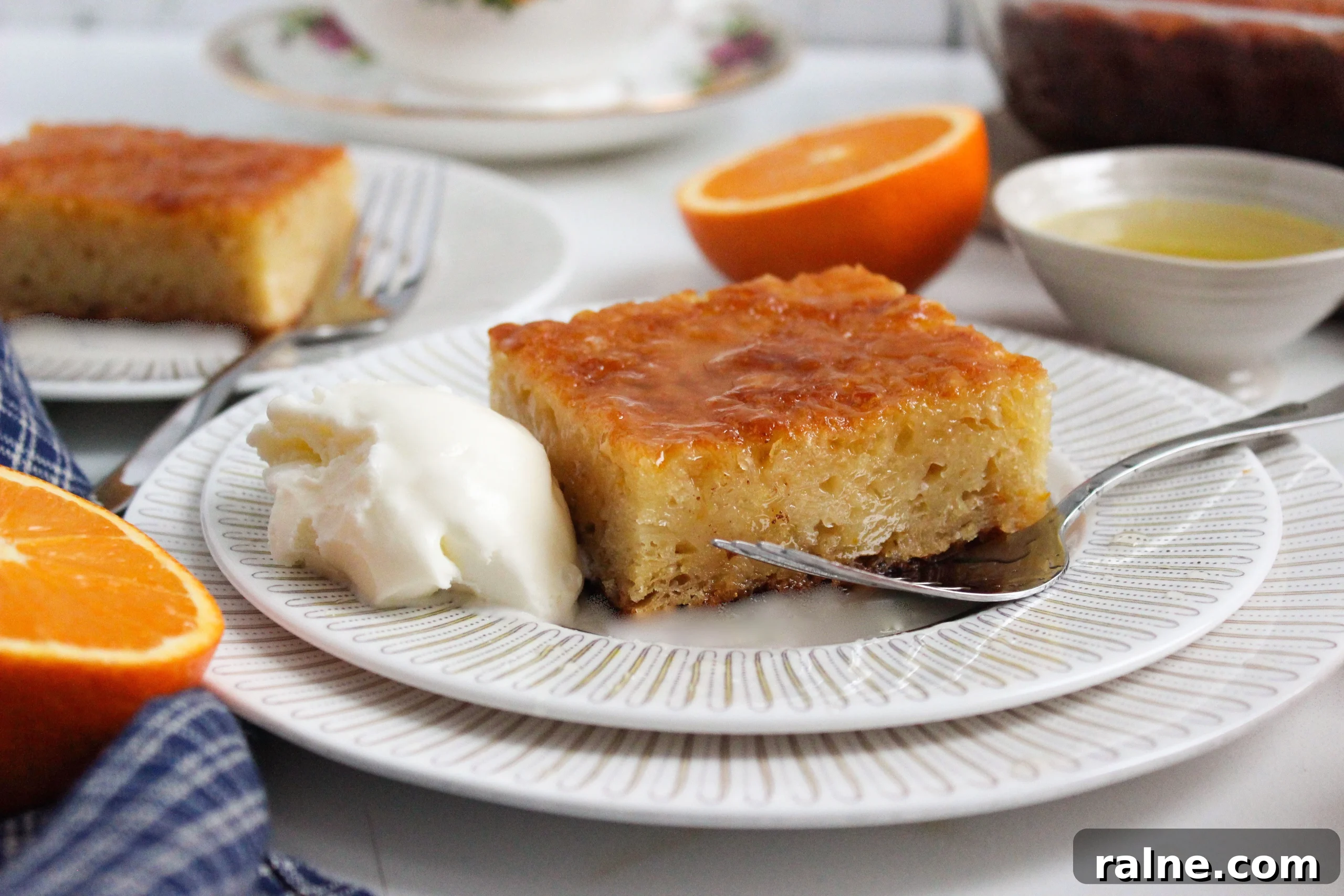
Serve slices with vanilla ice cream or plain Greek yogurt, or enjoy on their own with coffee or tea.
Related recipes
If you enjoy syrup-soaked desserts, try these:
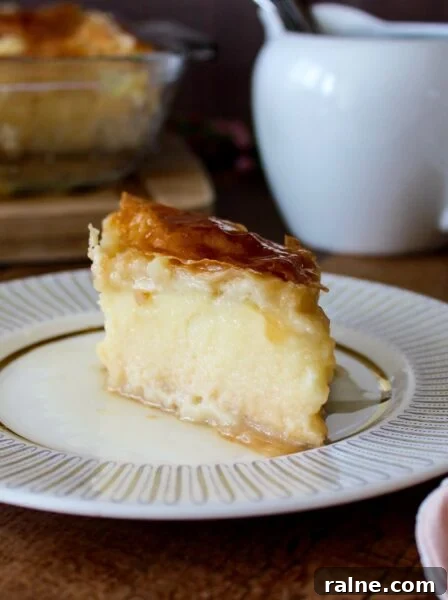
Galaktoboureko: a traditional Greek phyllo and custard dessert
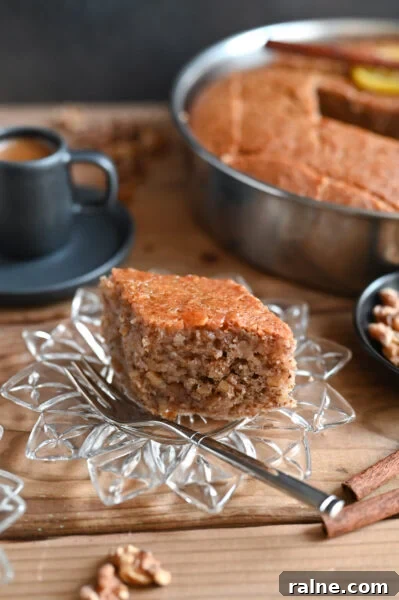
Karydopita (walnut cake): a classic syrup-soaked walnut cake
Pantespani: a Greek sponge cake often finished with an orange syrup
Portokalopita
Print
Pin