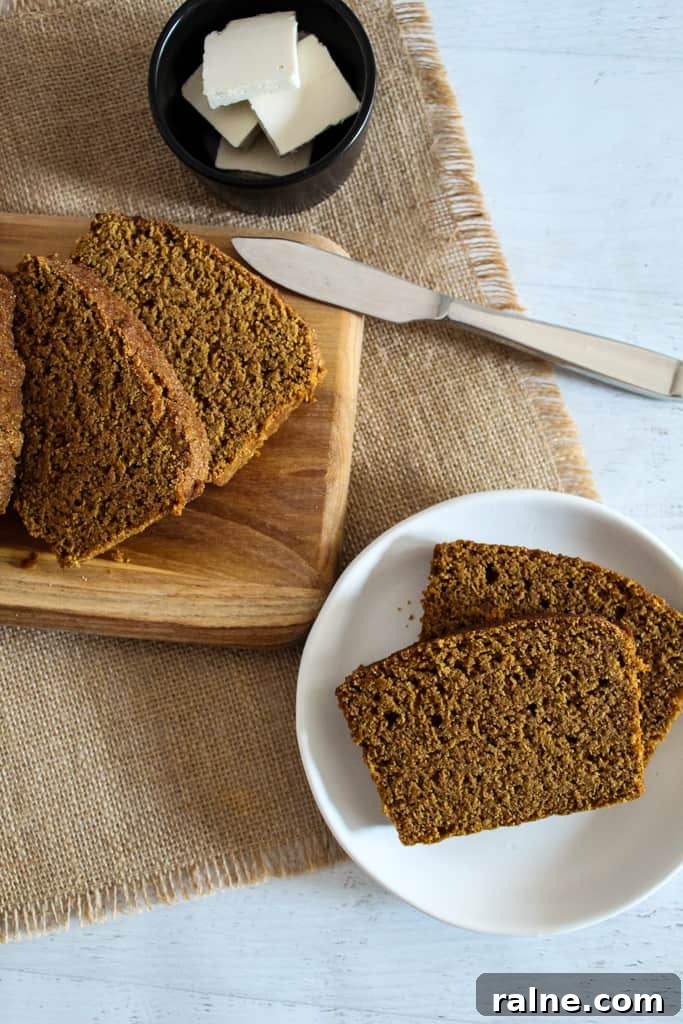
Has your gluten-free brown bread ever baked up heavy, under-set in the center, or crumbled when you sliced it? These problems usually come from an imbalance of moisture and binding agents.
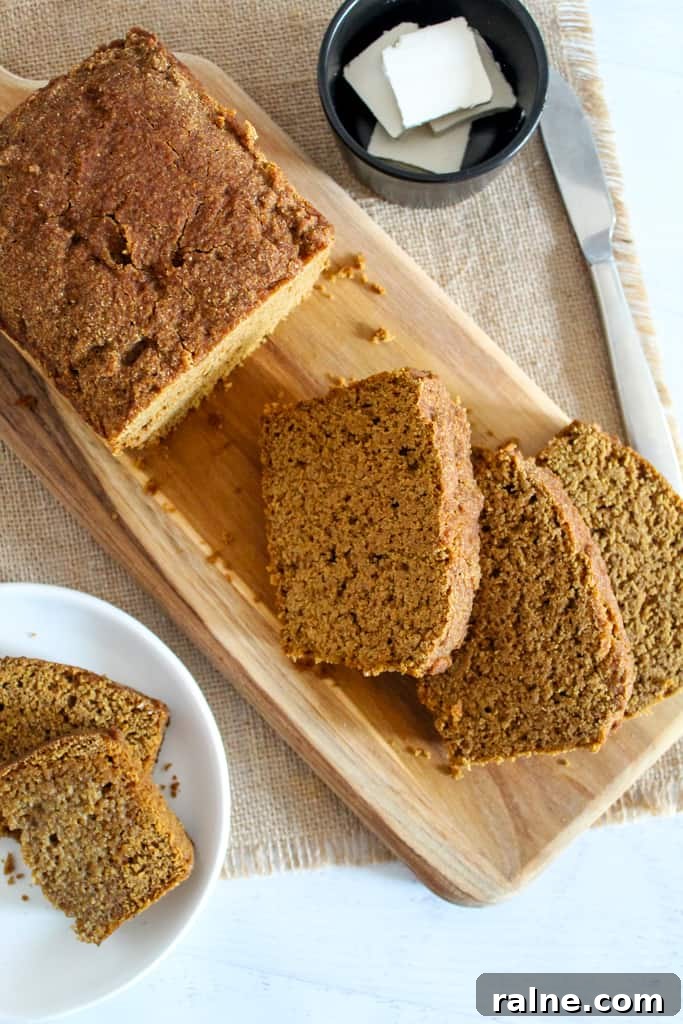
This recipe controls those variables so your loaf holds its shape, slices cleanly, and stays consistent. You can also adapt the same base into a more traditional Irish-style brown bread.
Would you like a different approach? See our Make-Ahead, Flour-Free Gluten-Free Bread recipe for another option.
Quick Ingredient Snapshot
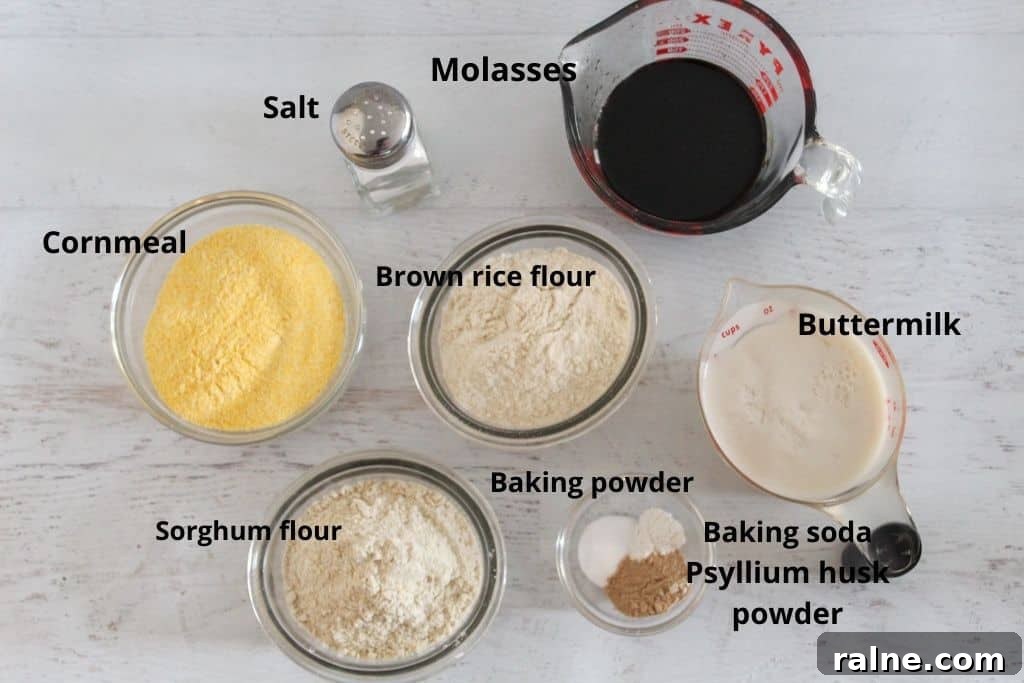
You’ll need the following:
- Gluten-free cornmeal
- Sorghum flour
- Brown rice flour
- Baking soda and baking powder
- Salt
- Psyllium husk powder
- Buttermilk (or plant-based with vinegar for dairy-free)
- Dark molasses
How the Gluten-Free Brown Bread Ingredients Work And Their Substitutions
Here’s what each ingredient contributes and simple substitution guidance so you can adjust without losing structure or flavor.
Gluten-Free Cornmeal
Cornmeal gives the bread its coarse texture and subtle bite — a defining trait of brown bread. You can reduce it slightly, but removing it entirely sacrifices that characteristic texture.
Sorghum Flour
Sorghum keeps the crumb soft and helps prevent dryness while contributing a mild sweetness. Oat flour can substitute, but expect a more delicate crumb and slightly less structure.
Brown Rice Flour
Brown rice flour provides firmness and stability to prevent collapse. White rice flour can be used but yields a lighter, less hearty loaf.
Psyllium Husk Powder
Psyllium is the primary binder that replaces gluten, holding the batter together for clean slicing. There’s no direct substitute that matches its binding power, so it’s best not to omit it.
Baking Soda + Baking Powder
These leaveners provide lift in a dough without yeast. Too much causes bitterness; too little yields a heavy loaf — measure carefully.
Salt
Salt balances sweetness and enhances overall flavor. Omitting it will make the loaf taste flat.
Buttermilk
Buttermilk adds moisture and a gentle tang while reacting with baking soda to help the batter rise. For a dairy-free option, use plant milk with a splash of vinegar; the result is slightly less rich but still effective.
Dark Molasses
Molasses defines the flavor, color, and moisture of Boston-style brown bread — it creates a darker, slightly sweet, and moist crumb. Reducing it moves the loaf closer to a traditional Irish profile. Replacing part of it with honey or maple syrup softens the flavor but diminishes depth.
Quick Sweetness Adjustments
- More molasses = richer, darker, moister bread.
- Less molasses = a more savory, Irish-style loaf.
Printable Gluten-Free Brown Bread Recipe Card
Ingredients
- 120 grams gluten-free cornmeal about 3/4 cup
- 95 grams sorghum flour about 3/4 cup
- 107 grams brown rice flour about 3/4 cup
- ½ teaspoon baking soda
- ½ teaspoon baking powder
- ½ teaspoon salt
- 1 teaspoon psyllium husk powder
- 1 cup buttermilk
- ½ cup dark molasses
Instructions
-
Combine all dry ingredients in a large bowl or the bowl of a stand mixer until evenly blended.
-
Pour in buttermilk and molasses. Mix on low until a thick, smooth batter forms.
-
Scrape the bowl and mix on medium for 2 minutes to ensure even hydration.
-
Set the batter aside for 30 minutes; it should thicken slightly.
-
Preheat the oven to 325°F (160°C). Position the rack low and grease an 8″ x 4.5″ loaf pan.
-
Spread the batter evenly in the pan and smooth the top.
-
Place the loaf pan inside a larger pan and add warm water to create a steam bath, about 6 cups depending on pan size. Keep water below the batter rim.
-
Cover the loaf pan tightly with foil to trap steam.
-
Bake on the lowest rack for 90–100 minutes, until the internal temperature reaches about 195°F (90°C).
-
Let the bread rest in the pan for 10 minutes, then remove and cool completely on a wire rack before slicing.
Notes
- Don’t skip the 30-minute rest — it strengthens structure by hydrating the flours and psyllium.
- A steam environment prevents a dry crust and helps the center cook evenly.
- Too much liquid leads to an under-set interior; measure carefully.
- Allow the bread to cool completely before slicing to avoid crumbling.
Doneness Cues
- The internal temperature should read about 195°F (90°C).
- The top should be firm and the center free of wet batter.
- A toothpick or skewer inserted into the center should come out clean.
- The loaf should pull slightly away from the pan edges.
- Be cautious when removing foil — steam will be very hot. Let the loaf cool in the pan for 10 minutes before removing.
Storage
- Room Temp: 2–3 days, wrapped well.
- Fridge: Up to 5 days (may dry slightly).
- Freezer: Up to 2 months; slice before freezing.
Reheat:
Toast slices or warm gently in the oven to restore moisture and texture.
Nutrition
Boston Brown Bread vs Irish Brown Bread
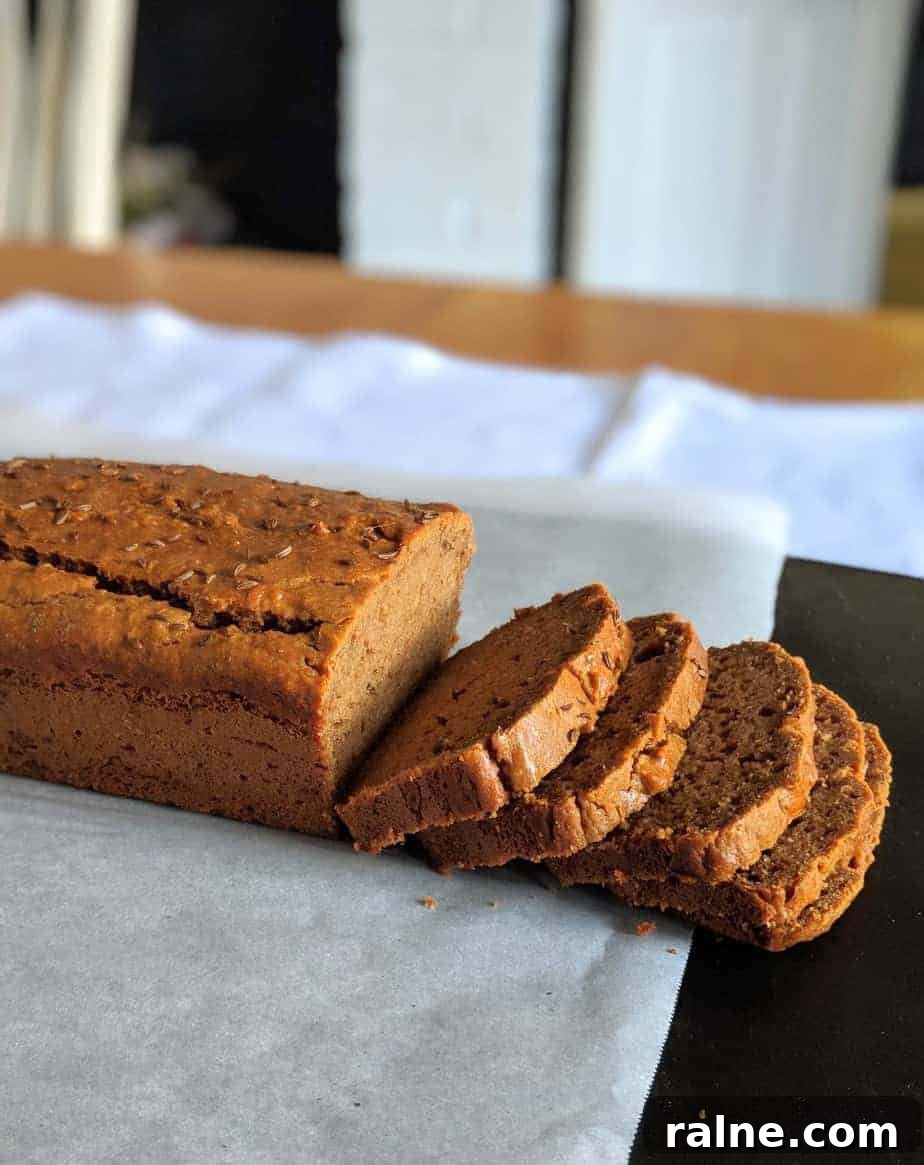
Although similar in some ingredients, Boston-style and Irish-style brown breads serve different purposes. Flavor, moisture, and texture distinguish them and guide how you’ll use each loaf.
Key Differences
Sweet vs Savory
Boston brown bread is slightly sweeter because of molasses. Irish brown bread is more neutral and pairs better with savory dishes.
Molasses vs Buttermilk
Boston-style leans on molasses for flavor and moisture; Irish-style emphasizes buttermilk for a subtle tang and lighter taste.
Texture (Dense vs Crumbly)
Boston brown bread is moist and dense, often steamed. Irish brown bread is drier and more crumbly, with a softer bite.
When to Choose Each
Choose Boston-style for breakfast or snacks with butter, honey, or jam. Choose Irish-style for lunches or dinners to accompany soups, stews, and savory spreads.
Are They Interchangeable?
They share structure but differ in flavor. Reducing molasses and emphasizing buttermilk and seeds shifts this recipe toward an Irish-style, wheaten profile.
Why This Gluten-Free Brown Bread Recipe Works
This recipe focuses on four essentials that remove guesswork and produce a reliable loaf.
Moisture Balance
The liquid-to-flour ratio hydrates the batter without making it too wet. The resting step lets flours absorb moisture evenly and helps avoid a soggy center.
Molasses Impact
Molasses holds moisture and softens the crumb; changing its amount shifts the flavor profile between sweet and savory.
Steam Baking Method
Steam prevents the crust from setting too early so the center cooks at the same rate, producing an even texture.
Structure Without Gluten
Psyllium with sorghum and brown rice flour builds a stable framework that traps moisture and enables clean slicing.
Step-by-Step Instructions
Use the right tools and follow each step carefully to achieve consistent texture and structure.
Essential Kitchen Tools You Actually Need
Recommended tools: an 8.5 x 4.5-inch loaf pan, a large mixing bowl or stand mixer, a hand or stand mixer for even mixing, a deep baking dish for a steam bath, heavy-duty foil, and a kitchen thermometer if available.
Step 1: Combine the Dry Ingredients
Add cornmeal, sorghum flour, brown rice flour, baking soda, baking powder, salt, and psyllium husk to a bowl and mix until even.
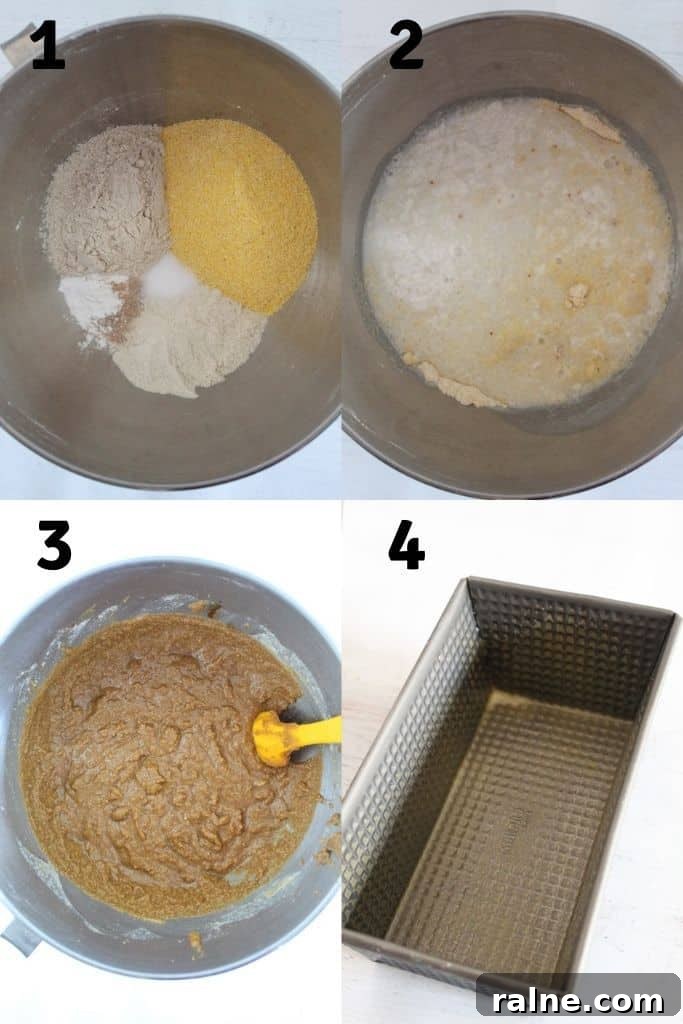
The mix should be an even color with no streaks of dry flour.
Step 2: Add Liquids and Start Mixing
Pour in buttermilk and molasses and mix on low for about 30 seconds until a thick batter forms — not a kneadable dough.
Step 3: Build Structure with Proper Mixing
Scrape down the bowl and mix on medium for 2 minutes. This ensures even hydration and activates psyllium’s binding.
Step 4: Rest the Batter (Do Not Skip)
Let the batter rest for 30 minutes; it will thicken and lose some surface shine as the flours absorb liquid.
Step 5: Prepare the Pan and Oven
Preheat the oven to 325°F (160°C) and grease an 8.5 x 4.5-inch loaf pan well to prevent sticking.
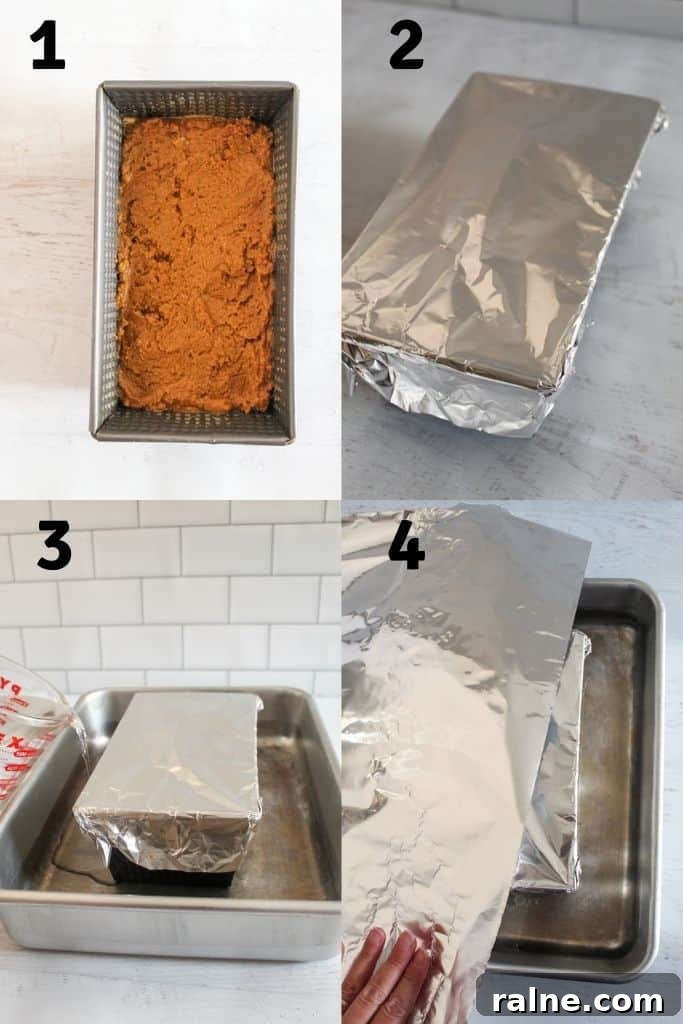
Step 6: Transfer and Level the Batter
Pour batter into the pan and smooth the top so there are no large air pockets.
Step 7: Cover the Loaf Pan
Tightly wrap the pan with foil to trap steam and prevent early crusting.
Step 8: Set Up the Steam Environment
Place the loaf pan inside a larger pan and add warm water a few inches up the sides of the outer pan. Take care not to let water enter the batter.
Step 9: Seal and Bake
Cover the whole setup with foil and bake on the lowest oven rack for 90–100 minutes, allowing slow, even cooking while steam prevents browning.
Step 10: Check for Doneness
Watch for hot steam when removing foil. The loaf is done when the internal temperature reaches ~195°F, the top is firm, and a skewer comes out clean.
Step 11: Cool in the Pan
Let the bread rest in the pan for 10 minutes before removing; the structure continues to set during this time.
Step 12: Cool Completely Before Slicing
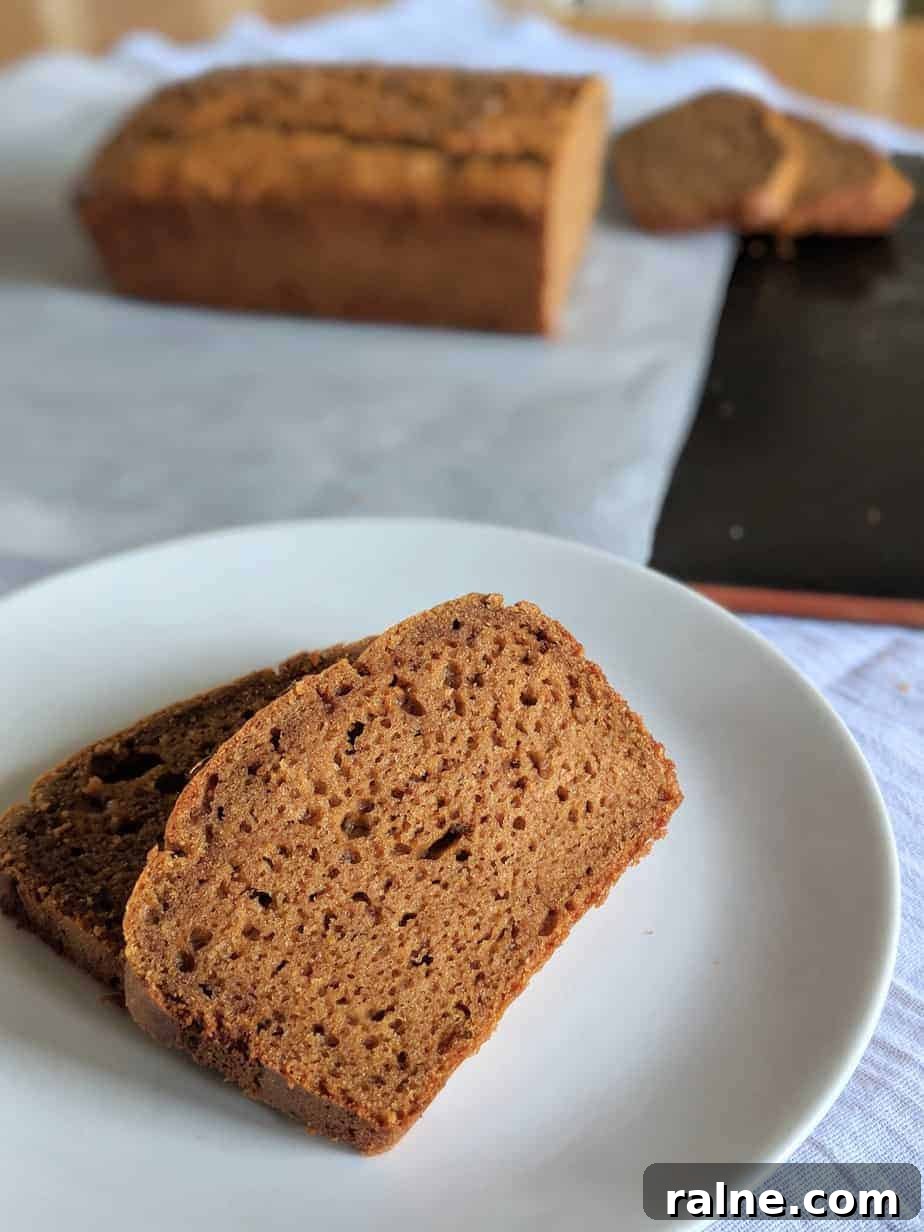
Transfer to a wire rack to cool fully. When cooled, the loaf should slice cleanly without crumbling.
Common Mistakes And How to Fix Them
Small variations can alter the outcome. Use these troubleshooting tips to identify issues and correct them on your next bake.
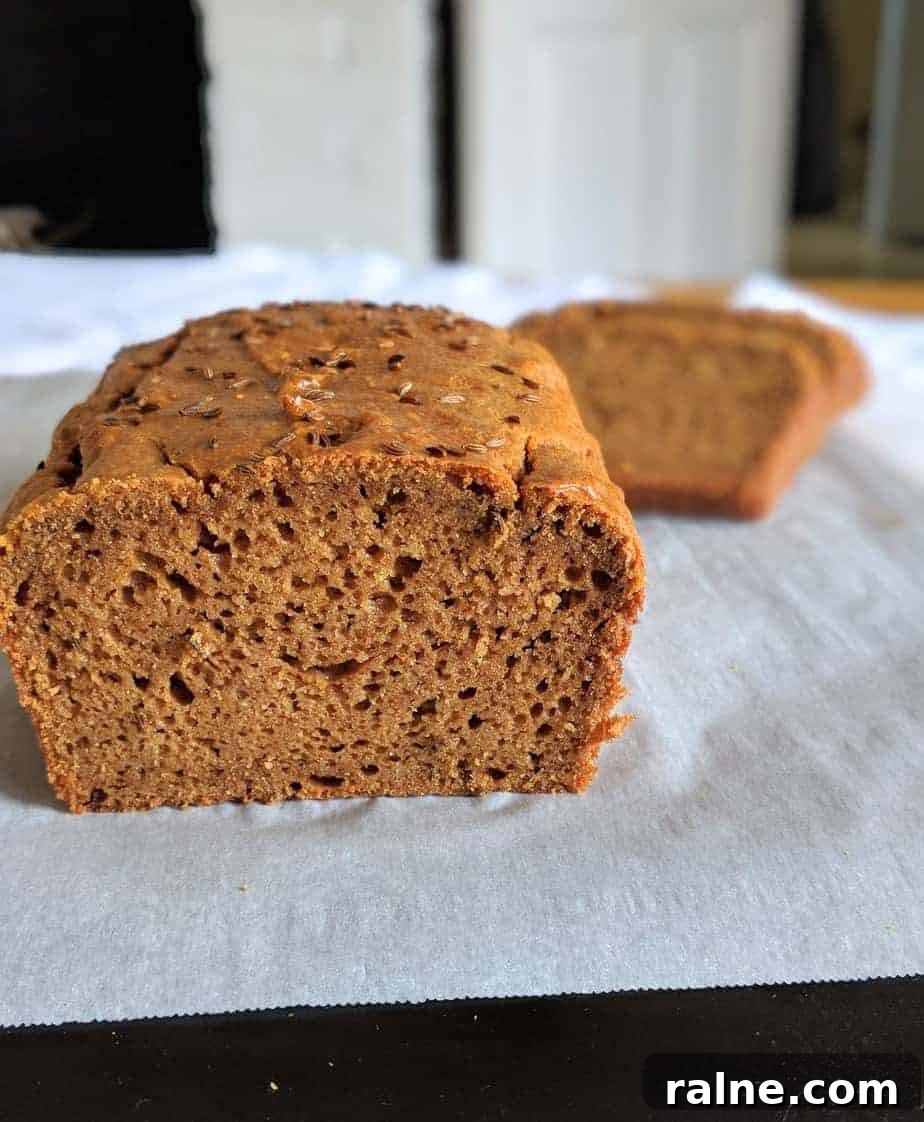
Why Is My Bread Gummy?
A gummy center indicates underbaking. Bake until the internal temperature reaches ~195°F and allow the loaf to cool completely before slicing.
Why Did It Collapse?
Collapse results from insufficient structure. Measure liquids accurately and mix thoroughly to activate the psyllium binder.
Why Is It Too Dense?
A dense loaf usually means limited rise. Check that leavening agents are fresh and that the batter is thick but not overly stiff.
Why Does It Taste Bitter?
Bitterness often comes from too much baking soda or an imbalance with molasses. Measure baking soda precisely and mix evenly.
How to Make This Gluten-Free Brown Bread Recipe More Like Irish Brown Bread
No new recipe is necessary to get an Irish-style result — shift the balance of flavors and textures instead.
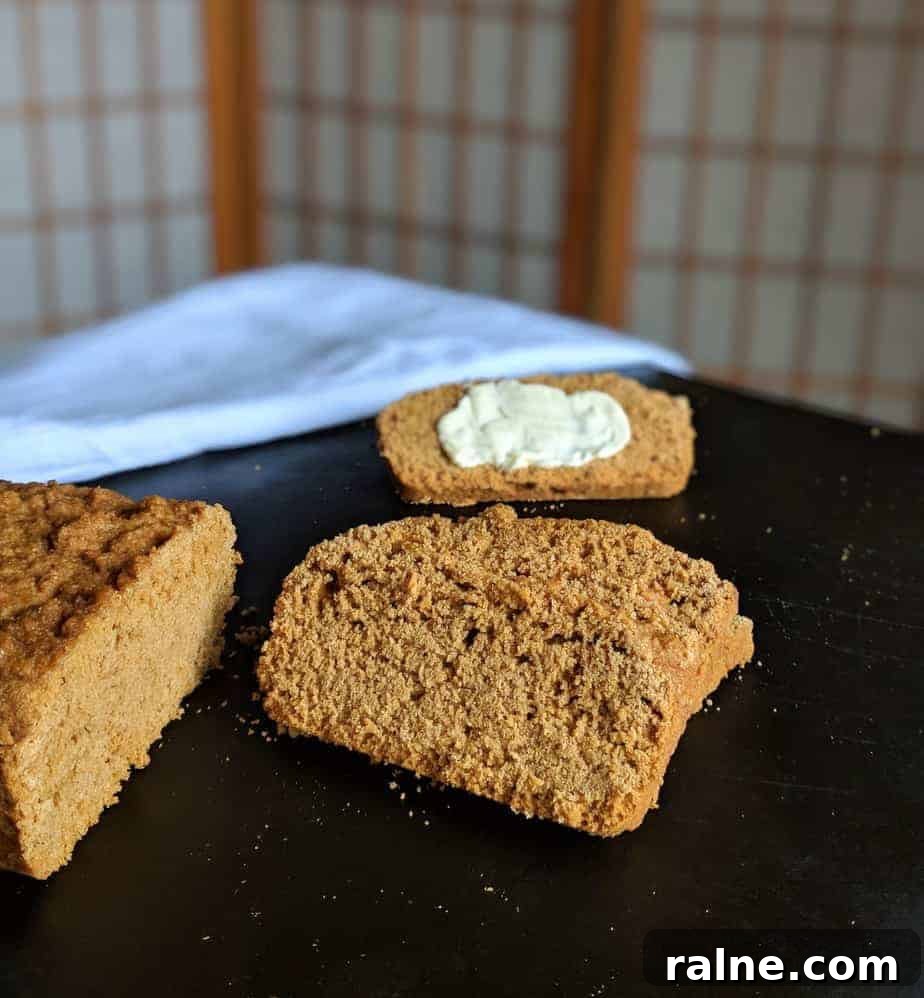
Reduce or Remove Molasses
Cutting back on molasses reduces sweetness and moves the loaf toward a neutral flavor profile.
Choose Buttermilk Flavor
Let buttermilk be the dominant flavor to add subtle tang and balance the loaf.
Add Seeds for Texture
Adding seeds gives the bread a firmer bite and a rustic finish that suits savory pairings.
Reduce Overall Sweetness
A less-sweet loaf pairs better with soups and savory dishes. Small adjustments to molasses and optional seeds will get you there.
Best Gluten-Free Flours for Brown Bread
Choosing the right combination of flours controls the framework and how close the final result is to a familiar brown bread texture.
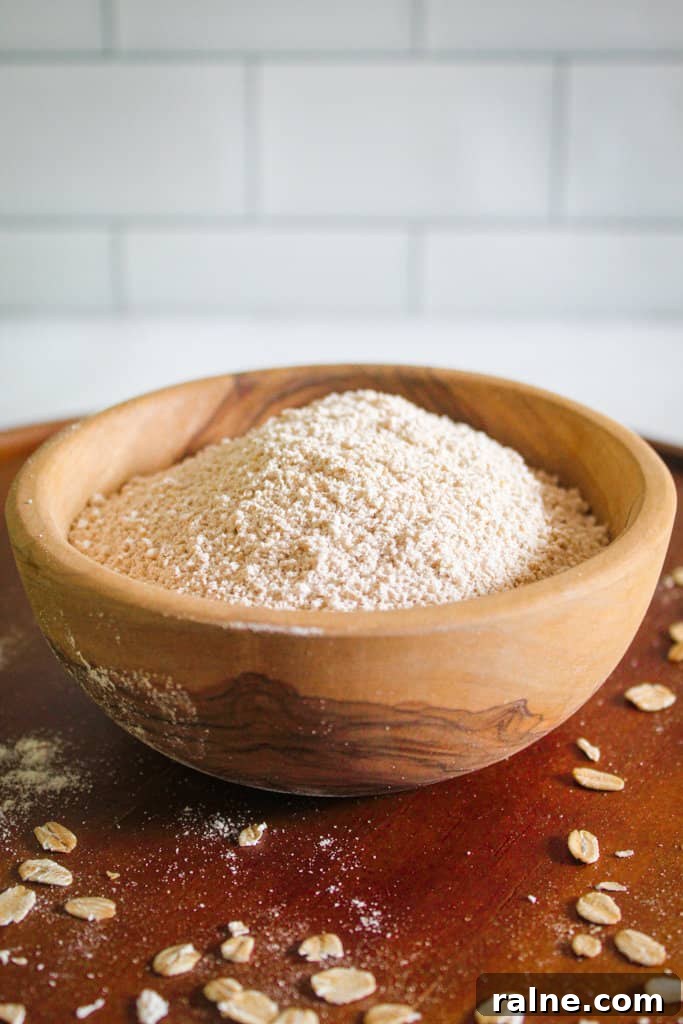
Oat Flour
Oat flour yields a softer, tender crumb but lacks structure on its own. Pair it with brown rice or sorghum to maintain stability.
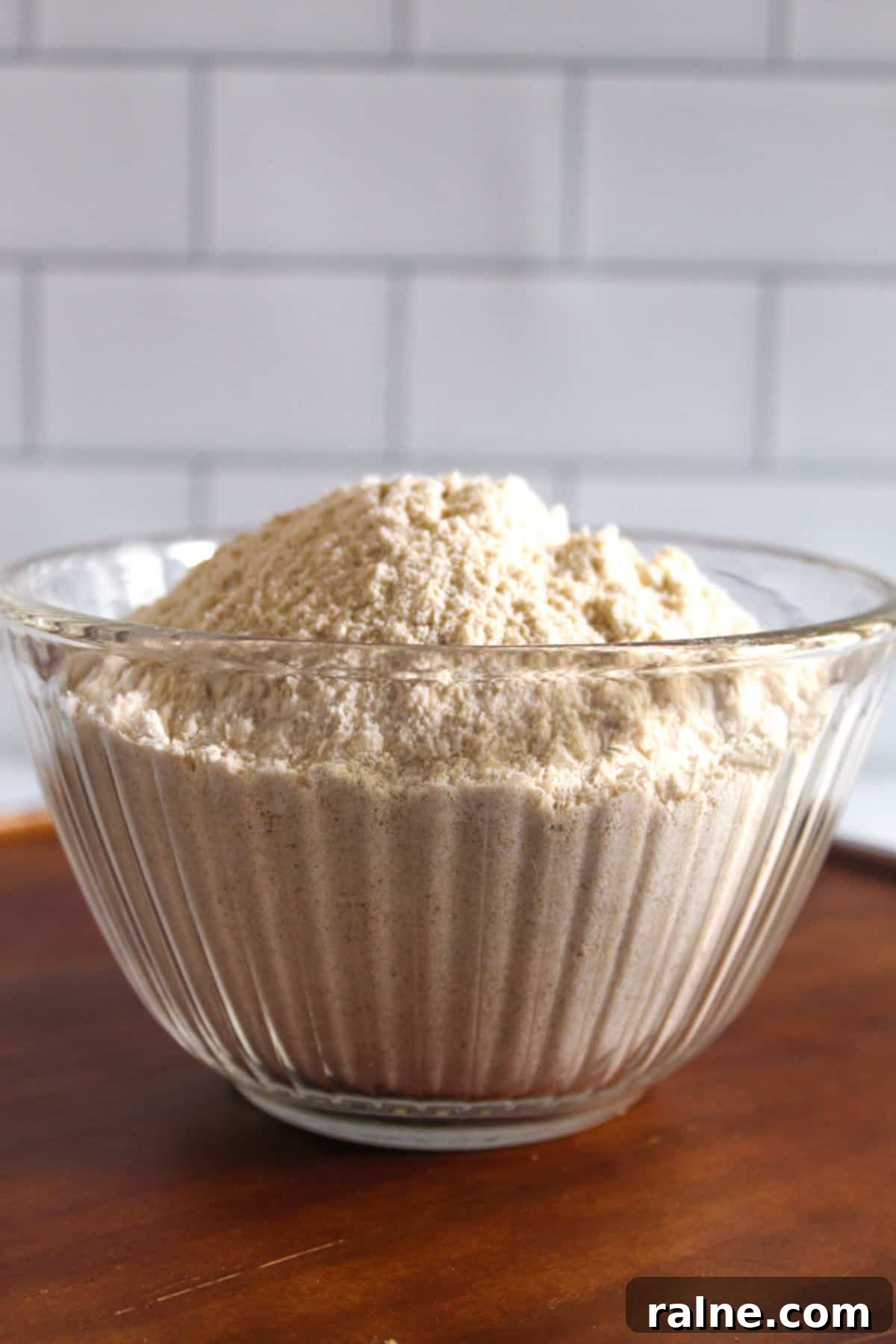
Sorghum Flour
Sorghum adds moisture retention and a balanced crumb; combined with brown rice flour it helps avoid heaviness.
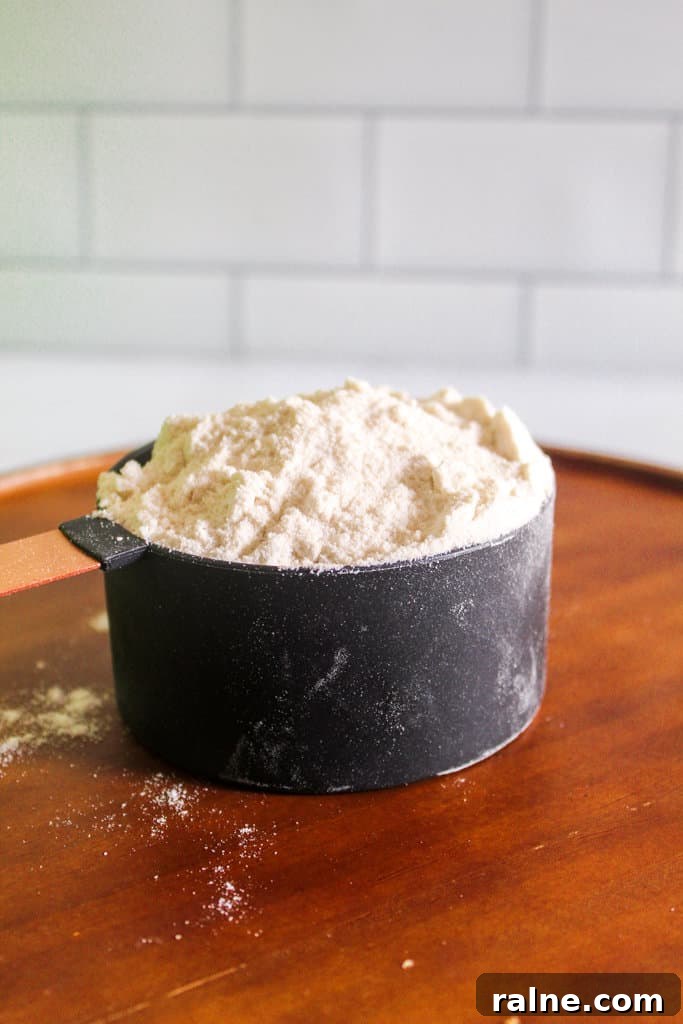
Brown Rice Flour
Brown rice flour contributes firmness and shape retention; paired with sorghum you’ll avoid a dense texture.
Pan Size and Baking Time Chart
Shape and size affect how heat moves through the batter. Use these guidelines and rely on doneness cues when changing pan types:
| Pan Type | Time | Result |
|---|---|---|
| Loaf pan | 90 to 100 minutes | Standard loaf, moist and sliceable |
| Coffee can | 100 to 110 minutes | Traditional, dense, uniform texture |
| Muffins | 25 to 35 minutes | Lighter, softer, quicker bake |
A loaf pan gives the most balanced result and is what this recipe is designed for. If you change the pan, use temperature and skewer tests rather than time alone.
How to Store, Freeze, and Reheat This Gluten-Free Brown Bread
Gluten-free bread dries out faster than wheat-based loaves, so proper storage and reheating preserve freshness and texture.
How to Prevent Dryness
Wrap the cooled loaf tightly in airtight packaging to retain moisture.
Freezing (Best for Long-Term Storage)
Slice before freezing, wrap slices individually or with parchment between them, and store in a sealed freezer bag for up to two months.
Best Reheating Methods
Toast to restore structure or warm gently in the oven to soften the crumb without drying it out.
What to Serve With Your Gluten-Free Brown Bread
Pairings bring out the loaf’s best qualities. Choose sweet toppings for Boston-style and savory accompaniments for Irish-style.
Butter and Honey
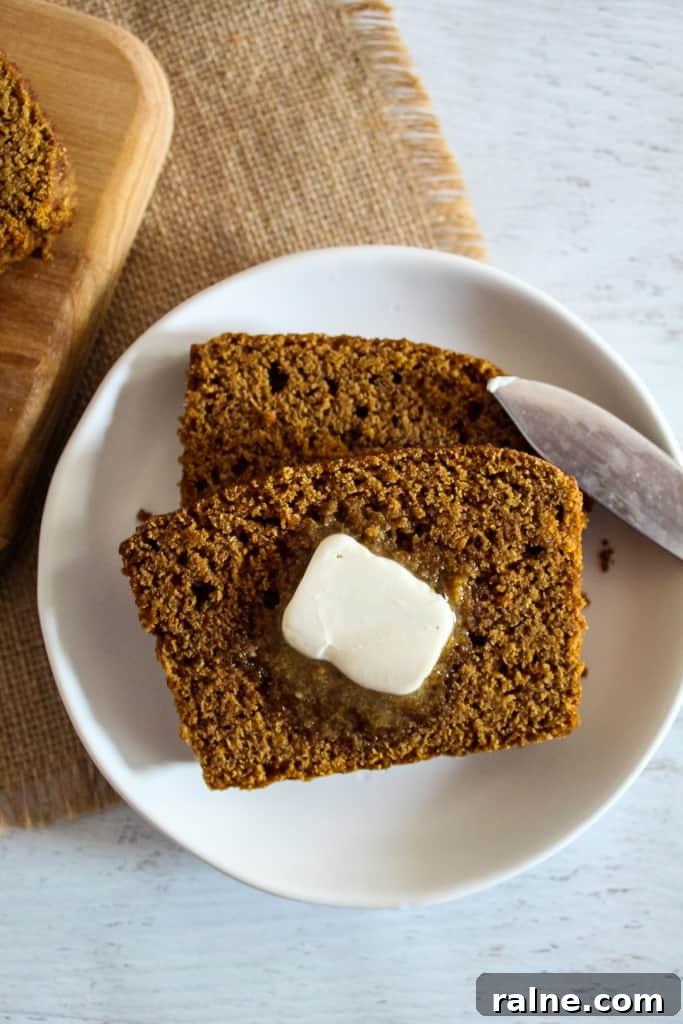
Warm slices with butter and honey highlight the deeper molasses notes and are a simple, satisfying serving.
Soups and Savory Dishes
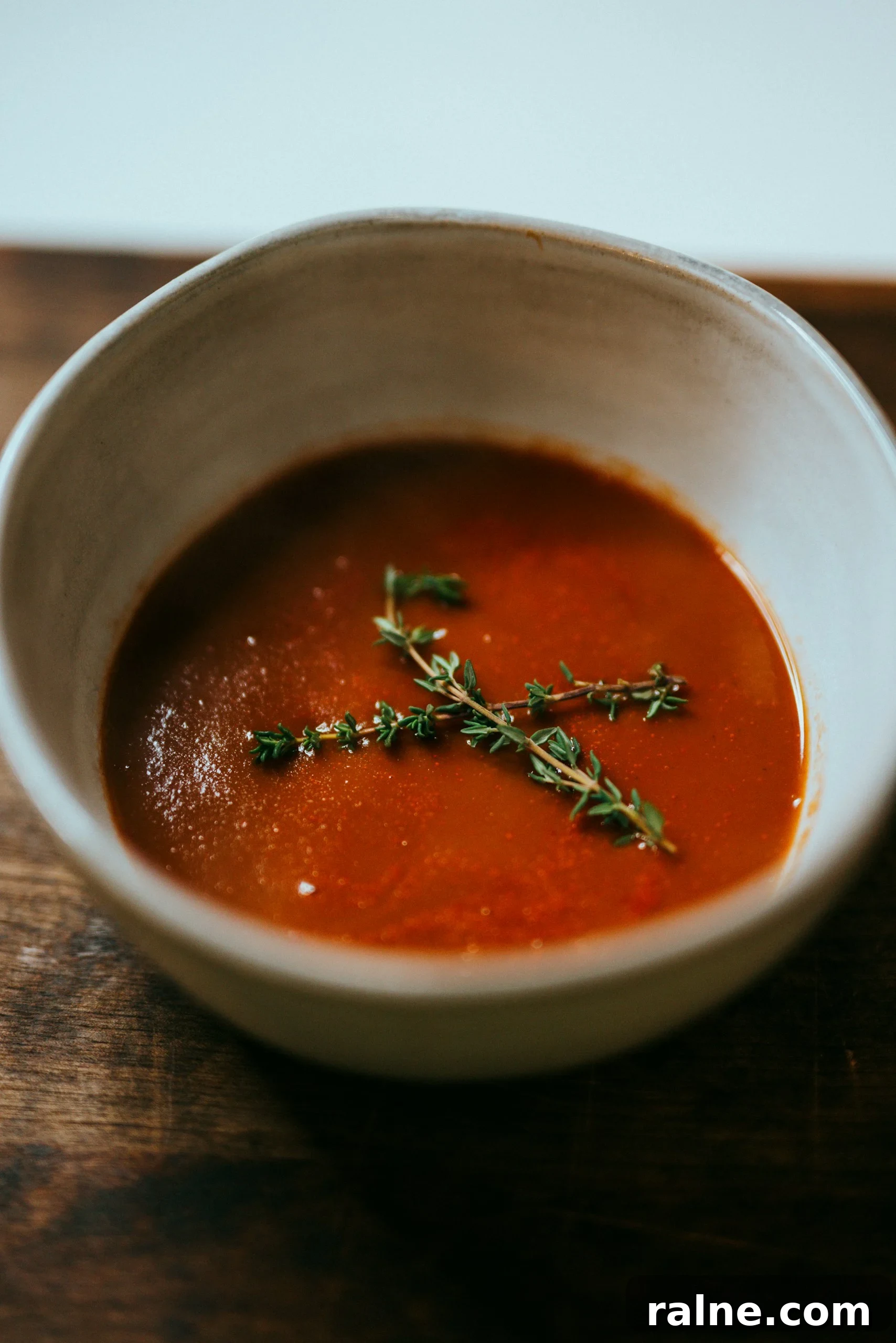
An Irish-style loaf pairs well with thick soups, stews, and broths — it holds up to dipping and adds hearty substance.
Breakfast Pairings
Toast with butter or jam, serve alongside eggs, or pair with yogurt and fruit for a filling breakfast.
Nutritional Benefits of This Gluten-Free Brown Bread
This loaf is made from simple, whole ingredients that offer more than empty calories: fiber, steady energy, and a naturally low-fat base.
Naturally Gluten-Free and Digestible
This recipe is suitable for those with celiac disease or gluten sensitivity and uses recognizable, minimally processed ingredients.
Rich in Fiber and Gut Support
Sorghum and whole-grain flours contribute dietary fiber, which supports digestion and helps keep you satisfied longer.
Steady Energy from Whole Grains
Cornmeal, sorghum, and brown rice provide complex carbohydrates that release energy gradually rather than causing quick spikes.
Naturally Low in Fat
The base recipe is low in fat, making it a light starting point you can customize with toppings.
Who Is This gluten-free Brown Bread Recipe For?
This recipe suits a range of bakers: those on gluten-free diets, beginners seeking reliable methods, people who want a traditional-style loaf with small adjustments, and anyone wanting a simple whole-ingredient bread.
Frequently Asked Questions
If you don’t see your question here, leave a comment with your specific issue and we’ll help troubleshoot.
Can I Make This Bread Without Psyllium Husk?
Psyllium is essential for binding in this formula. Omitting it will likely produce a crumbly loaf that falls apart when sliced.
Can I Bake This Bread Without A Steam Bath?
You can, but expect a drier crust and a possible undercooked center. The steam bath promotes even cooking and moisture retention.
Why Does My Bread Stick To the Pan?
Sticking usually means the pan wasn’t greased sufficiently or the loaf was removed too soon. Let it rest 10 minutes before releasing from the pan.
Can I Make this Recipe Vegan?
Yes — substitute buttermilk with plant milk plus vinegar. The texture may be slightly less rich but remains pleasant.
How Do I Get A Lighter Texture Instead of a Dense Loaf?
Use fresh leavening, mix thoroughly, maintain correct hydration, or bake as muffins for a lighter, less dense result.
Related Recipes To Try
Explore variations if you want a softer crumb, more nutrition, or a different method such as yeast-based or sourdough.
- Soft Gluten-Free Vegan Bread for a lighter crumb
- Omega-3 Loaded Cinnamon Bread for extra flavor and nutrition
- Beginner-Friendly Gluten-Free Sandwich Bread for everyday use
- Gluten-Free Sourdough Bread to explore fermentation
Tell Us How Yours Went
Did your loaf turn out heavy or perfect? What flour combination worked best for you? Share your results, tweaks, or questions in the comments — your experience helps others bake better loaves.