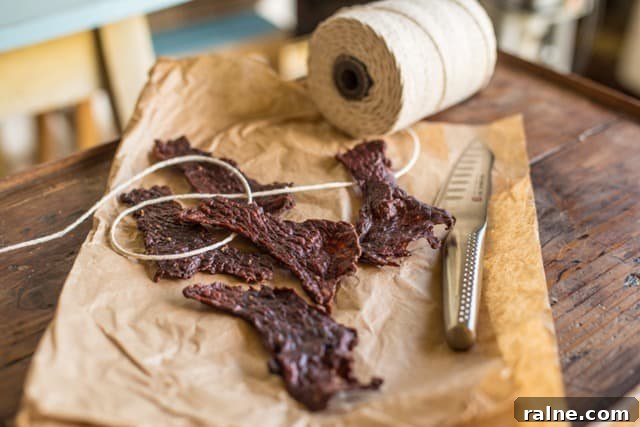
This nitrate-free Salt and Pepper Beef Jerky is a delicious, high-protein snack with no added sugar. It’s well suited to low-carb, keto, paleo, and whole-food diets, and makes for a satisfying savoury bite.
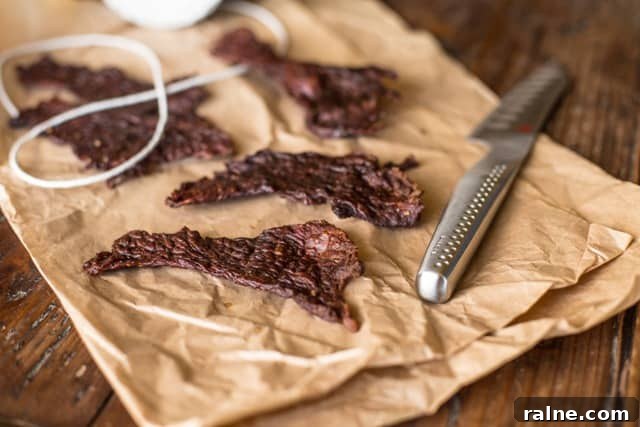
What is beef jerky?
Beef jerky is made by slicing lean meat into very thin pieces and drying them until the moisture is removed. The dehydration preserves the meat, extending its shelf life compared with raw meat, and creates a compact, flavourful snack.
Because it’s low in carbohydrates and relatively low in fat while being high in protein, jerky is a convenient option for people looking for a nutrient-dense, portable snack.
A brief history of jerky
References to dried meat appear in ancient Egyptian records, where the dry climate allowed easy sun-drying. In North America, the practice became widely adopted by early settlers and frontiersmen. Cowboys and travellers often sliced meat into strips and hung them to dry in the sun, producing lightweight, preserved food they could carry for long journeys.
The notion of setting out on the trail with little more than a saddlebag and a supply of jerky is appealing—a simple, practical food that’s stood the test of time.
Do you need nitrates to make jerky?
Nitrates and nitrites are commonly added to cured meats to extend shelf life and help preserve color and safety. This recipe intentionally avoids nitrates, so the jerky should be stored and consumed more quickly than commercially cured versions. In practice, homemade jerky rarely lasts long in a household where people enjoy it.
Preparing the meat
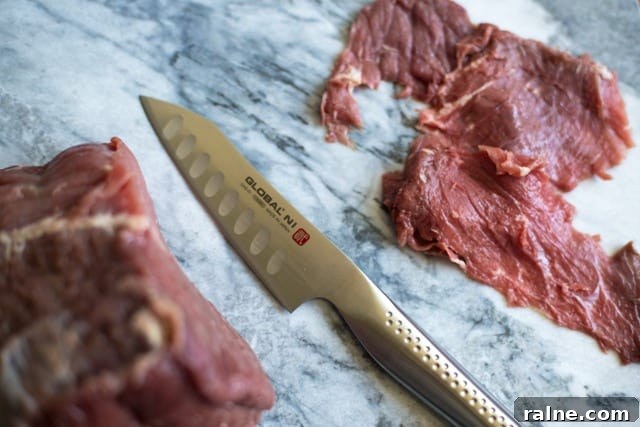
A sharp, reliable knife is one of the most important tools for making jerky. A good knife isn’t a luxury if you cook often; it makes slicing lean joints thinly and consistently much easier.
Two practical tips for slicing: first, place the joint in the freezer for about an hour to firm it up—this makes it far easier to cut thin, even slices. Second, slice against the grain of the muscle fibres to produce a less chewy texture. Try both with and against the grain to discover your preferred bite.
Trim away any visible fat as you prepare the meat: fat does not dehydrate well and can spoil during storage, affecting the jerky’s shelf life and flavour.
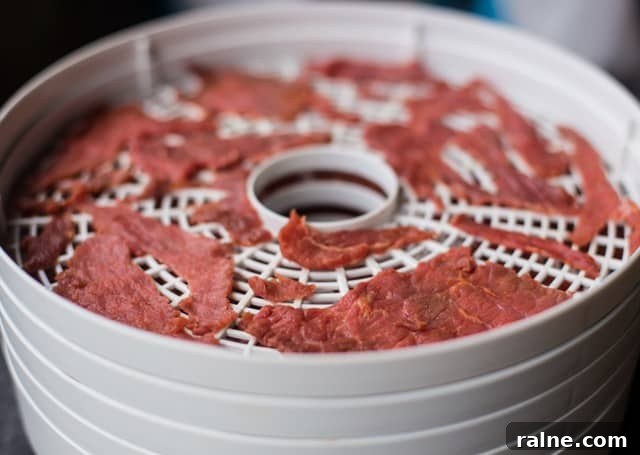
Salt and Pepper Beef Jerky: no nitrates, no marinade
This recipe keeps the seasoning simple—just salt and freshly ground black pepper—so the meat’s natural flavour shines through. The jerky is dried using a dehydrator, but you can dry the strips in a low oven if you don’t have a dehydrator. Whichever method you use, practice good hygiene: the meat won’t be cooked at high temperatures, so clean utensils, surfaces, and hands thoroughly to reduce contamination risk.
Because this method uses no nitrates and no extensive curing marinade, the finished jerky should be stored in the refrigerator after drying. Removing fat and drying the meat thoroughly will extend how long it stays good, but refrigerated storage is recommended for safety and freshness.
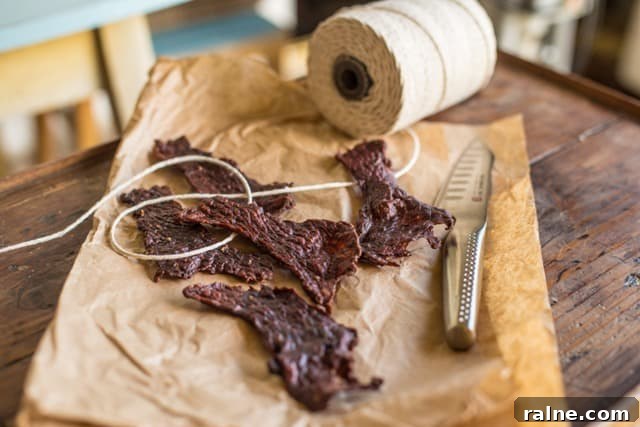
If you’ve made jerky before you’ll notice this approach is simpler than many recipes that use curing salts or complex marinades. That simplicity results in a clean, peppery snack that’s ready to enjoy sooner. Different areas of a dehydrator or oven may dry at different rates; remove finished pieces as they become ready and let the rest continue drying.
Enjoy making and eating your jerky—if you try it in a dehydrator for the first time, dehydrating other foods like tomatoes can be a good way to become familiar with the process.
Main Course
American
beef jerky recipe, peppered beef jerky, salt & pepper jerky
-
600
g
silverside beef
lean -
2
teaspoons
fine salt -
1
tablespoon
freshly ground black pepper
-
Place the piece of beef in the freezer for about an hour to firm it up, which makes slicing easier.
-
Sharpen your knife, then slice the meat as thinly as possible. Some pieces may be thicker—don’t worry about slight variations.
-
Cutting against the grain usually yields a less chewy result, but experiment with both directions to find your preferred texture.
-
Place the beef slices in a large zip-top bag and sprinkle with the salt and pepper. Seal the bag and massage the seasoning into every piece through the plastic.
-
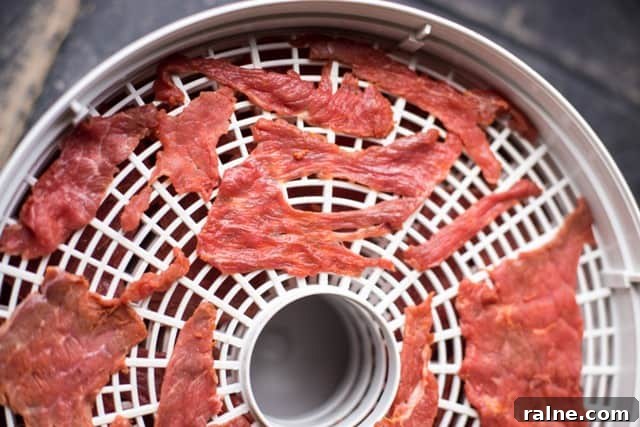
Arrange the slices on dehydrator trays or oven racks so they don’t touch or overlap.
-
Dry the meat until it is dry but still flexible. Allow the jerky to cool, then store it in a sealed container in the refrigerator.
-
Different pieces may finish at different times; remove finished pieces to cool while the rest continues drying.
Calories from Fat 405