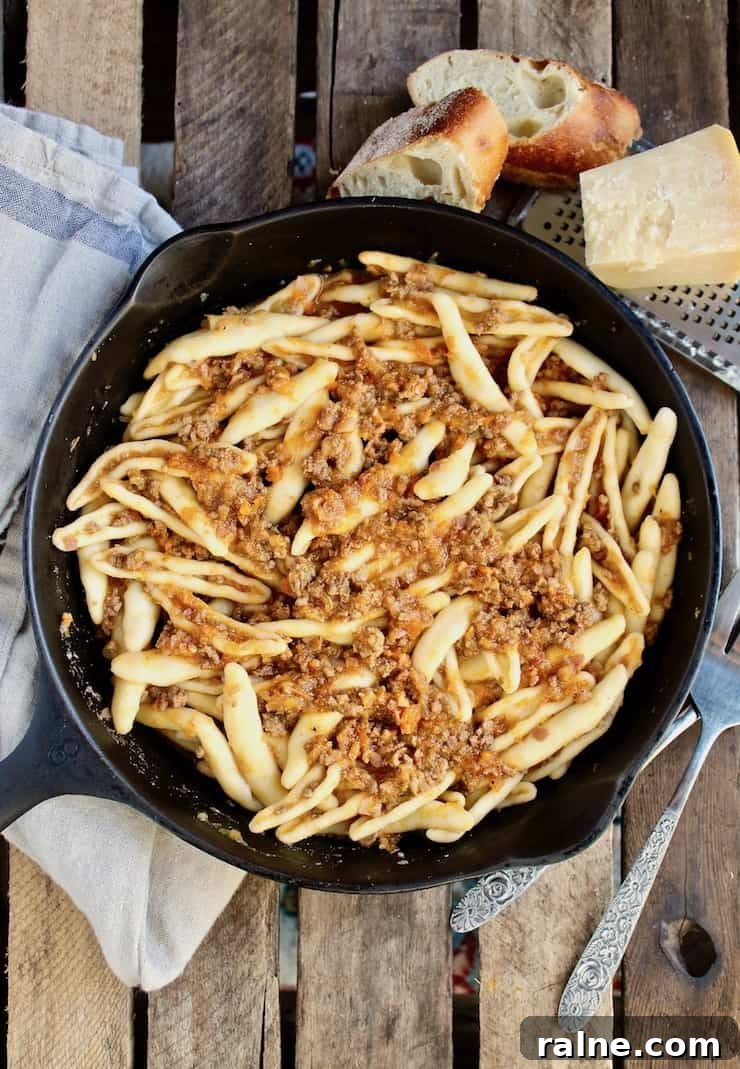
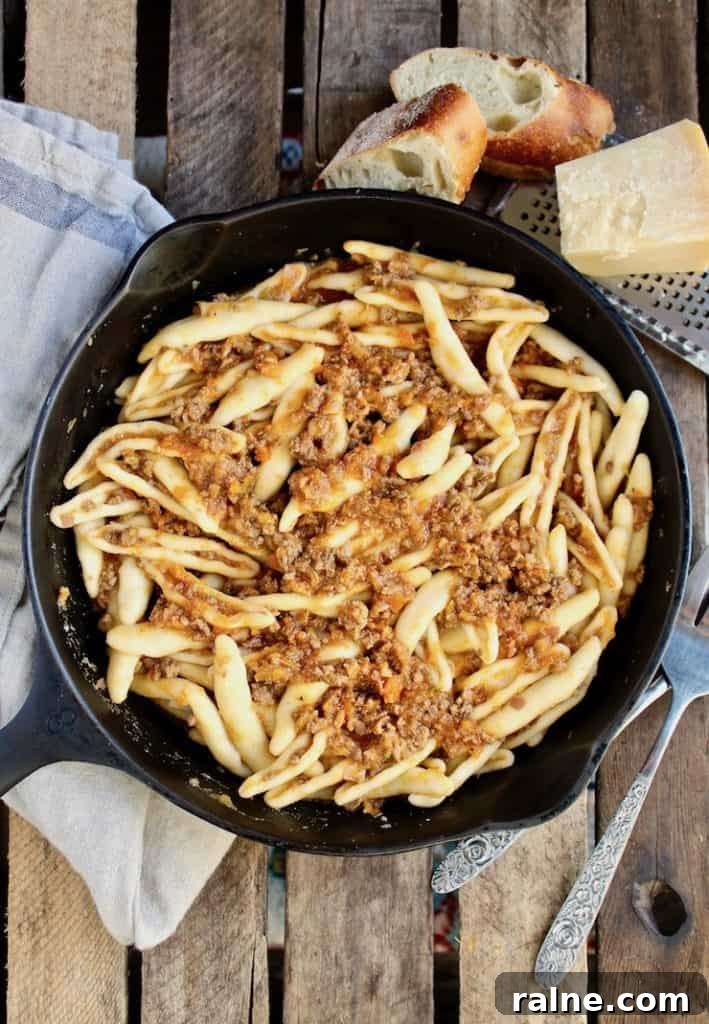
Classic Bolognese Ragù
Full disclosure: I can make a quick meat sauce by doctoring jarred marinara with browned ground beef, onions and a few spices, and my husband declares it the best pasta sauce he’s ever had. It’s good, but it’s not a true Bolognese ragù. This Classic Bolognese Ragù is a slow-cooked sauce that develops deep, layered flavor over a couple of hours — not a 15-minute shortcut.
I first made Bolognese years ago and then, somehow, forgot about it. An authentic ragù alla Bolognese centers on a handful of specific ingredients: ground meat, pancetta, onions, carrots, celery, tomato paste, stock, red wine, milk, salt and pepper. That’s all it needs, and that’s what I used here.
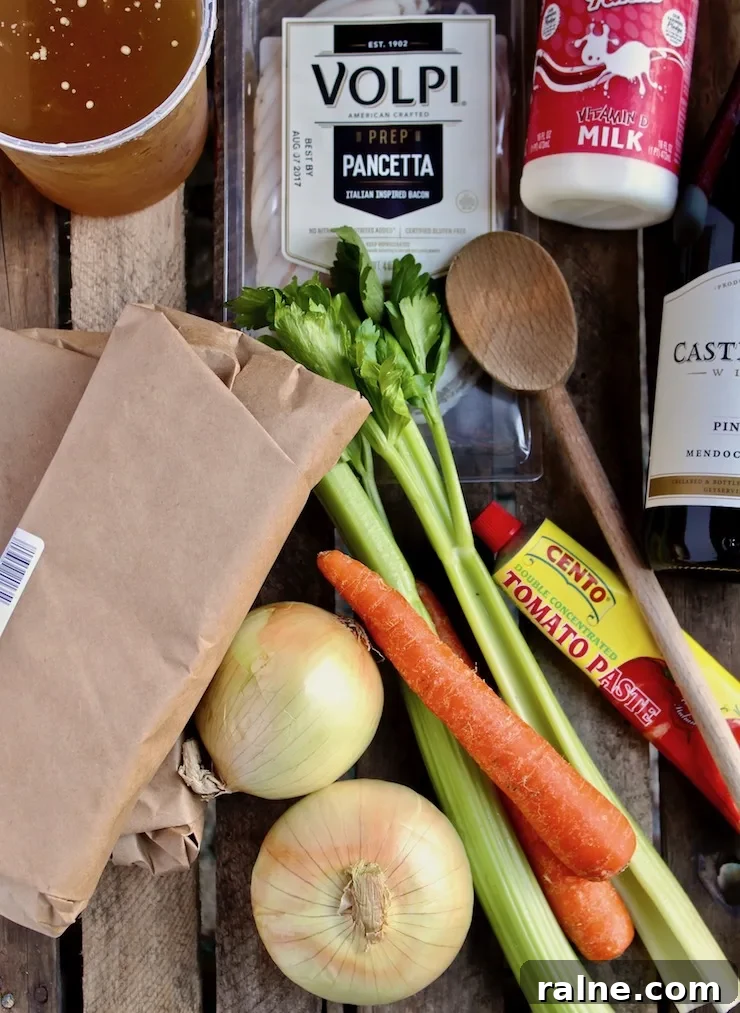
For the meat I used a mix of ground beef and ground pork; ground veal can replace pork if you prefer. The sauce begins with a soffritto — finely chopped onion, carrot and celery — which forms the aromatic base. From there you build the sauce by browning the meats with pancetta, deglazing with red wine, adding tomato paste and stock, and letting everything simmer gently so the flavors concentrate. This recipe uses no chopped whole tomatoes — only tomato paste, stock and a splash of wine. The final touch is adding milk and simmering until the sauce is rich and velvety.
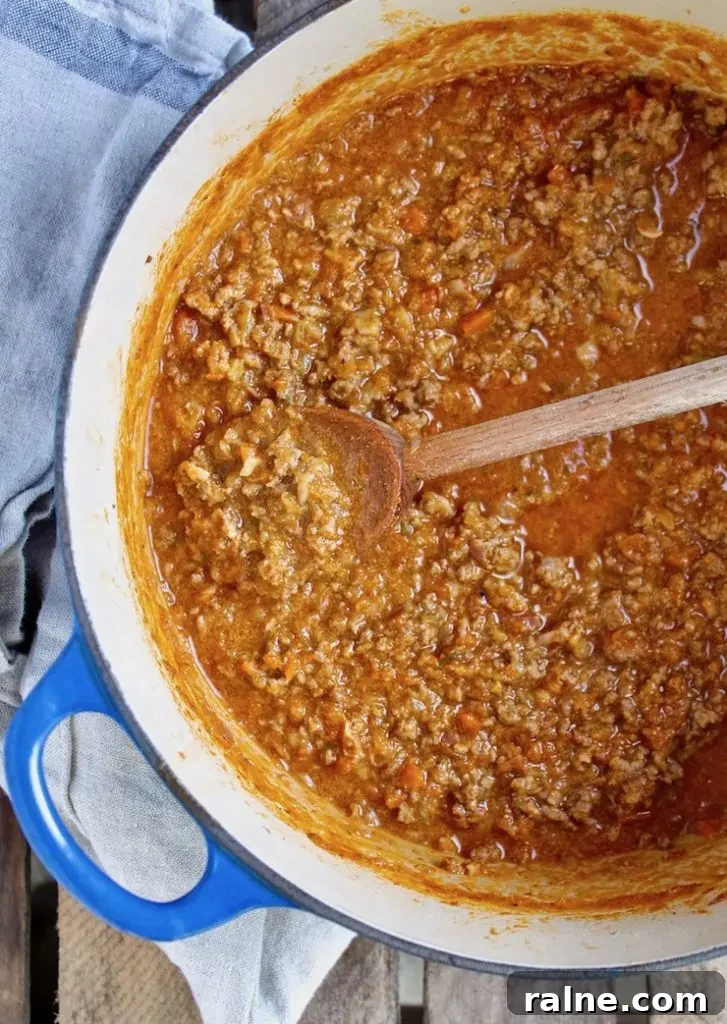
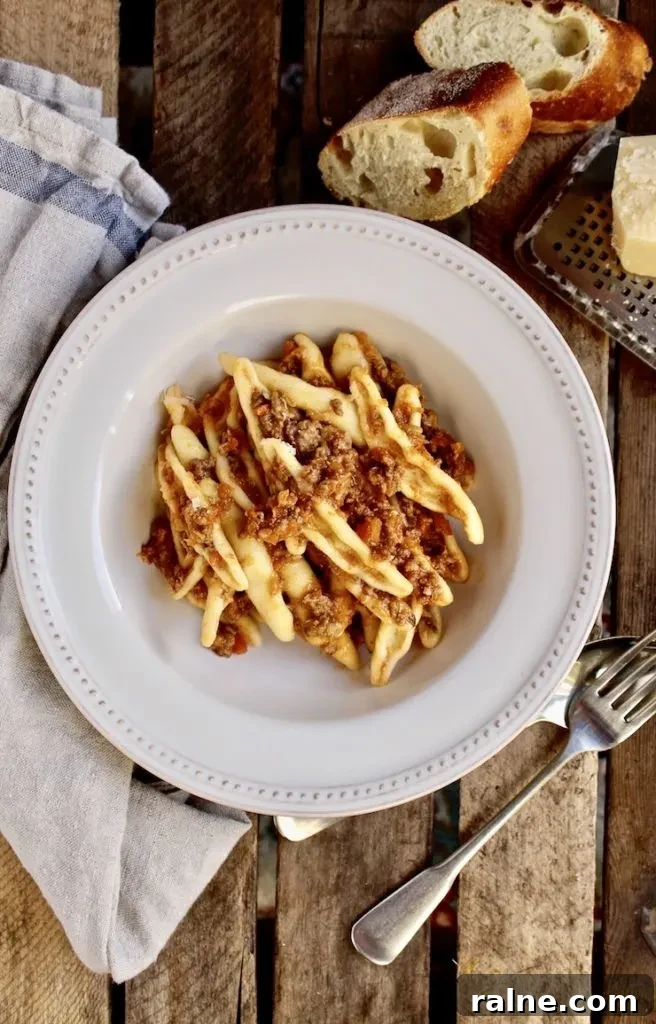
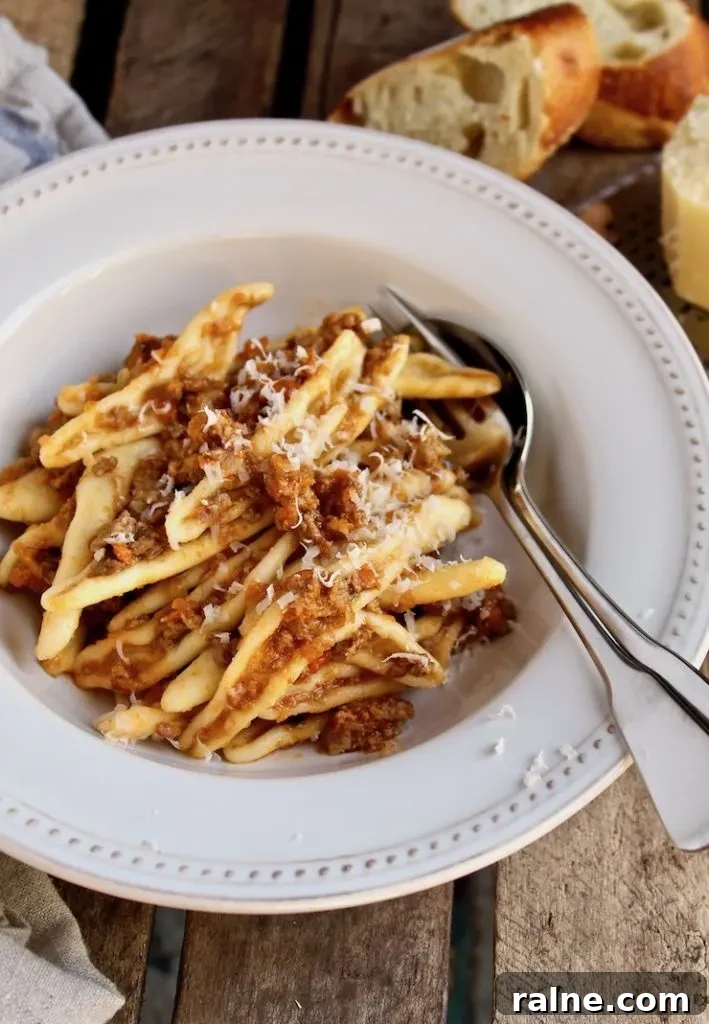
The finished ragù delivers deep, complex flavor from relatively few ingredients and without heavy use of garlic or spices. Tradition pairs Bolognese with broad, hearty pastas like pappardelle or tagliatelle; these shapes hold onto the meaty sauce. I didn’t have pappardelle, so I used a rustic southern Italian pasta called Cicatelli Molisani, which is often served with ragù and stood up nicely to the sauce. If you don’t have that, choose pappardelle, tagliatelle or rigatoni to match the texture and heft of the ragù.
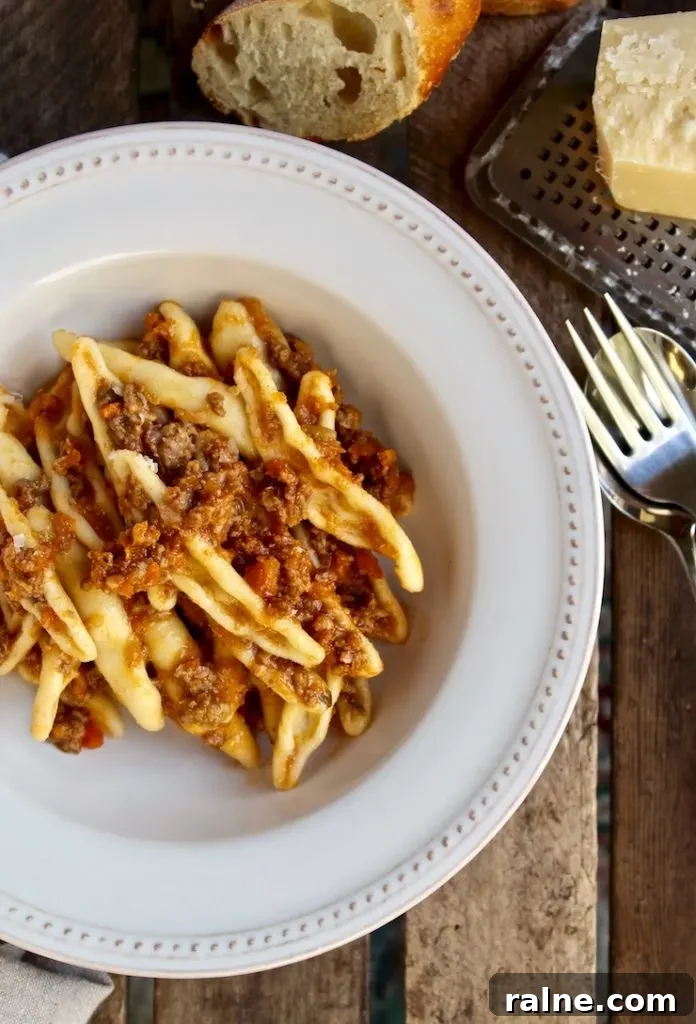
I strongly recommend making Classic Bolognese Ragù at home. It’s straightforward to prepare, but it benefits from time on the stove so the flavors can deepen. I froze about half for later; when reheating, add a bit of stock if it needs thinning. The meal I served with the ragù included pasta tossed with a touch of reserved pasta water, crusty bread and a glass of wine — simple and satisfying, and a lovely way to share an evening.
Buon appetito, Kelly
Classic Bolognese Ragù
Another favorite is Sunday Gravy, which also takes time but rewards you with depth of flavor — perfect for a chilly weekend.
Classic Bolognese Ragù
Print
Pin
Rate
Ingredients
- 2 tablespoon olive oil
- 2 onions, finely chopped, about 1½ cups (see notes below)
- 2 ribs celery, finely chopped, about 1 cup (see notes below)
- 2 carrots, finely chopped, about ¾ cup (see notes below)
- 6 oz ground beef, 85% lean (I used ground sirloin)
- 6 oz ground pork (could use veal instead)
- 4 oz thinly sliced pancetta, finely chopped
- ½ cup dry red wine
- 3 cups (about) chicken stock, divided
- 3 tablespoon tomato paste
- Kosher salt and freshly cracked black pepper
- 1 cup whole milk
- 1 lb pasta, preferably pappardelle, tagliatelle or fettuccine
- Grated Parmesan, for serving
Instructions
-
Heat oil in a large heavy pot over medium-high heat. Add onions, celery and carrots and sauté until soft, about 8 minutes. Add beef, pork and pancetta and continue sautéing, breaking up the meat as it cooks to a small crumble, until browned, another 15 minutes.
-
Add wine and boil for 1 minute, stirring and scraping up any browned bits. Add 2½ cups chicken stock and tomato paste, stir to combine. Reduce heat to very low and cook at a gentle simmer, stirring occasionally, for 1½ hours. Season with salt and pepper.
-
In a small saucepan, bring milk to a simmer. Gradually add hot milk to the sauce, a little at a time and stirring to blend. Cover with lid slightly ajar and simmer another 45 minutes until the milk is completely absorbed. If needed, add more stock by ¼-cupfuls to thin.
-
Cook pasta in a large pot of salted water until 1 minute shy of al dente. Drain, reserving ½ cup of pasta cooking water. Transfer ragù to a large skillet over medium-high heat. Add pasta and toss to coat. Add reserved pasta water, a little at a time, if it seems too dry. Plate and serve with freshly grated Parmesan cheese.
Recipe Notes
- The easiest way to finely chop vegetables for the soffritto is with a food processor: roughly chop each vegetable and pulse until very finely minced.
- I froze some of the ragù; when reheating, I added a splash of chicken stock to loosen the sauce as needed.
Nutrition
*Adapted from Bon Appétit, May 2011